
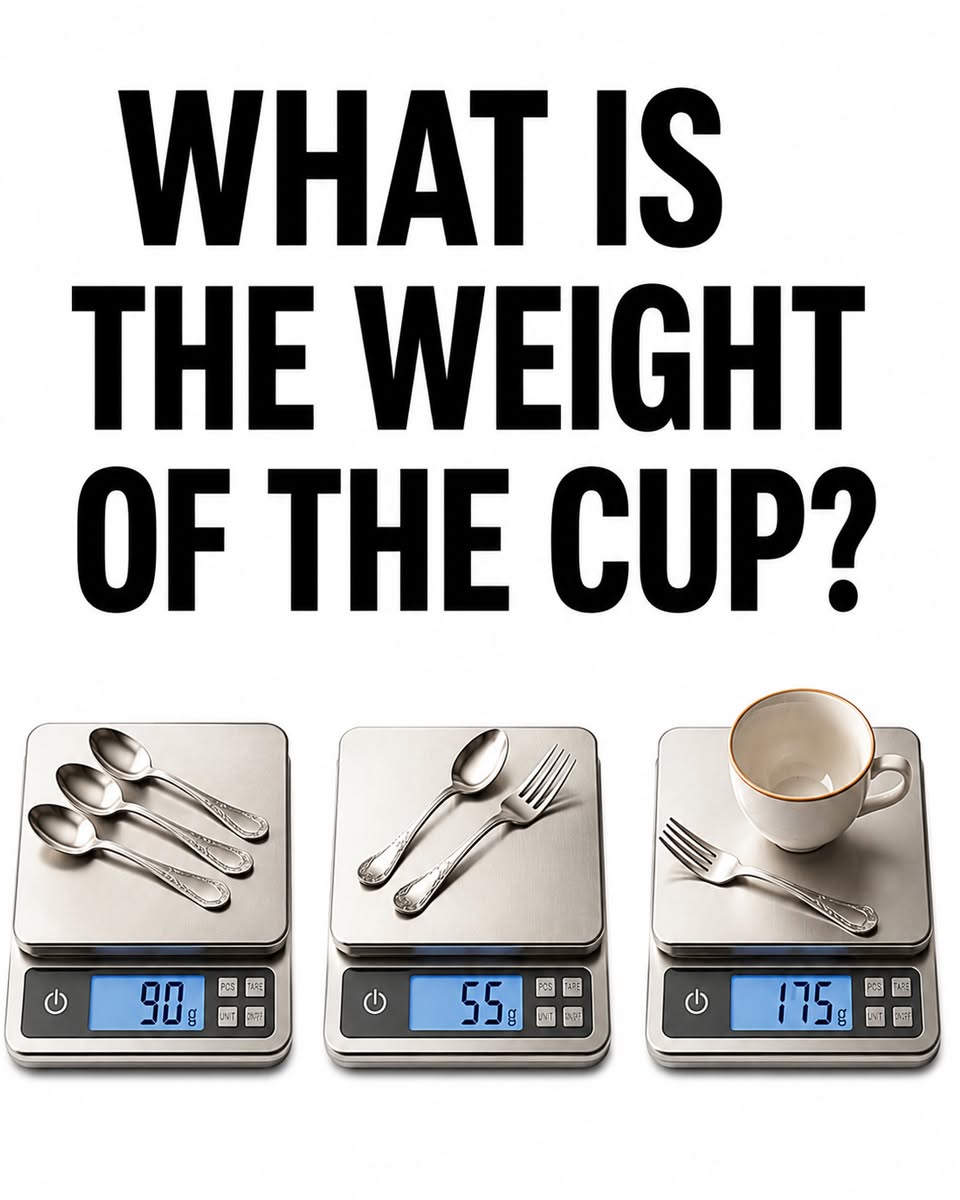
Viral math puzzles and logic brainteasers are sweeping social media feeds worldwide, capturing the curiosity of millions of daily users. Among these popular visual challenges, weight-scale equations stand out as a fan favorite. They look remarkably simple at first glance, featuring everyday kitchen items like spoons, forks, and coffee cups placed on digital scales. However, they tap directly into fundamental principles of algebra, deductive reasoning, and problem-solving skills that keep readers engaged and commenting.
Beyond providing fun entertainment during a quick break, solving logic puzzles serves as excellent mental exercise to maintain cognitive sharpness across all age groups. Engaging with educational challenges, exploring logical reasoning, and maintaining brain fitness play an active role in personal health care and lifelong learning. In this comprehensive guide, we will break down the exact step-by-step solution to this viral puzzle, explore the cognitive benefits of brain teasers, discuss practical kitchen measurement techniques, and provide actionable tips for improving mathematical logic.
The Puzzle Breakdown: Analyzing the Scales
To solve the puzzle correctly, let us look carefully at the three kitchen scales presented in the image and write down the exact information shown on each digital display screen.
+--------------+---------------------------------------+------------------------+
| Scale Number | Items on the Scale                    | Total Displayed Weight |
+--------------+---------------------------------------+------------------------+
| Scale 1      | 3 Identical Spoons                    | 90 grams               |
| Scale 2      | 1 Spoon + 1 Fork                      | 55 grams               |
| Scale 3      | 1 Fork + 1 Cup                        | 175 grams              |
+--------------+---------------------------------------+------------------------+
Each scale gives us an algebraic equation where the items represent unknown variables. By solving these equations sequentially, we can easily discover the exact weight of the cup.
Step-by-Step Mathematical Solution
Let us solve the puzzle step-by-step using basic algebra. We will define our variables clearly:
- S = Weight of one spoon (in grams)
- F = Weight of one fork (in grams)
- C = Weight of one cup (in grams)
Step 1: Find the Weight of One Spoon (S)
Looking at Scale 1, we see three identical spoons weighing a total of 90 grams.
$$\text{Equation 1: } 3 \times S = 90\text{ g}$$
To find the weight of a single spoon, divide the total weight by 3:
$$S = \frac{90}{3} = 30\text{ g}$$
Result: Each spoon weighs exactly 30 grams.
Step 2: Find the Weight of One Fork (F)
Next, look at Scale 2, which displays one spoon and one fork together weighing a total of 55 grams.
$$\text{Equation 2: } S + F = 55\text{ g}$$
Since we already know that $S = 30\text{ g}$, substitute this value into the equation:
$$30 + F = 55\text{ g}$$
Subtract 30 from both sides to isolate the fork’s weight:
$$F = 55 – 30 = 25\text{ g}$$
Result: Each fork weighs exactly 25 grams.
Step 3: Find the Weight of the Cup (C)
Finally, examine Scale 3, which shows one fork and one cup weighing a total of 175 grams.
$$\text{Equation 3: } F + C = 175\text{ g}$$
Substitute our known value for the fork ($F = 25\text{ g}$) into this final equation:
$$25 + C = 175\text{ g}$$
Subtract 25 from both sides to find the exact weight of the cup:
$$C = 175 – 25 = 150\text{ g}$$
Final Answer: The weight of the cup is 150 grams!
Why Brain Teasers Are Essential for Mental Fitness and Health
Engaging in regular problem-solving exercises is far more than just a pleasant distraction; it is a scientifically proven way to promote cognitive longevity and brain health.
Cognitive Benefits of Daily Logic Exercises
- Enhances Working Memory: Solving multi-step equations requires holding information in mind while processing new steps, which strengthens working memory pathways.
- Improves Problem-Solving Speed: Regularly working with logic puzzles enhances cognitive flexibility and speeds up pattern recognition.
- Reduces Cognitive Decline Risk: Research in healthy aging indicates that lifelong mental stimulation helps build cognitive reserve, which may delay symptoms of age-related cognitive decline.
Holistic Health and Educational Wellness
Maintaining cognitive sharpness goes hand in hand with broader preventative health and education practices. Utilizing wellness benefits covered under health insurance policies—such as annual preventive care visits and memory screenings—allows individuals to track their neurological and cardiovascular health proactively. Integrating mental puzzles into daily routines serves as a zero-cost habit that supports overall cognitive vitality.
Practical Applications: Precision Weighing in the Kitchen
Understanding item weights and scale calibration is an important skill in culinary arts, baking, and dietary management.
+---------------------------+-----------------------------------+-----------------------------------------------+
| Measurement Method        | Primary Usage                     | Level of Precision                            |
+---------------------------+-----------------------------------+-----------------------------------------------+
| Digital Kitchen Scale     | Baking, Portion Control, Recipes  | High Precision (to 0.1g or 1g)                |
| Volume Cups & Spoons      | Quick Liquid & Dry Ingredients    | Moderate (subject to packing variations)      |
| Visual Estimation         | Casual Cooking & Plating          | Low (varies by individual experience)         |
+---------------------------+-----------------------------------+-----------------------------------------------+
Why Digital Scales Beat Measuring Cups
- Consistency in Baking: Baking relies on exact chemical reactions between flour, sugar, liquids, and leavening agents. A cup of flour measured by volume can vary up to 20% depending on how tightly packed it is, whereas 150 grams of flour on a scale is always exact.
- Nutritional Tracking for Health: For individuals managing dietary goals, weight loss, or diabetes management, weighing food portions ensures precise calorie and carbohydrate tracking.
- Simplified Cleanup: Weighing ingredients directly into a single bowl set on a scale using the “tare” function eliminates the need for multiple dirty measuring cups and spoons.
How to Calibrate and Care for Your Digital Kitchen Scale
To ensure your digital kitchen scales provide accurate measurements like those shown in the puzzle, follow these simple maintenance tips:
- Use a Flat, Level Surface: Digital load sensors require a firm, completely flat surface. Operating a scale on a soft or uneven countertop will cause inaccurate readings.
- Check the Tare Function: Always press the “Tare” or “Zero” button after placing a container on the scale to reset the weight to zero before adding your ingredients.
- Replace Batteries Regularly: Low battery power is the primary cause of fluctuating or inaccurate readings on digital LED scale displays.
- Store Without Weight on Top: Never store heavy items resting on top of your digital scale, as continuous pressure can permanently damage the sensitive internal load cells.
Surprising Facts About Weights and Kitchen Items
- Standard Cutlery Standards: Most stainless-steel teaspoons weigh between 25 and 35 grams, making the 30-gram spoon in our puzzle surprisingly true to real-world standards!
- Ceramic Mug Variability: Empty ceramic coffee mugs typically weigh anywhere from 150 grams to 350 grams, depending on their wall thickness and handle design.
- The Origin of the Gram: The gram was originally defined in 1795 as the absolute weight of a volume of pure water equal to the cube of the hundredth part of a meter (1 cubic centimeter) at the melting point of ice.
Business, Education, and the Viral Engagement Economy
Why do simple math puzzles like this generate millions of comments and shares on social media platforms like Facebook?
The Psychology of Engagement
- Low Barrier to Entry: Visual puzzles require no specialized background to attempt, making them accessible to viewers across diverse educational levels.
- Social Validation: Successfully solving a puzzle creates a pleasant sense of accomplishment, encouraging users to comment with their answer to confirm their accuracy.
- Debate and Discussion: Variations in visual interpretation or minor calculation mistakes lead users to discuss their reasoning in the comments section, significantly boosting algorithmic visibility and user retention.
Frequently Asked Questions (FAQ)
What is the weight of the cup in the puzzle?
The cup weighs exactly 150 grams. This is determined by finding that each spoon weighs 30g ($90 \div 3$), each fork weighs 25g ($55 – 30$), and subtracting the fork’s weight from the third scale ($175 – 25 = 150\text{g}$).
How can I practice solving algebra puzzles like this faster?
Start by identifying the scale that contains only one type of item first. Solving for a single variable gives you a known number that you can easily plug into the remaining multi-item equations.
Why does a digital scale sometimes give different weights for the same item?
Drafts, unstable surfaces, debris beneath the rubber feet, or weak batteries can cause slight weight variations. Ensure your scale sits on a clean, solid table for optimal precision.
Are visual math puzzles good for kids?
Yes! Visual scale puzzles are a fantastic educational tool for teaching children introductory algebra principles without relying on intimidating abstract symbols.
Conclusion
Visual math puzzles offer a delightful blend of entertainment, logic, and brain exercise. By breaking down the three scales step-by-step—calculating the spoon at 30 grams, the fork at 25 grams, and the cup at 150 grams—we see how simple algebraic principles solve everyday mysteries effortlessly. Incorporating quick logic challenges into your daily routine is a fun, effective way to keep your mind active, enhance analytical thinking, and enjoy a rewarding mental workout.
