
While browsing flea markets, estate sales, or garage sales, antique lovers frequently stumble upon strange metal tools whose original purposes have been lost to time.
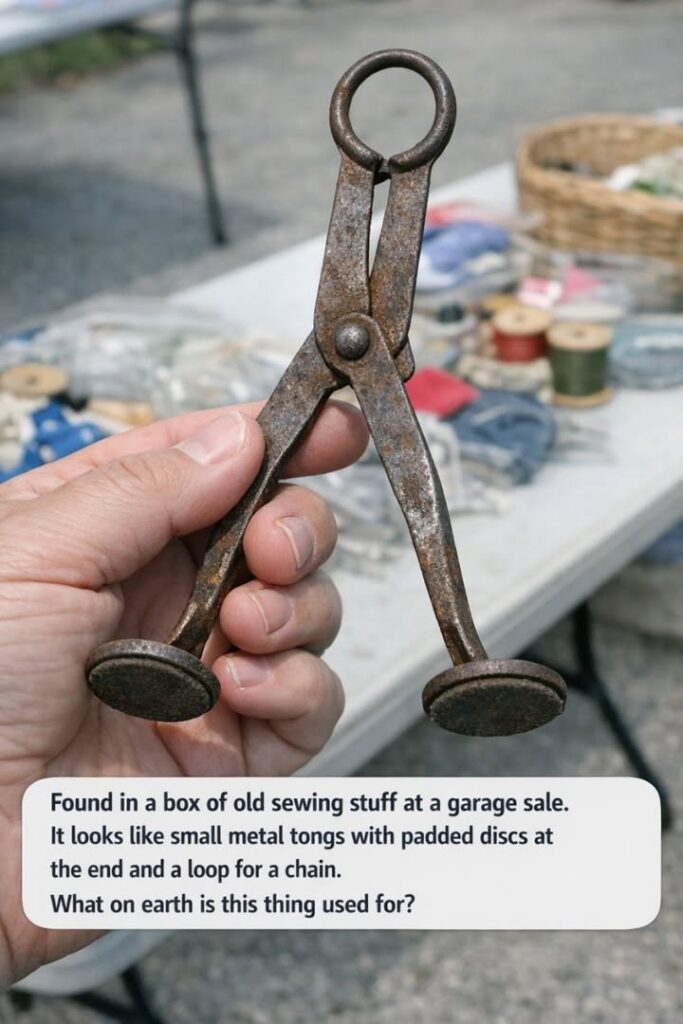
A viral social graphic displays a hand holding a scissor-like iron tool featuring two flat, padded disc pads at the bottom and a circular ring at the top. The image caption reads: “Found in a box of old sewing stuff at a garage sale. It looks like small metal tongs with padded discs at the end and a loop for a chain. What on earth is this thing used for?”
This distinctive artifact is a vintage skirt lifter (also known as a dress holder or hem lifter), a highly popular fashion accessory used by women during the late Victorian and Edwardian eras (1870s to 1910s).
Here is a full breakdown of what a skirt lifter is, how it was used in daily life, and why it was commonly kept alongside sewing supplies.
What Is a Victorian Skirt Lifter?
During the 19th and early 20th centuries, women wore long, floor-length skirts and heavy petticoats. Walking outdoors posed a constant challenge, as trailing skirt hems frequently dragged through mud, dust, wet grass, and street grime.
+-----------------------------------------------------------------------------------+
|                        VICTORIAN SKIRT LIFTER ANATOMY & FUNCTION                  |
+-------------------+----------------------------+----------------------------------+
| Component         | Structure                  | Functional Purpose               |
+-------------------+----------------------------+----------------------------------+
| Padded Discs      | Cloth, velvet, or leather  | Firmly clamps skirt fabric       |
| (Pincer Jaws)     | lined round pads           | without snagging delicate weaves |
| Scissor / Spring  | Hinged iron or brass       | Applies pressure to hold heavy   |
| Mechanism         | leverage arms              | fabric layers securely lifted    |
| Top Ring          | Small metal loop or split  | Attaches to a chatelaine, belt,  |
| Attachment        | ring connection            | or cord worn around the waist    |
+-------------------+----------------------------+----------------------------------+
1. Hands-Free Skirt Protection
To keep heavy dress hems clean while walking or climbing stairs, women squeezed the scissor handles open, clamped the padded metal discs onto the fabric of their skirt, and engaged a sliding ring to lock the jaws shut. This lifted the skirt hem a few inches off the ground without requiring the wearer to hold her dress up by hand constantly.
2. Fabric-Safe Padded Jaws
The flat discs at the ends of the pincers were lined with velvet, felt, leather, or smooth rubber. This ensured the metal clamp could hold thick woolen or silk skirt fabrics securely without leaving permanent crush marks, snagging threads, or tearing material.
3. Attachment to a Chatelaine or Belt
The top ring allowed the tool to suspend from a cord, ribbon, or chatelaine—a decorative belt hook worn around the waist that held everyday domestic tools such as thimbles, scissors, needle cases, and keys.
Why Was It Found in a Sewing Box?
Skirt lifters are frequently found tucked inside antique sewing kits and seamstress boxes for several practical reasons:
- Tailoring and Hemming Work: Victorian dressmakers used skirt lifters as temporary clamps or “sewing birds” to hold fabric taut against a table while pinning, measuring, or hand-stitching long structural hems.
- Repurposing Accessories: Once women’s skirt lengths shortened dramatically during the 1920s flapper era, skirt lifters became obsolete for daily wear and were repurposed into domestic craft clamps.
Financial Impact: Value of Vintage Sewing Collectibles
Discovering antique metal tools at garage sales can yield surprisingly valuable finds for collectors:
- High Collector Demand: Authentic Victorian brass, silver-plated, or decorative iron skirt lifters sell on antique markets ranging from $30 to over $150 depending on condition, ornamentation, and maker marks.
- Chatelaine Accessories: Ornate sterling silver skirt lifters featuring filigree patterns or gemstone accents are highly sought after by jewelry and fashion history collectors.
Fascinating Facts About Victorian Fashion Gadgets
- The Chatelaine System: Before modern purses became common, women carried essential daily items attached to waist chains called chatelaines—a term derived from the French word for the mistress of a castle (châtelaine).
- The “Skirt-Grip” Patent Craze: Dozens of competing patents for automatic skirt clamps, spring-loaded dress holders, and cord-pulley lifters were granted between 1860 and 1905 across the United States and Europe.
Conclusion: A Clever Solution from Fashion History
That strange pair of padded metal tongs found in an old sewing box is a genuine piece of Victorian history. Engineered to keep long floor-length skirts pristine, the skirt lifter represents a practical blend of 19th-century ergonomics and fashion utility.
Frequently Asked Questions
Q1: What is the official name of this vintage tool?
A1: It is officially called a skirt lifter (or dress holder / hem lifter).
Q2: How did a skirt lifter attach to a dress?
A2: The tool clamped onto the lower fabric of a skirt using padded discs, while the top ring suspended from a belt or chatelaine around the user’s waist.
Q3: Why do the discs on the clamp have padding?
A3: The velvet, leather, or felt padding prevented the metal jaws from damaging, snagging, or crushing delicate dress fabrics.
Q4: When did women stop using skirt lifters?
A4: Skirt lifters fell out of common use in the 1910s and 1920s when women’s hemline fashions rose above the ankle, making hem protection unnecessary.
Q5: How much are antique skirt lifters worth today?
A5: Depending on the material, maker, and condition, antique skirt lifters typically sell for $30 to $150+ among vintage tool and fashion collectors.
