
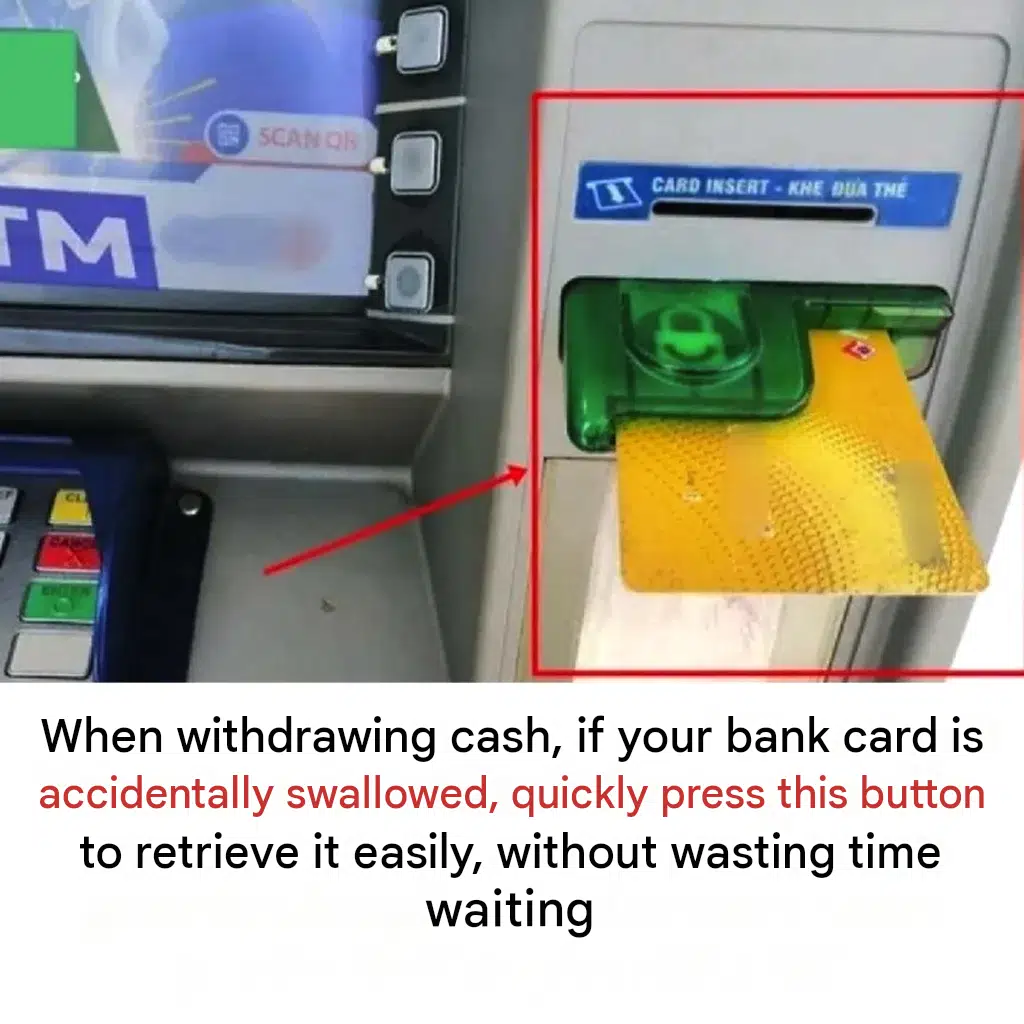
Withdrawing cash from an automated teller machine (ATM) is a seamless daily routine for millions of banking customers worldwide. Whether grabbing quick pocket money or accessing cash while traveling, ATMs offer round-the-clock financial convenience. However, few moments in daily life trigger as much sudden panic as inserting your credit or debit card into a machine, only to watch the card reader pull it inside and display an error message without returning it.
Internet rumors and viral social media posts frequently claim that pressing a secret button combination—such as holding down the “Cancel” key or pressing “Clear”—will instantly override the ATM’s internal mechanism and force it to eject your swallowed card. In reality, these secret button tricks are completely false urban legends. In this comprehensive article, we explore why ATMs retain bank cards, financial security protocols, consumer protection rights, and the exact steps to take if your card is ever captured.
Why Do ATMs Swallow Bank Cards?
When an ATM retains a card, it is rarely a random error. Banking hardware is programmed with strict security and operational protocols designed to protect cardholders from fraud, identity theft, and equipment damage.
1. Security Protocols and Wrong PIN Attempts
The most common reason an ATM swallows a card is repeated incorrect PIN entries. If someone enters the wrong PIN three consecutive times, the ATM assumes the card may be stolen or used by an unauthorized person. To protect your bank account from fraudulent withdrawals, the machine automatically retains the card in a secure internal vault.
2. Expired, Blocked, or Stolen Cards
Financial institutions automatically transmit real-time status updates across banking networks. If a card has been reported lost or stolen, flagged for suspected fraudulent activity, or past its expiration date, the ATM network will instantly issue a capture command when the card is inserted.
3. Forgotten Cards and Time-Out Features
To protect customers who get distracted, ATMs operate on strict timer cycles. If you leave your card sticking out of the card reader slot for more than 20 to 30 seconds after completing a transaction, the machine will retract the card into an internal retention bin to prevent the next person in line from stealing it.
4. Technical Hardware Glitches and Power Disruptions
Modern ATMs are complex machines running specialized software connected to financial networks. Mechanical card reader jams, network connectivity drops, or sudden power fluctuations can cause the machine to freeze mid-transaction, preventing the card reader from ejecting the card safely.
The Secret “Cancel Button” Myth Debunked
Viral online posts often claim that holding the red “Cancel” key for several seconds will trigger an emergency release mechanism inside the ATM to return swallowed cards.
This claim is entirely false. The “Cancel” button on an ATM keypad is designed only to cancel an active transaction on screen before the machine processes your request. Once a card is physically retained by the machine’s internal security bin due to a timeout, PIN error, or fraud flag, no key combination on the external pad can force the mechanism to release it. This design prevents unauthorized individuals or scammers from manipulating the keypad to retrieve stolen or blocked cards.
Financial, Legal, and Security Considerations
When a bank card is retained by an ATM, taking swift action protects your bank accounts and financial identity from potential exploitation.
1. Fraud Prevention and Account Security
The immediate priority when your card is captured is to ensure no unauthorized transactions can take place. Contacting your bank or using your mobile banking application to temporarily “lock” or “freeze” the card prevents fraudulent charges while you arrange for a replacement.
2. Liability for Unauthorized Charges
Consumer protection regulations limit cardholder liability for fraudulent charges, provided the loss or capture is reported promptly to the card-issuing financial institution. Freezing your account immediately ensures full protection under consumer banking laws.
3. Traveling and International Banking
If an ATM swallows your card while traveling abroad, retrieve foreign transaction hotlines immediately. Foreign ATMs owned by independent third-party operators often have strict policies against opening machines to return cards to non-customers, making instant account freezing and replacement ordering crucial.
Essential Steps to Take If Your Card Is Captured
If an ATM swallows your bank card, stay calm and follow these practical, step-by-step instructions:
- Wait and Confirm Status: Stay by the machine for at least one to two minutes. Ensure the screen has reset to its default home display and that the transaction is completely closed, ensuring the card is not sticking out.
- Check the ATM for Tampering: Inspect the card slot and keypad area for suspicious skimming devices or fake overlays designed by scammers to trap cards physically.
- Freeze Your Card via Mobile App: Open your bank’s official smartphone app immediately and toggle the “Lock Card” or “Freeze Card” feature to block all pending transactions.
- Contact Customer Support Immediately: Call the official emergency customer service phone number listed on the ATM machine, inside your mobile app, or on your bank’s official website to report the incident and request a new card.
- Inform Branch Staff (If Applicable): If the ATM is attached to a physical bank branch operating during business hours, notify the staff inside. Bring official photo identification (such as a driver’s license or passport) to request assistance.
Fascinating Facts About ATM Technology
- Internal Security Vaults: Retained cards do not drop into a loose tray; they are deposited into a locked, tamper-proof internal retention box inside the ATM vault that can only be accessed by authorized armored cash couriers or bank officers.
- Contactless ATMs: Modern ATMs increasingly feature NFC (Near Field Communication) readers, allowing customers to tap their smartphone or card rather than inserting it, completely eliminating the risk of swallowed cards.
- The World’s First ATM: The world’s first automated cash dispenser was installed by Barclays Bank in London in 1967, using paper checks impregnated with mildly radioactive carbon-14 rather than plastic magnetic stripe cards.
Conclusion
Having a bank card swallowed by an ATM can be frustrating, but understanding that it is an automated security measure brings peace of mind. While viral rumors about secret keypad buttons are untrue, taking swift action—freezing your card in your mobile app and contacting your bank immediately—ensures your accounts remain safe and secure.
Frequently Asked Questions (FAQ)
Can pressing the “Cancel” button release a swallowed card?
No. The “Cancel” button only stops active on-screen transactions. It cannot override internal security mechanisms once a card has been drawn into the machine’s internal retention vault.
Will the bank return my card if the ATM is attached to a branch?
If the ATM is located directly at your home bank’s branch and staff can verify your identity with official photo ID, they may be able to retrieve it. However, many banks follow strict policies requiring swallowed cards to be destroyed and replaced for security reasons.
What happens to cards retained inside ATMs?
Retained cards are collected during routine servicing by certified armored security technicians or bank managers. For security and fraud prevention, collected cards are typically shredded securely rather than reissued.
How quickly should I report a swallowed card?
You should report the captured card or freeze it through your mobile banking app immediately within minutes of the incident to prevent any potential fraudulent activity.
