
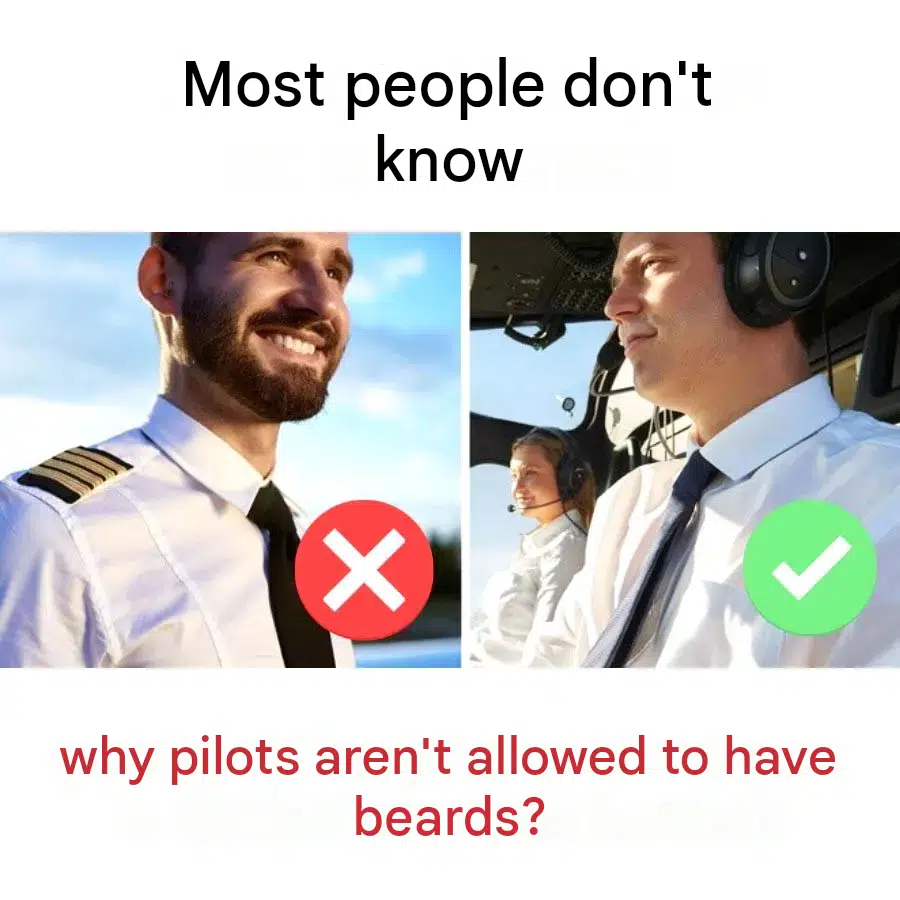
When passengers board a commercial airliner, they expect the flight crew to project a professional, polished image. Crisp uniforms, pressed shirts, neat ties, and well-groomed appearances are standard expectations across the global aviation industry. However, grooming standards for commercial airline pilots—specifically regulations surrounding facial hair—go far beyond simple corporate aesthetics or traditional airline branding.
If you have ever wondered why most commercial airline pilots are required to remain clean-shaven, the answer involves rigorous life-or-safety protocols, emergency procedures, and strict aviation guidelines. While facial hair has surged in popularity across modern corporate workplaces, commercial flight decks maintain strict protocols rooted in passenger and crew protection.
In this comprehensive guide, we will examine the critical safety reasons behind pilot grooming standards, explore how emergency oxygen masks function at high altitudes, review aviation regulations, and discuss how travel insurance, legal considerations, and personal financial planning intersect with modern airline operations.
The Core Reason: Emergency Oxygen Masks and Airtight Seals
The primary reason many commercial airlines enforce strict clean-shaven policies for pilots relates to emergency decompression events and the use of oxygen equipment at high cruising altitudes.
Cruising Altitude and Cabin Pressure
Commercial aircraft typically cruise at altitudes between 30,000 and 40,000 feet. At these elevations, the outside air is dangerously thin, and ambient atmospheric pressure is too low to sustain human consciousness for more than a brief period.
To keep passengers and crew safe, commercial airliners use sophisticated environmental control systems to pressurize the cabin, simulating an altitude of roughly 6,000 to 8,000 feet. However, in the rare event of a sudden cabin depressurization, emergency oxygen masks drop automatically for passengers, while flight deck crews immediately don specialized full-face quick-donning oxygen masks.
The Science of the Seal
For a pilot’s oxygen mask to function effectively during an emergency, it must form an absolute, airtight seal against the skin of the face.
- Oxygen Delivery: These masks pump 100% pure oxygen under positive pressure into the pilot’s respiratory system to prevent hypoxia (oxygen deprivation) at high altitudes.
- The Facial Hair Problem: Facial hair—even a well-trimmed mustache, goatee, or full beard—creates microscopic gaps between the rubber sealing edge of the mask and the pilot’s skin.
- Dangerous Leaks: If a pilot has a beard, pressurized oxygen can leak out through the hair follicles, and toxic smoke or cabin contaminants can leak inward. Even a tiny air gap can severely compromise oxygen delivery during critical moments when clear thinking is essential.
Regulatory Standards: FAA and Global Aviation Authorities
Aviation safety is governed by strict international and national regulatory bodies, such as the Federal Aviation Administration (FAA) in the United States and the European Union Aviation Safety Agency (EASA).
Emergency Equipment Testing
Regulatory agencies require airlines to prove that all emergency safety equipment can be deployed and operated successfully by any active crew member under extreme conditions.
- Tests conducted by aviation safety researchers have consistently demonstrated that oxygen masks take significantly longer to seal properly on bearded test subjects compared to clean-shaven individuals.
- In high-stress, time-sensitive emergency scenarios—such as an in-flight fire or rapid decompression—every second counts. Fumbling with a mask seal obstructed by facial hair introduces unacceptable operational risks.
Evolving Airline Policies
While legacy airline carriers have historically maintained strict no-beard policies across the board, industry standards have occasionally evolved. Some airlines permit mustaches provided they do not interfere with the sealing surface of the oxygen mask. Furthermore, policies can vary between regional carriers, cargo operators, and international airlines depending on their specific aircraft fleets and regulatory jurisdictions.
Financial Protection, Travel Insurance, and Aviation Safety
Maintaining rigorous safety standards is not only about regulatory compliance; it also underpins the multi-billion-dollar global travel and insurance ecosystem.
Managing Travel Insurance and Risk
When individuals book flights, they trust that airlines implement every possible measure to ensure a safe journey. Robust safety cultures reduce the statistical probability of catastrophic incidents, keeping commercial aviation statistically as the safest mode of transportation in the world.
When evaluating travel plans, smart travelers often invest in comprehensive travel insurance policies that cover trip interruptions, emergency medical evacuations, and unexpected delays. Knowing that commercial airlines adhere to uncompromising safety protocols—down to pilot grooming rules—reassures travelers and corporate risk managers alike.
Career Stability and Legal Considerations
For aspiring aviators navigating flight school, commercial licensing, and employment interviews, adhering to company grooming policies is a standard professional requirement. Understanding airline operational guidelines protects pilots’ career progression and ensures seamless compliance with employment contracts.
Practical Maintenance and Grooming Standards for Professionals
While flight deck crew members must remain clean-shaven, aviation professionals across other departments—such as flight attendants, customer service agents, and administrative staff—follow different corporate dress codes.
Daily Skincare and Shaving Hygiene
For pilots who must shave daily, maintaining healthy skin without razor burn or irritation is an essential daily routine:
- Quality Shaving Tools: Using multi-blade razors or safety razors with moisturizing shaving gels prevents ingrown hairs and skin irritation caused by frequent shaving.
- Post-Shave Care: Applying alcohol-free balms or hydrating lotions keeps facial skin conditioned despite the dry, recycled air encountered during long-haul flights.
Fascinating Facts About Aviation Safety and Pilot Life
- Hypoxia Symptoms: Mild hypoxia can impair judgment and cognitive function before a pilot even realizes they are oxygen-deprived, making an immediate and secure oxygen mask seal vital.
- Quick-Donning Masks: Modern cockpit oxygen masks are designed to be slipped onto the face with one hand in under five seconds, even while the pilot is wearing headset equipment.
- Smoke Goggles Integration: In smoky cockpit environments, pilots wear full-face oxygen masks equipped with specialized anti-fogging smoke goggles to protect their eyes and respiratory tracts simultaneously.
- The Evolution of Uniforms: Early airline pilot uniforms were modeled after British Royal Navy attire to instill passenger confidence during the pioneering days of commercial air travel.
Conclusion
The rule prohibiting airline pilots from wearing beards is far more than an old-fashioned corporate tradition. It is a critical, life-saving safety requirement designed to ensure that emergency oxygen masks form an airtight seal during rapid decompression or smoke emergencies at high altitudes.
By prioritizing uncompromising safety protocols, regulatory bodies, airlines, and flight crews work together to maintain the highest standards of safety in global aviation. Understanding these hidden details deepens our appreciation for the rigorous preparation behind every smooth and secure flight.
Frequently Asked Questions (FAQ)
1. Are mustaches allowed for airline pilots?
Many airlines permit mustaches as long as they are neatly trimmed and do not extend past the corners of the mouth or interfere with the bottom sealing edge of the emergency oxygen mask. Full beards, goatees, and heavy stubble are generally prohibited because they compromise the mask seal.
2. Do oxygen masks really leak if a pilot has a beard?
Yes. Safety tests conducted by aviation authorities and equipment manufacturers show that facial hair creates micro-gaps that allow oxygen to escape under pressure and allow ambient smoke or toxic gases to leak inward during an emergency.
3. Do these grooming rules apply to all airlines worldwide?
While most major commercial passenger airlines enforce strict clean-shaven policies for flight deck crew, exact regulations can vary depending on the country, the specific airline’s operating specifications, and the type of aircraft being flown.
4. How quickly do pilots need to put on oxygen masks in an emergency?
During a rapid decompression event at high altitude, pilots are trained to put on their oxygen masks using one hand in less than five seconds to prevent the onset of dangerous hypoxia.
5. Do flight attendants face the same beard and shaving restrictions?
No. Flight attendants do not occupy the flight deck controls during emergency oxygen deployment in the same manner as pilots, so grooming standards for cabin crew are typically governed by general corporate appearance guidelines rather than oxygen mask seal requirements.
