
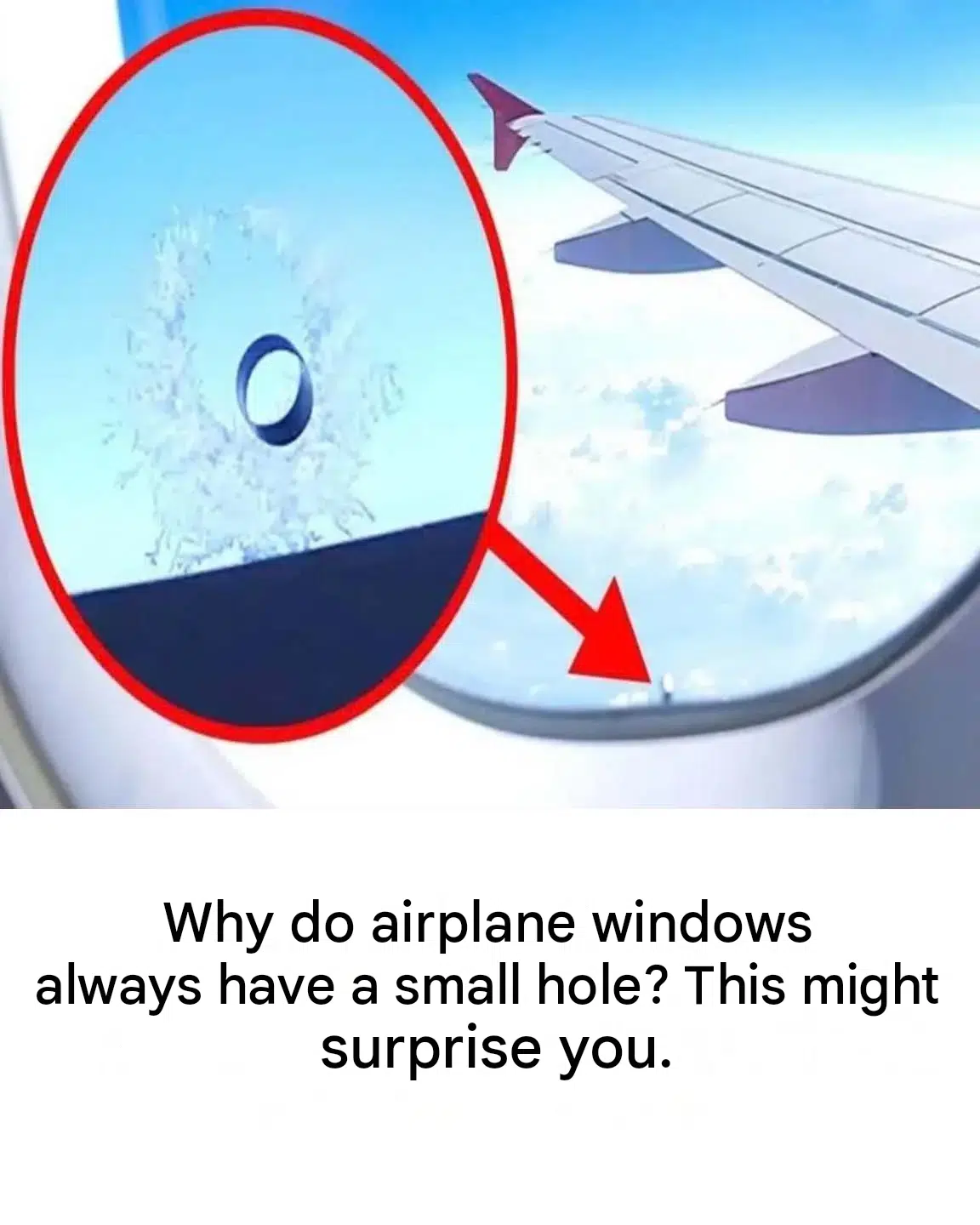
Have you ever looked out the window during a commercial flight, gazed down at the clouds, and noticed a tiny, seemingly random hole drilled into the bottom of the plastic windowpane? For many frequent flyers, this small detail sparks instant curiosity. Does it vent air? Is it a manufacturing defect? Could it pose a safety risk?
As it turns out, that little hole is an ingenious feature of aeronautical engineering designed to keep passengers safe at 35,000 feet. In this comprehensive article, we will explore the precise engineering purpose behind the cabin window hole, examine how airplane cabin pressure works, and discuss how safety regulations and material science protect travelers across the Travel, Technology, and Medical industries.
The Engineering Purpose: Managing Cabin Pressure
To understand why the hole is there, we first need to look at how airplane windows are constructed. Commercial aircraft windows are not made of a single pane of glass; instead, they consist of three distinct layers:
- The Outer Pane: Faces the outside atmosphere and bears almost the entire structural pressure differential between the inside of the cabin and the high-altitude vacuum.
- The Inner Pane: Faces the passenger cabin, protecting the middle pane from scratches and physical wear.
- The Middle Pane (The Bleed Hole Pane): Features that famous tiny hole.
What the Tiny Hole Actually Does
The small aperture located on the middle pane is officially known as a bleed hole. Its primary function is to regulate air pressure between the passenger cabin and the air gap situated between the outer and middle panes.
When an airplane climbs to cruising altitude, the air pressure outside drops dramatically, while the cabin is artificially pressurized for passenger comfort. This creates a massive pressure differential.
- The outer pane handles the heavy lifting, taking on the brunt of the cabin pressure.
- The bleed hole allows cabin pressure to equalize between the cabin and the air space between the panes.
By balancing this pressure, the hole ensures that the load is safely distributed to the strongest, outermost pane rather than cracking or blowing out the interior panels.
Preventing Fogging and Condensation
Beyond pressure management, the bleed hole serves a second critical function: moisture control.
At cruising altitudes of 30,000 to 40,000 feet, external temperatures plummet to minus 50 degrees Fahrenheit or lower. If the windowpanes were completely sealed without ventilation, moisture from the warm passenger cabin would hit the freezing outer glass, causing heavy frost and condensation to form instantly.
The bleed hole allows any trapped humidity inside the window sandwich to vent out into the cabin, keeping the viewing panes crystal clear so passengers can enjoy the view and pilots can visually inspect the aircraft wings.
The Role of Advanced Materials and Safety in Aviation
The manufacturing of modern aircraft windows relies heavily on advanced material science and strict regulatory compliance.
High-Strength Acrylics and Polycarbonates
Unlike traditional window glass, airplane windows are crafted from high-grade stretched acrylic. Acrylic offers exceptional impact resistance, flexibility under pressure, and optical clarity. Even if a bird strike or extreme stress damages a pane, acrylic tends to craze or crack rather than shatter into dangerous, sharp shards.
Rigorous Testing and Quality Assurance
Aviation safety protocols require windows to undergo extreme stress testing simulating cabin decompression, thermal shock, and high-velocity impacts before ever being cleared for commercial service.
Broader Applications: Technology, Travel, and Safety Standards
The principles of pressure equalization and structural redundancy seen in aircraft windows extend across many other professional sectors.
Travel and Aerospace Innovation
As commercial aerospace engineering evolves toward supersonic and high-altitude space tourism, cabin pressure management and thermal insulation remain top priorities for aerospace designers.
Technology and Manufacturing Safety
In consumer electronics, medical devices, and heavy machinery, engineers use similar pressure-relief valves and venting mechanisms to prevent internal housing deformation caused by altitude or temperature shifts.
Legal and Insurance Compliance
Aviation manufacturers and commercial airlines operate under strict federal guidelines overseen by regulatory bodies such as the Federal Aviation Administration (FAA). Adherence to rigorous safety standards protects airlines from liability, ensures passenger security, and influences commercial Insurance underwriting for fleets worldwide.
Fascinating Facts About Airplane Windows
- Curved Corners: Have you noticed that airplane windows are always rounded rather than square? Rounded corners distribute physical stress evenly across the frame. Sharp 90-degree corners create stress concentration points that can lead to catastrophic metal fatigue.
- Scratch-Resistant Design: The innermost pane you touch isn’t structural at all—it’s simply a replaceable plastic shield designed to take the brunt of passenger rings, belt buckles, and camera lenses.
- Stretched Acrylic: The acrylic used in modern aircraft windows is chemically stretched during manufacturing to align the polymer chains, making it remarkably resistant to shattering under high pressure.
Conclusion
That tiny hole in your airplane window is much more than a curious quirk—it is a vital safety feature that manages pressure differentials, prevents frost buildup, and ensures structural integrity at high altitudes.
The next time you board a flight and glance out at the wing, you can appreciate the brilliant engineering keeping you safe thousands of feet in the air!
Frequently Asked Questions (FAQ)
What happens if the outer window pane breaks?
While extremely rare, commercial airplane windows are designed with built-in redundancy. The outer pane handles the primary pressure load, but the middle and inner panes are engineered to maintain cabin pressure temporarily in the unlikely event of outer pane damage, giving pilots time to descend safely.
Is the hole dangerous if someone touches it?
Not at all. The bleed hole is small, smooth, and handles minor pressure equalization. Touching it poses no safety hazard to passengers.
Why aren’t airplane windows made of traditional glass?
Traditional glass is heavy, brittle, and shatters easily into sharp shards upon impact. High-grade acrylic is much lighter, more flexible, and far safer under extreme pressure variations.
