
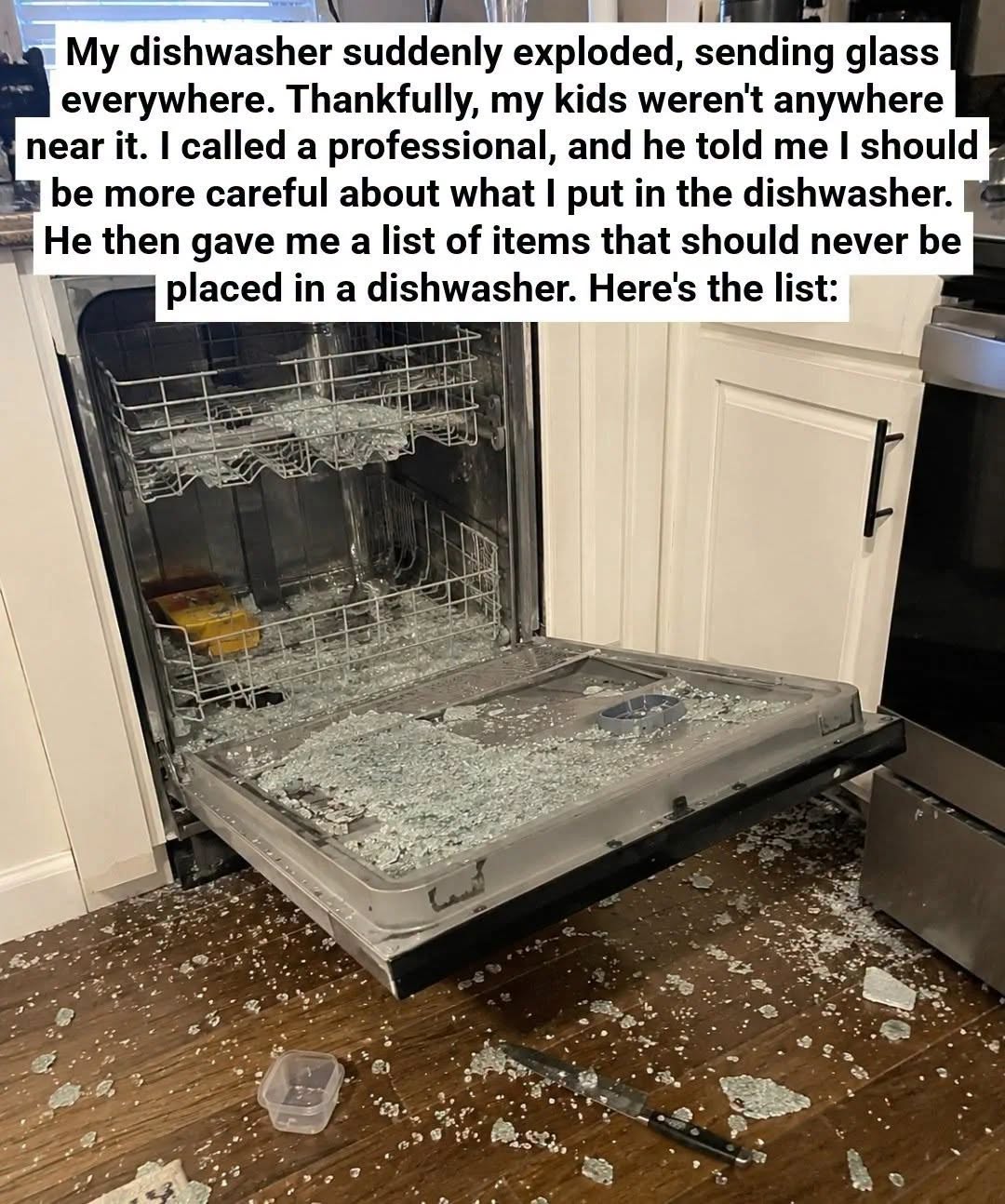
Imagine standing in your kitchen when a sudden, loud pop echoes through the house. You hurry over to find your dishwasher door completely shattered, with thousands of tiny glass fragments showered across your kitchen floor.
This exact terrifying scenario is captured in a viral image where a homeowner shares: “My dishwasher suddenly exploded, sending glass everywhere. Thankfully, my kids weren’t anywhere near it. I called a professional, and he told me I should be more careful about what I put in the dishwasher. He then gave me a list of items that should never be placed in a dishwasher. Here’s the list:”
While a shattered glass dishwasher door looks like a terrifying explosion, understanding the material science behind tempered glass, thermal stress, and proper kitchen appliance care can clear up why this happens and how to keep your home safe.
Why Glass Dishwasher Doors Break: Tempered Glass Dynamics
Modern appliances that feature glass front panels—such as ovens, microwaves, and high-end dishwashers—utilize tempered safety glass.
How Tempered Glass Works
Tempered glass is manufactured through extreme thermal heating followed by rapid surface cooling. This process places the outer surfaces into compression and the interior into tension. This unique tension makes tempered glass roughly four to five times stronger than standard annealed glass. When it eventually breaks, it disintegrates into small, relatively harmless granular cubes rather than jagged, sharp shards.
What Triggers Sudden Shattering?
While tempered glass is tough, it possesses a specific vulnerability: spontaneous fracture caused by microscopic surface damage or extreme thermal stress.
- Microscopic Nicking and Scratches: Over time, hitting the glass door edge with heavy pots, metal belt buckles, or hard object impacts creates invisible micro-fractures in the outer compression layer.
- Thermal Shock: Running an intense high-heat heated dry cycle or heated sanitization cycle followed by rapid cold air exposure can expand existing microscopic cracks.
- Internal Tensions: Once a micro-crack penetrates the outer compressive layer and reaches the high-tension inner core, the entire sheet of tempered glass releases its stored kinetic energy instantly, resulting in a dramatic “explosion” of safety glass.
Items You Should Never Put in a Dishwasher
While improper glassware placement inside the rack can cause internal glass breakage during heavy wash cycles, preserving your appliance and tableware requires knowing what belongs in a dishwasher and what should always be washed by hand.
1. Fine Crystal and Non-Tempered Glassware
Delicate crystal glasses and thin, non-tempered glass items are highly vulnerable to thermal shock. High water temperatures combined with intense water pressure can crack fragile glass mid-cycle, creating loose glass shards inside the wash tub.
2. High-Carbon Chef Knives
Place professional kitchen knives in the dishwasher and you will dull their razor edges quickly. The harsh alkaline detergents, high heat, and churning water cause fine blade edges to nick and rust. Furthermore, exposed sharp blades pose a cutting hazard when unloading.
3. Cast Iron and Carbon Steel Skillets
Dishwasher detergents contain abrasive salts and strong alkalis designed to strip grease. Running cast iron cookware through a wash cycle completely strips away the hard-earned non-stick seasoning layer and invites immediate rust.
4. Wooden Cutting Boards and Wooden Utensils
Wood absorbs hot water rapidly during prolonged wash cycles. As the wood fibers swell and dry during the heated drying phase, wooden spoons, salad bowls, and cutting boards will warp, crack, and split along seam lines.
5. Non-Stick (Teflon) Cookware
Unless explicitly labeled dishwasher-safe by the manufacturer, high wash temperatures and harsh detergent chemicals gradually erode non-stick PTFE coatings, causing pans to lose their slick surface prematurely.
6. Copper and Aluminum Cookware
Harsh detergent chemicals react naturally with soft metals. Copper pots will tarnish and discolor, while unanodized aluminum items will develop a dull, dark oxide film that rubs off onto hands and towels.
7. Soft Plastics and Disposable Containers
Thin plastic tubs (such as margarine or takeout containers) cannot withstand the high heat of the bottom heating element. They melt, warp, and release chemical fumes inside the washing chamber.
What to Do If Your Appliance Glass Shatters
If you experience a glass failure with a home appliance, prioritize safety by taking these immediate steps:
- Keep Pets and Children Away: Immediately isolate the kitchen area to prevent barefoot accidents or pet paw injuries.
- Disconnect Power: Turn off the circuit breaker powering the dishwasher before attempting any cleanup to eliminate electrical hazards around standing water and glass.
- Wear Protective Gear: Put on thick work gloves and closed-toe shoes before picking up larger glass pieces.
- Vacuum Fine Particles: Use a vacuum hose attachment or shop-vac to clear fine glass dust from floor crevices, cabinet kickplates, and appliance tracks. Follow up by sweeping thoroughly.
Financial and Appliance Maintenance Insights
Understanding appliance glass maintenance can protect your home budget and extend machine longevity:
- Inspecting Glass Panels: Periodically check appliance door glass for chips, heavy scratches, or loose framing. Catching minor door damage early allows for targeted door panel replacement before total glass failure occurs.
- Hiring Appliance Specialists: If an interior heating element runs continuously or control board thermostats fail, water temperatures can spike well above safe operating limits. Annual maintenance checks ensure temperature sensors operate within safe parameters.
Fascinating Facts About Kitchen Appliances and Glass
- Nickel Sulfide Inclusions: On rare occasions, microscopic impurities known as nickel sulfide (NiS) inclusions trapped inside tempered glass during factory production can expand slowly over years, eventually triggering sudden glass breakage without any external impact!
- The Safety Advantage: If appliance doors were made of standard plate glass rather than tempered glass, structural breaks would produce large, deadly razor-sharp daggers instead of small cube granules.
Conclusion: Smart Appliance Care for Safe Kitchens
A shattered glass dishwasher door is a jarring sight, but understanding the physical properties of tempered safety glass takes away the mystery.
By avoiding thermal shock, handling appliance doors with care, and keeping non-dishwasher-safe items out of the wash tub, you can protect your kitchen equipment, keep your tableware in pristine condition, and maintain a safe home environment for your family.
Frequently Asked Questions
Q1: Can a dishwasher explode due to water pressure or gas?
A1: No. Dishwashers run on low household water pressure and do not utilize explosive gases. “Explosions” reported by homeowners refer to the rapid tension release of shattering tempered safety glass panels.
Q2: Is shattered tempered glass dangerous?
A2: Tempered glass is designed specifically to break into small, blunt-edged cubes rather than sharp shards, greatly reducing the risk of severe injury. However, small glass granules can still cause minor cuts and should be cleaned up carefully with protective gloves.
Q3: Why do some plastic items melt on the bottom rack of a dishwasher?
A3: Most traditional dishwashers feature an exposed heating element at the very bottom of the tub used for water heating and drying cycles. Placing light plastics on the lower rack exposes them to intense radiant heat, causing them to warp or melt.
Q4: Can I replace just the glass panel on my dishwasher door?
A4: Yes. Most major appliance manufacturers sell outer glass door assemblies as replacement parts, allowing technicians to replace the glass front without purchasing a completely new dishwasher.
Q5: How can I tell if an item is safe for the dishwasher?
A5: Check the bottom of the container or cookware for the universal dishwasher-safe symbol (typically showing a plate inside a rack with water droplets) or a explicit manufacturer care label.
