
Introduction
Have you ever opened your washing machine door after a fresh load, expecting crisp, clean clothes, only to find them covered in stubborn pet hair, lint, or pesky detergent residue? You’re not alone. This frustration is a common pain point for households across the United States. Many of us constantly search for a solution, trying expensive lint removers, different detergents, or even resorting to running second wash cycles. But what if the answer was as simple as a kitchen sponge? A surprisingly popular life hack that has gone viral across social media is exactly that: placing a regular household sponge into the drum with your laundry. This unusual suggestion has divided the internet, with strong advocates swearing by its effectiveness and skeptics questioning if it’s a brilliant innovation or a disaster waiting to happen.
This article takes a deep dive into this viral laundry phenomenon. We will unpack the science behind why people claim it works, examine the very real potential risks to your appliances and finances, explore safer and more effective alternatives, and provide expert practical tips for keeping your laundry fresh and your washing machine running smoothly. Before you toss that sponge in your next load, read on to understand the full story.
The Theory: How a Sponge is Supposed to Work
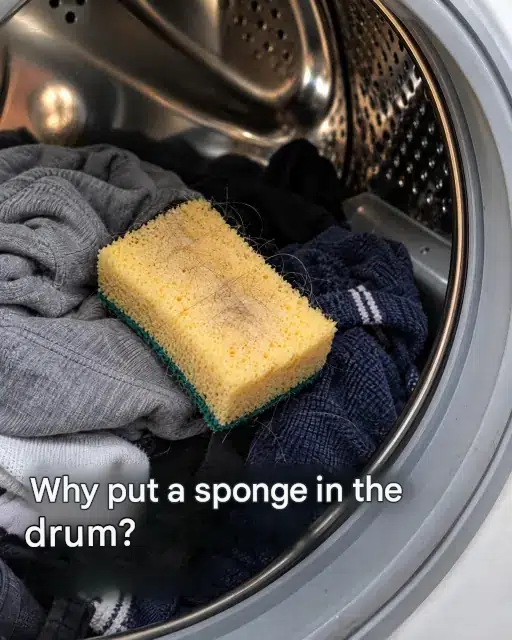
The core idea behind this method is incredibly simple and sounds like a quick fix. People claim that adding a standard yellow and green scouring sponge to a wash cycle will attract and trap pet hair, human hair, and lint that would otherwise cling to your clothing or clog your machine’s filter. Proponents often share images similar to the one that inspired this article, showing a sponge covered in hair after a wash, presenting it as definitive proof. But is there actual science to back this up, or is it merely coincidental?
The Mechanics of Hair & Lint Trapping
The claim is based on the texture of the sponge. A standard kitchen sponge, particularly the kind with a rough scouring pad side and a softer cellulose side, has a multi-layered structure that creates many tiny pockets and crevices. The abrasive scouring side is especially rough, designed to dislodge stubborn grime on dishes. Proponents suggest that as the sponge tumbles through the wash, its abrasive fibers snag and pull away loose hair and lint fibers from fabrics like cotton and wool, which tend to hold onto them stubbornly.
While it’s true that the coarse fibers of a scouring pad can physically catch small particles like hair, the effectiveness is questionable in a washing machine. The high-water environment and aggressive agitation, designed to clean clothes and suspend dirt, could just as easily dislodge any trapped particles. The sheer volume of clothes in a standard load means a single sponge has a limited surface area to interact with. For this to work significantly, the sponge would need to come into contact with nearly every piece of clothing repeatedly, which is highly unlikely in a full wash.
Does a Sponge Help Remove Detergent Residue?
Another secondary claim is that the sponge helps absorb or break down excess detergent residue that can leave white streaks on dark clothes. The idea here is that the sponge’s absorbent properties soak up concentrated detergent, preventing it from depositing onto clothing.
This theory is also highly dubious. Detergent residue is almost always caused by one of three issues: using too much detergent for the water level/load size, overloading the machine, or a malfunctioning rinse cycle. A sponge will absorb some detergent solution, but it won’t magically neutralize or filter out excess particles. If you use significantly too much detergent, the water simply becomes oversaturated, and that extra detergent will find a home on your clothing.
The Risks: What Can Go Wrong?
While the idea of a simple, cheap fix is appealing, there are significant risks to your washing machine and potentially your finances and home if you decide to try this. Washing machine repair, or even replacement, is not a small investment. For most homeowners, understanding appliance longevity and cost-effectiveness is a key consideration, much like managing an investment portfolio or planning for retirement. Taking unnecessary risks with major appliances is generally poor financial strategy. It’s essential to weigh these risks carefully against the uncertain benefits.
Potential for Damage to Your Washing Machine Drum and Seal
The most obvious risk is physical damage to the appliance itself. Let’s start with the machine’s drum. The inner drum of a modern washing machine is designed with precision holes and a smooth, polished finish to allow water flow while preventing fabric damage. A rough scouring pad, especially after multiple cycles, can cause micro-abrasions to this finish. While a single cycle might not cause catastrophic failure, the cumulative effect over time can degrade the surface, making it more prone to rusting and creating edges that could then snag and tear delicate clothing.
Even more critical is the damage to the rubber door seal, or gasket. This seal is crucial for preventing water from leaking out of the machine. The aggressive tumbling action can push the sponge into the gap between the drum and the seal. The abrasive side of the sponge can fray, tear, or wear down the rubber. Replacing a door seal is a complex and often expensive repair that typically requires a certified attorney in the form of a professional appliance repair technician, adding significantly to your household maintenance costs. A worn-out seal can lead to water damage, mold growth, and a costly, unwelcome surprise.
Clogging the Drain Pump, Hose, and Filter
Beyond physical wear, a disintegrating sponge poses an internal threat. Kitchen sponges are not designed to withstand the violent forces and heat of a laundry cycle indefinitely. Over time, the sponge material, especially the coarse scouring fibers, will break down and shed tiny plastic or synthetic pieces. These particles will travel with the wastewater and can accumulate in the most vulnerable parts of the machine’s drainage system:
- The Filter: Most washing machines have an accessible filter (often behind a small panel at the front) that is designed to catch lint and small objects like coins. Sponge debris can rapidly overwhelm this filter, requiring much more frequent cleaning.
- The Drain Pump: If enough sponge fibers or chunks pass the filter, they can get tangled in the drain pump impeller. A blocked or damaged drain pump can prevent the machine from draining properly, leading to a flood, an expensive repair bill, and potentially even water damage insurance claims.
- The Drain Hose: Small chunks of sponge can lodge themselves in the drain hose, reducing flow or creating a complete blockage.
Contamination and Hygiene Concerns
Finally, using a kitchen sponge for laundry introduces serious hygiene questions. The premise is that you would use a “new” sponge. But how new is “new”? Once a sponge has been used in a wash cycle with dirty clothes, it is no longer clean. If you leave it in the drum or try to reuse it without proper sterilization, you are creating a perfect breeding ground for bacteria and mold in the damp, warm environment. Imagine the bacteria from dirty socks and underwear multiplying on a damp sponge that you then re-use. Far from making your clothes cleaner, you might be contaminating them. For families with young children or anyone concerned about optimal health and hygiene, this should be a significant deterrent.
A Balanced Assessment: When Might it Have a Minimal Effect?
It’s fair to ask why anyone believes it works if the risks are so clear. Is there any truth to it at all? Under very specific, almost hypothetical conditions, there might be a sliver of truth. For instance, if you were to run a single, very small, very wet load (like one dirty towel) with a brand-new, sterile sponge, and the sponge happened to make perfect contact with a specific patch of hair, it might snag a small amount. In that extremely limited scenario, you might see results similar to those shared online, purely by chance.
However, the question isn’t whether it can work in an ideal, controlled environment; it’s whether it’s an effective, reliable solution for everyday household laundry, and more importantly, whether that minimal benefit is worth the significant risk of damage and hygiene issues. The overwhelming answer from appliance experts and consumer advocates is a resounding no. The viral trend provides a powerful visual cue that misleads people, but a closer look at the mechanics, risks, and sheer volume of typical laundry loads reveals it to be an unsustainable and ill-advised hack.
Safer and More Effective Alternatives for Lint and Hair
Fortunately, you don’t need to risk your washing machine to manage lint and pet hair. There are well-established, effective products and practices specifically designed for this purpose, and they are generally a much better investment for your time and money.
Dedicated Laundry Lint & Hair Traps
These products are specifically engineered to solve the exact problem people are trying to fix with a sponge, without the associated risks.
- Lint Snares / Lint Cages: For top-loading machines, these are usually small, reusable plastic cages or bags that float on top of the water and catch lint that gets suspended. They have openings designed not to impede water flow.
- Reusable Floating Mesh Lint Catchers: Similar to snares, these are often flower-shaped or mesh cones that float and gather hair and lint. They are safe and gentle on fabrics.
- Specialty Pet Hair Solvents/Aids: There are liquid additives you can use in the rinse cycle that claim to relax fabric fibers to help hair wash away more easily, though their effectiveness is mixed and some can cause allergic reactions. A much safer and more reliable option is the FurrZoff Pet Hair Remover, which is a reusable, safe-for-fabrics stone that you can keep near the machine to use before washing.
The Role of Fabric Softener (in Moderation)
The proper use of fabric softener can play a significant role in managing lint. Static electricity is a major cause of lint and hair adhering to fabrics. Fabric softener reduces static cling by coating the fibers with a layer of chemical lubricants. This can help prevent lint from sticking during the wash and can make it easier to remove in the dryer.
However, it’s crucial to use it correctly:
- Don’t Overdose: Using too much can coat your clothes (making them less absorbent) and lead to residue buildup on your clothing and in your machine (waxy mildew).
- Dilute (for Top Loaders): If you add it during the wash cycle in an older top-loader, it’s best to dilute it slightly to ensure it doesn’t leave streaks. Most modern machines have dedicated dispensers that do this automatically.
- Consider Natural Alternatives: White vinegar in the rinse cycle can act as a natural, residue-free fabric softener and odor neutralizer that won’t leave a buildup.
The Power of the Dryer
It’s worth mentioning that your dryer is actually your most potent weapon against lint. The tumbling action, combined with the powerful air current, is very effective at blowing lint and hair away from clothes and into the lint filter. A well-maintained dryer, with a clean lint screen, should be your primary method for lint removal. For the cleanest clothes, focus on optimizing your dryer usage and keeping its filter clear, and consider using reusable dryer balls to help fluff clothes and improve airflow.
How to Properly Use and Maintain Your Washing Machine for Lint Reduction
Instead of relying on gimmicks, a more reliable and sustainable strategy is to focus on proper appliance care and best practices. Think of it as preventative maintenance, much like managing a small business or your personal finances—a small amount of effort now saves you from costly and complex problems later. Taking care of your appliance is a practical and essential part of household finance and long-term investment in your home.
Optimize Your Loads: Size Matters
The single most common mistake leading to residue and poor lint removal is overloading the machine. Clothes need space to move freely in the water and for detergent to dissolve completely. If the drum is too full, clothes can’t tumble, and the water can’t penetrate and lift away grime. The resulting friction increases lint production and prevents proper rinsing.
Proper Load Guidelines:
- Front Loader: For a large load, the drum should not be more than three-quarters full. For delicate items, it should be no more than half full. You should always be able to easily fit your hand, side-on, on top of the clothes in the drum.
- Top Loader: The clothes should loosely fill the tub around the central agitator. They should never be packed in, and for the best results, they shouldn’t go much higher than the topmost row of holes in the tub.
The Importance of Correct Detergent Usage
Using the right amount of detergent is paramount. Too much detergent is not only wasteful but is a primary cause of those white streaks and residue. It oversaturates the wash water, preventing it from effective cleaning, and then remains on your clothes and in your machine, where it can cause waxy buildup and mildew. Conversely, using too little won’t get your clothes clean.
Tips for Correct Dosing:
- Read the Manufacturer’s Instructions: Check your washing machine manual for recommended detergent amounts for different load sizes.
- Read the Detergent Bottle: The instructions on the detergent itself will give you dosage recommendations for light, medium, and heavy loads. For an average-sized load with standard soil, use the smallest suggested amount.
- Consider Soil Level: Use slightly more for a very heavily soiled load (e.g., muddy sports clothes), but still within the recommended range.
- Use High-Efficiency (HE) Detergent: If you have an HE machine (common for front-loaders), it is essential to use HE detergent, as it is low-sudsing. Using regular detergent can cause excessive sudsing that can damage the machine and affect cleaning.
Regular Cleaning and Maintenance of Your Washing Machine
A clean machine cleans clothes better. Over time, residue, minerals from hard water, mold, and bacteria can build up, particularly in the hidden areas. Make it a habit to perform regular maintenance.
Routine Cleaning Schedule:
- Clean the Gasket (After Each Use): For front-loaders, wipe the door seal with a cloth. It’s especially prone to holding moisture and trapping small items and lint.
- Leave the Door Open (After Each Use): After running a load, leave the door slightly ajar to allow the interior to dry and prevent mold/mildew growth.
- Perform a Clean Cycle (Monthly): Most modern machines have a dedicated self-clean cycle. If yours does not, you can run an empty cycle on the highest temperature setting with 2 cups of white vinegar (added at the start of the wash cycle) followed by another cycle with a cup of baking soda (added to the drum).
- Check and Clean the Filter (Quarterly): Locate and clean the small object filter, typically behind a panel at the front.
Practical Tips for Specific Fabrics and Pet Owners
Managing a household and optimizing laundry can seem like running a small business, but these specific tips for fabrics and pet owners can help you maintain efficiency.
Handling Problem Fabrics (Towels, Wool)
- Towels: New towels produce a significant amount of lint. Wash them separately for the first few cycles. To set the dye and help reduce lint, try adding 1 cup of white vinegar to the final rinse cycle for the first few washes.
- Wool/Delicates: These should always be washed on a gentle cycle, preferably in a dedicated mesh garment bag, which protects them from excessive agitation and reduces lint production.
Essential Tips for Homes with Pets
If you have pets that shed, you need to add a few more steps to your laundry routine to prevent a furry buildup.
- Brush Your Pet Regularly: The best defense is a good offense. Daily brushing of your pet is the most effective way to keep hair off your clothes in the first place.
- Use a FurrZoff or Similar Tool: Before you put clothes in the wash, use a specialized tool like a FurrZoff stone to pull away loose hair. It works wonders on stubborn fur on fabrics.
- Pre-Wash Dryer Cycle: For very hairy items like pet bedding, try putting them in the dryer on a “fluff” or air-only cycle with a damp washcloth for 10-15 minutes before washing. This can help dislodge hair into the dryer lint filter.
- Increase the Rinse Cycle: Some machines have an option for an extra rinse. Use it for pet-heavy loads to help ensure hair is thoroughly flushed away.
- Wash Pet Items Separately: Don’t wash pet blankets and beds with your nice work clothes. Keep a dedicated washday for all things pet-related.
Conclusion
The idea of using a kitchen sponge as a magic laundry fix is one that generates quick clicks and social media engagement. Its popularity is understandable—who doesn’t love a cheap and simple solution to a frustrating problem? However, the reality behind this life hack is that it is far less effective than it appears in static photos and comes with substantial, unnecessary risks to your appliance and potentially your wallet and health.
A single sponge cannot reliably and effectively trap significant amounts of lint and hair in a full wash load. Conversely, the potential for abrasive wear and tear on your machine’s components, particularly the delicate door seal, is a very real threat. A damaged machine means not only an expensive repair but also downtime, lost efficiency, and added stress. Furthermore, using a sponge that has been in contact with dirty clothes creates hygiene concerns.
Instead of gambling with a pricey appliance, the wisest approach is to stick with proven, safe, and effective methods. Invest in dedicated floating lint traps or a pet hair removal stone. Optimize your laundry practices by not overloading your machine, using the correct amount of detergent, and maintaining a consistent cleaning schedule for your washing machine. And finally, let your dryer and its filter do their intended job. These reliable practices are not only safer but will, in the long run, save you time, money, and the frustration of a broken machine and dirty clothes. Don’t be fooled by the sponge hack; your washing machine and clothes deserve better.
FAQ Section
Is it really effective at trapping pet hair?
While you might see some hair on the sponge, it is not an efficient or effective way to handle pet hair in a regular laundry load. Its limited surface area means it misses most of the hair, making it an unreliable solution compared to other dedicated tools and methods.
Can I use any type of sponge?
We strongly advise against using any type of kitchen sponge. Even the softest cellulose sponges can disintegrate, and the abrasive side of scouring pads can damage your machine. The best practice is to avoid using non-laundry-approved items in your machine altogether.
What are the main signs my washing machine seal is damaged?
- Water Leaking: The most obvious sign. You might see a pool of water in the floor area.
- Wet Spots Below the Door: Check the exterior of the machine directly under the door.
- Visible Cracks, Tears, or Worn Areas: Inspect the entire circumference of the seal closely for physical damage.
- Mold or Mildew That Won’t Go Away: If water is trapped and can’t drain, mold will form and persist, even after cleaning.
Are floating mesh lint traps safe?
Yes, floating mesh lint traps that are specifically made for washing machines are generally very safe. They are typically made from soft plastic and fine mesh that will not damage the machine’s drum or seal and are gentle on fabrics. They are designed to work by collecting suspended lint from the surface of the water, not through abrasive action.
How often should I clean my washing machine?
For a standard busy household, we recommend a routine “deep clean” cycle once a month. In addition, you should wipe down the door seal for front-loaders after every wash and empty the small object filter every three months. Making this a regular habit is part of good household business and preventative maintenance, ensuring the long-term investment in your appliance pays off. Regular cleaning and attention to proper usage are far more effective than trying viral life hacks, much like consistent saving and planning for retirement are more effective than high-risk, short-term schemes. In the world of laundry, a little preventative care goes a long way.
