
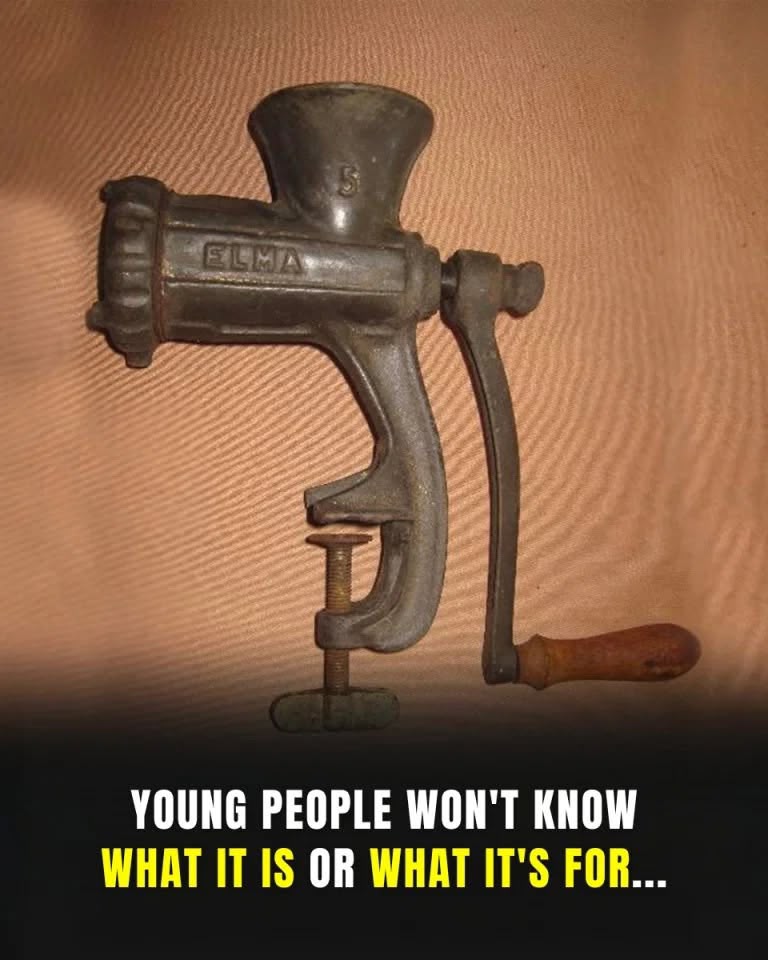
Nostalgic images of vintage kitchen tools frequently circulate across social media platforms, accompanied by playful claims like: “Young people won’t know what it is or what it’s for…”
The featured item in the image is a classic cast-iron manual meat grinder (or meat mincer), specifically manufactured by ELMA, a renowned brand famous for durable kitchenware. Before modern food processors and electric appliances filled home counters, these heavy-duty hand-cranked tools were an essential feature in homes worldwide. In this article, we explore how manual meat grinders work, their historical role in home cooking, and why vintage kitchenware remains popular today.
1. What Is It and How Does It Work?
A manual meat grinder is a mechanical tool designed to mince or grind meat, vegetables, nuts, and spices using manual leverage:
- Clamp Mount: The base features a heavy-duty screw clamp designed to secure the device tightly to the edge of a sturdy wooden kitchen table or countertop.
- Hopper and Feed Chute: Ingredients are placed into the top opening (the hopper) and fed down toward an internal auger or feed screw.
- Hand Crank and Cutting Blade: Turning the wooden handle rotates the internal auger, pushing food through a star-shaped rotating blade against a perforated extrusion plate (die).
- Customizable Discs: Users could swap out the front extrusion disc to achieve fine, medium, or coarse grinding depending on whether they were making sausages, burger patties, or pastes.
2. The History and Legacy of Vintage Kitchenware
During the late 19th and mid-20th centuries, brand manufacturers like ELMA made cast-iron tools built to last generations:
- Self-Reliance in Culinary Prep: Families bought whole cuts of meat or raised livestock, grinding their own ground beef, sausage meats, and spreads at home to ensure quality and stretch food budgets.
- Durability and Craftsmanship: Made from heavy cast iron or tin-coated iron, these manual appliances had virtually no breakable electronic components and could easily operate for decades with proper maintenance.
- Multi-Purpose Kitchen Workhorse: In addition to grinding meat, home cooks used these devices to crush tomatoes for sauces, grind nuts for baking, prepare stuffing, or make homemade baby food.
3. Why Vintage Manual Tools Are Making a Comeback
While modern electric food processors provide speed, manual vintage tools have seen a resurgence among culinary enthusiasts and homesteaders:
- Superior Texture and Control: Manual grinding prevents friction heat from melting animal fats during processing, resulting in a superior texture for gourmet burgers and sausages.
- Off-Grid Reliability: For off-grid living, camping, or emergency preparedness, non-electric tools offer uninterrupted kitchen utility.
- Sustainability and Zero Waste: Heavy vintage tools require no electricity and avoid the short lifespan associated with cheap plastic appliances.
4. Care and Maintenance for Cast-Iron Kitchenware
Restoring or maintaining an antique meat grinder requires straightforward care steps:
- Hand Washing Only: Wash all disassembled parts thoroughly by hand using warm, soapy water immediately after use.
- Thorough Drying: Dry components completely with a cloth or in a low-temperature oven to prevent surface rust on cast-iron parts.
- Food-Grade Mineral Oil: Coat iron blades and augers with a light layer of food-grade mineral oil before storage to protect metal surfaces against moisture.
Fascinating Facts About Vintage Kitchen Tools
- Invention of the Meat Grinder: The manual meat grinder was invented in the 19th century by Karl Drais, the same German inventor who created the earliest precursor to the bicycle!
- The Brand Name “ELMA”: ELMA is a classic European manufacturer renowned for producing cast-iron coffee grinders, grain mills, and food prep appliances.
- Sausage Stuffer Attachments: Many classic manual grinders included funnel attachments that allowed users to stuff natural sausage casings directly as meat was ground.
Frequently Asked Questions (FAQ)
What is the vintage tool in the photo?
It is a vintage manual cast-iron meat grinder (mincer) with a table clamp mount, used for grinding meats, vegetables, and spices by hand.
Is it hard to use a manual meat grinder?
Not at all. Chilling the meat thoroughly in the freezer for 20–30 minutes before grinding hardens the fat and muscle fibers, allowing the internal blade to slice smoothly with minimal physical effort.
Are vintage cast-iron meat grinders safe to use today?
Yes, provided they are thoroughly cleaned, free of rust, coated with food-grade oil, and verified to have food-safe plating (such as hot-dip tinning).
Conclusion
While modern electric gadgets have largely replaced manual appliances, classic cast-iron tools like the ELMA hand-crank meat grinder remain iconic symbols of durability and self-reliant home cooking. Recognizing these kitchen relics connects us to generations of culinary heritage and sustainable kitchen practices.
