
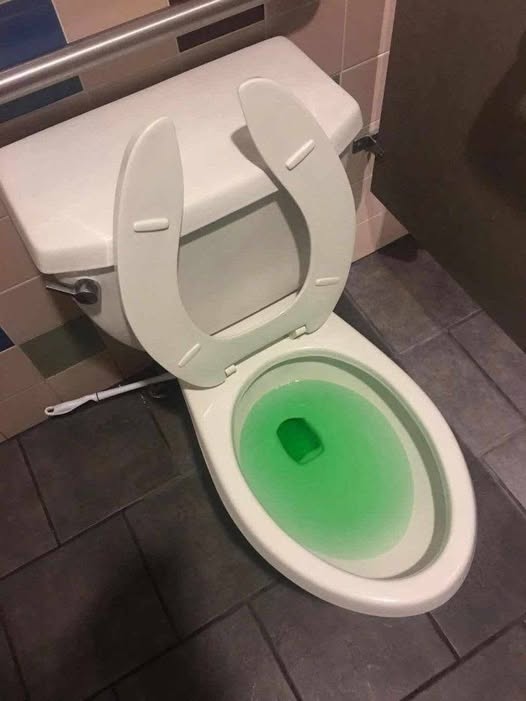
Walking into a restroom and lifting the toilet lid to reveal bright, neon-green water can be an alarming experience. Whether encountered in a commercial facility, a public restroom, or even a home bathroom, the sight of vibrant lime-green fluid standing in the bowl raises immediate questions. Is it a dangerous chemical spill? A viral prank? A specialized industrial cleaning agent? Or a sign of severe plumbing distress?
As captured in the viral image of a commercial toilet bowl filled with vivid green water, this visual phenomenon is far more common than most people realize. While your first instinct might be worry, the explanation behind neon-green toilet water is rooted in standard plumbing diagnostic procedures, specialized sanitation additives, and environmental tracing techniques.
Understanding why toilet water turns bright green, whether the chemicals involved are hazardous, and what steps facility managers or homeowners should take when encountering it can turn an unsettling surprise into an easy maintenance fix.
The Primary Causes of Bright Green Toilet Water
There are four main reasons why toilet water takes on a distinct bright green hue, ranging from deliberate plumbing diagnostic tests to continuous cleaning additives.
1. Water Tracing Dye (Plumbing Leak & Flow Testing)
By far the most common reason for vivid, neon-green water in a toilet is the use of fluorescent water tracing dye (typically fluorescein or similar non-toxic tracer compounds).
Plumbers, municipal engineers, and facility maintenance technicians routinely use these dyes to detect hidden leaks, trace pipe routes, and confirm proper drainage connections.
- How It Works: A tiny amount of concentrated powder or liquid dye is added to the toilet tank, drain line, or main plumbing stack. The dye dissolves rapidly, transforming clear water into an eye-catching, highly visible neon green or yellow-green color.
- Why It Is Used: If water is leaking through an unsealed toilet flapper, cracking through a waste pipe inside a wall, or seeping into the surrounding floor, the fluorescent green dye makes the exact location of the leak immediately obvious—even under UV or black light.
2. Automatic Toilet Cleaners and Deodorizers
In many commercial and residential restrooms, continuous-clean tablets or liquid drop-in dispensers are placed inside the toilet tank or hung along the inside rim of the bowl.
While many standard cleaners use blue dye (such as Ty-D-Bol), several brand-name and commercial cleaning products use green formulations that contain pine oil, surfactants, and green coloring. As the toilet sits unused between flushes, the cleaning chemicals dissolve into the bowl water, creating a deep emerald or bright green tint.
3. Backflow from Industrial Coolants or Anti-Freeze (Winterization)
In seasonal buildings, cabins, or facilities preparing for winter freeze conditions, maintenance staff often pour non-toxic propylene glycol (plumbing antifreeze) into toilets, sinks, and drains to prevent standing trap water from freezing and cracking the porcelain. Plumbing antifreeze is traditionally dyed bright neon green or pink so technicians can visually confirm that traps are properly protected.
In rare plumbing failures involving cross-connections or severe back-siphonage, industrial fluids or boiler water containing green anti-corrosion additives can occasionally migrate into freshwater supply lines, though backflow preventers are installed to stop this.
4. Excessive Algae or Bacterial Buildup
If a toilet is left unflushed for extended periods in a warm, sunlit environment (such as a bathroom with a large skylight or window), microscopic algae blooms can develop in standing bowl water. However, natural algae typically presents as a dull, cloudy, brownish-green or dark mossy color, rather than the vivid, glowing neon tone seen in diagnostic dye tests.
Water Tracing Dye vs. Chemical Cleaners: Comparison Chart
To quickly determine what caused the green water in a specific toilet, consult this diagnostic reference:
+-----------------------------------------------------------------------------------+
|                           GREEN WATER CAUSE IDENTIFICATION                        |
+-------------------+----------------------------+----------------------------------+
| Characteristic    | Water Tracing Dye          | Commercial Toilet Cleaner        |
+-------------------+----------------------------+----------------------------------+
| Color Intensity   | Bright Neon / Electric     | Emerald / Teal / Forest Green    |
| Odor              | Completely Odorless        | Strong Pine, Bleach, or Citrus   |
| Longevity         | Disappears in 1–3 Flushes  | Persists for Weeks               |
| Primary Purpose   | Leak Detection & Tracing   | Cleaning & Deodorizing           |
| Toxicity Level    | Non-Toxic & Biodegradable  | Mild Irritant (Do Not Ingest)    |
+-------------------+----------------------------+----------------------------------+
Is Bright Green Toilet Water Safe?
When encountering neon green water in a public or residential restroom, safety and health concerns are paramount.
Is Water Tracing Dye Toxic?
No. Standard plumbing tracer dyes used by professionals are non-toxic, biodegradable, and environmentally safe. They are specifically formulated to be harmless to human skin, sewage systems, septic tanks, and local waterways. Even if touched inadvertently, tracer dye washes off skin easily with warm soap and water.
Are Green Cleaning Tablets Safe?
Commercial cleaning tablets contain concentrated surfactants, detergents, and bleaching agents. While safe for normal toilet use:
- Skin & Eye Contact: Splashing colored water into the eyes or on bare skin can cause mild irritation.
- Ingestion Danger for Pets: Pets should never be allowed to drink from a toilet bowl containing green or blue chemical cleaning concentrates, as the chemical surfactants can cause severe gastroenteritis or toxic reactions.
What to Do If You Find Green Water in Your Toilet
If you walk into a bathroom and discover bright green toilet water, follow these recommended practical steps:
1. Perform the Flush Test
Flush the toilet once or twice while watching the water refill the bowl:
- If the water returns to crystal clear after one or two flushes, it was a temporary plumbing dye test or a concentrated drop-in cleaner that has flushed out.
- If the water refills with bright green fluid from the tank every time, there is an active cleaning tablet or dispenser located inside the toilet tank.
2. Inspect the Toilet Tank
Lift the porcelain tank lid carefully and check inside:
- Look for a dissolving green puck, a hanging fluid dispenser, or colored water inside the tank reservoir.
- Inspect for any signs of physical leaks around the flapper valve or fill tube.
3. Notify Maintenance (In Commercial Buildings)
If you encounter green water in an office building, hotel, or public facility and no warning sign is posted, notify the building manager or maintenance staff. They can confirm whether an active dye leak test or plumbing winterization procedure is currently underway.
Financial and Maintenance Insights for Property Owners
Understanding the tools used in commercial plumbing maintenance can save property owners substantial money on repair bills:
- Preventing Unseen Leak Expenses: A running toilet leaking water silently past a worn flapper valve can waste upwards of 200 gallons of water per day, adding hundreds of dollars to monthly municipal utility bills. Investing a few dollars in a pack of leak detection tracer tablets allows property managers to spot hidden flapper leaks instantly before water costs skyrocket.
- Protecting Plumbing Fixtures: Using quality non-acidic tracer dyes ensures that internal rubber seals, gaskets, and plastic flush mechanisms remain undamaged during diagnostic testing, avoiding premature component replacement.
Fascinating Facts About Water Dye and Plumbing
- Used in Caving and Geology: Hydrogeologists use the same fluorescent green tracer dyes (fluorescein) to map subterranean rivers, trace groundwater flow paths through karst cave systems, and locate underground spring sources across vast distances.
- High-Visibility Power: A single teaspoon of concentrated water-tracing dye powder can discolor thousands of gallons of water, making it visible to the human eye even at microscopic dilution ratios.
- UV Light Activation: Many modern tracing dyes glow intensely under ultraviolet (black) light, allowing plumbers to detect microscopic leaks behind drywall or under subflooring that would otherwise remain completely invisible to the naked eye.
Conclusion: Mystery Solved
While discovering bright green water in a toilet bowl can be startling at first glance, it is almost always the result of standard, harmless plumbing maintenance.
In the vast majority of cases, neon green water signifies an active leak detection dye test performed by plumbers to troubleshoot piping issues, or the presence of a heavy-duty commercial bowl cleaner working to keep the fixture sanitized.
By performing a simple flush test, inspecting the tank reservoir, and knowing the characteristics of non-toxic tracer dyes, you can navigate unexpected plumbing surprises with confidence and keep your home’s sanitation systems running smoothly.
Frequently Asked Questions
Q1: Will water tracing dye permanently stain my toilet bowl porcelain?
A1: No. Professional water tracing dyes are water-soluble and non-staining on non-porous surfaces like vitreous china porcelain. Standard flushing or light scrubbing with a toilet brush removes all traces of the dye instantly.
Q2: Why do plumbers use green dye instead of other colors?
A2: Bright neon green (fluorescein) offers the highest visual contrast against white porcelain, dark drains, and soil. It is also exceptionally responsive to ultraviolet (UV) light inspection compared to blue or red dyes.
Q3: Can I use food coloring to test my toilet for leaks at home?
A3: Yes! Placing 10 to 15 drops of dark food coloring (such as blue, red, or green) into your toilet tank is a popular DIY method to test for a leaking flapper valve. If colored water appears in the bowl after 15 minutes without flushing, your flapper needs replacement.
Q4: Is green toilet water a sign of toxic mold or bacteria?
A4: No. Mold and bacterial growth in toilets typically produce dark black, pink, or fuzzy slime rings along the waterline. Vivid neon green water is almost exclusively caused by added dyes or cleaning chemicals.
Q5: What should I do if my pet drinks water containing toilet cleaning chemicals?
A5: If a dog or cat drinks water containing commercial chemical cleaners, flush their mouth with fresh water immediately and contact a veterinarian or pet poison control helpline for guidance, as chemical surfactants can cause digestive irritation.
