
Refrigerators are designed to keep food fresh, but mixing leftover dishes, pungent cheeses, and fresh produce in a sealed environment often leads to excess moisture and lingering smells.
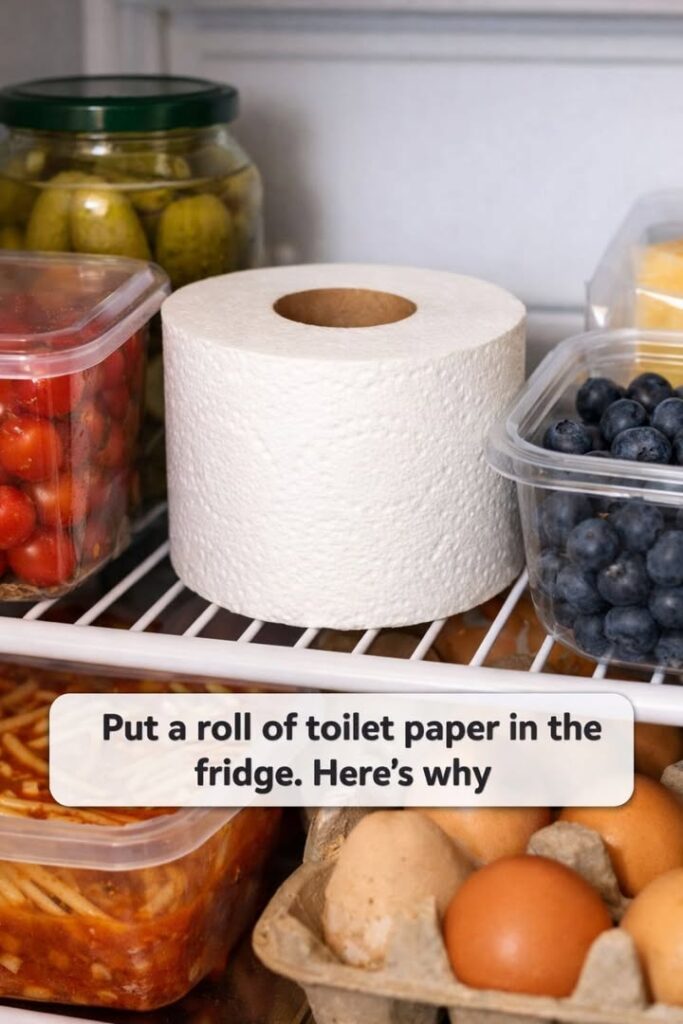
A viral social graphic showing a clean white toilet paper roll resting on a refrigerator shelf surrounded by fresh tomatoes, blueberries, and eggs features the caption: “Put a roll of toilet paper in the fridge. Here’s why.”
While using bathroom paper in the kitchen might seem bizarre at first, toilet paper is uniquely engineered to absorb moisture and trap airborne odor molecules, making it an effective DIY refrigerator freshener.
Here is a full breakdown of why this hack works, how to use it safely, and alternative long-term solutions for fridge moisture control.
How the Toilet Paper Fridge Hack Works
Toilet paper serves two key functional roles when placed in a cold, sealed environment:
+———————————————————————————–+
| TOILET PAPER FRIDGE HACK MECHANISM |
+——————-+—————————-+———————————-+
| Action | Physical Principle | Benefit for Produce & Fridge |
+——————-+—————————-+———————————-+
| Excess Moisture | Porous, highly absorbent | Reduces condensation that causes |
| Absorption | cellulose fibers | premature spoilage & mold growth |
| Odor & Volatile | Capillary action traps | Minimizes lingering food smells |
| Trapping | airborne moisture molecules| without heavy chemical scents |
+——————-+—————————-+———————————-+
- Absorbing Excess Humidity and Condensation
Refrigerators naturally accumulate humidity every time the door opens or warm food is placed inside. High humidity causes condensation droplets to settle on produce, accelerating mold growth and turning leafy greens slimy. Toilet paper consists of loosely woven cellulose fibers designed for maximum liquid absorption, drawing ambient moisture out of the air before it ruins your food. - Trapping Airborne Odors
Foul fridge smells are carried through water vapor suspended in cold air. As the toilet paper roll absorbs ambient humidity, it simultaneously traps airborne odor molecules within its porous layers, keeping smelly items like onions, garlic, or fish from saturating the entire fridge.
How to Apply the Hack Safely (Step-by-Step)
If you want to try this hack at home, follow these steps for optimal hygiene:
Use a Brand-New Roll: Always use a fresh, unused roll straight out of plastic packaging to ensure clean hygiene.
Optional Baking Soda Boost: Sprinkle a few tablespoons of pure baking soda into the hollow cardboard core or over the top of the roll to enhance its odor-neutralizing power.
Place in the Back: Position the roll near the back corner of a middle shelf where airflow circulates, away from raw meat or liquid spills.
Replace Monthly: Once the roll feels heavy or damp, discard it or use it for household spills—do not keep it in the fridge indefinitely.
Better Long-Term Alternatives for Fridge Odors
While toilet paper works in a pinch, these dedicated alternatives offer cleaner, more permanent moisture control:
Baking Soda Box: An open box of sodium bicarbonate chemically neutralizes acidic and basic smell molecules without taking up shelf space.
Activated Charcoal Bags: Reusable bamboo charcoal inserts absorb heavy humidity and organic odor molecules far more efficiently than paper products.
Paper Towels in Crisper Drawers: Lining produce drawers with a single layer of paper towels absorbs moisture directly underneath fruits and vegetables without cluttering main shelves.
Financial Impact: Extending Produce Shelf Life
Controlling humidity inside your refrigerator yields immediate financial savings:
Reducing Food Waste: Spoiled produce accounts for a significant portion of wasted household grocery budgets. Absorbing ambient condensation extends the fresh shelf life of berries, herbs, and greens by several days.
Energy Efficiency: Excess internal frost and heavy humidity force refrigerator compressors to work harder. Keeping air drier helps the appliance maintain stable cooling temperatures.
Fascinating Facts About Paper Fiber Absorbency
Engineered Capillary Action: Toilet paper is made using short hardwood and long softwood fibers processed to create millions of micro-gaps that pull liquid inward through capillary action.
Creping Process: During manufacturing, paper web is scraped off a drying cylinder with a blade (creping), creating tiny micro-folds that give toilet paper its soft, springy, and absorbent texture.
Conclusion: A Quick DIY Fix for Refrigerator Moisture
Placing a fresh roll of toilet paper in the fridge is a practical, low-cost trick to absorb excess moisture and suppress light food odors. While dedicated options like activated charcoal or baking soda remain superior long-term solutions, this simple paper hack works surprisingly well in an emergency.
Frequently Asked Questions
Q1: Is it hygienic to put toilet paper in the fridge?
A1: Yes, provided you use a brand-new, clean roll placed away from raw food or unsealed liquids.
Q2: How long can you leave a toilet paper roll in the fridge?
A2: Replace the roll every 3 to 4 weeks, or sooner if it becomes noticeably damp or absorbed significant odor.
Q3: Can you still use the toilet paper after removing it from the fridge?
A3: It is not recommended for personal hygiene due to absorbed moisture and food odors, but it can be used for garage cleanups or soaking up household spills.
Q4: Does paper towels work the same way as toilet paper in the fridge?
A4: Yes. Placing a roll or sheet layer of paper towels inside crisper drawers yields the exact same moisture-absorbing benefits.
Q5: What is the single best item to absorb fridge odors permanently?
A5: Activated charcoal (carbon) bags are considered the most effective reusable odor and moisture absorbers for appliances.
