
Picking a perfectly sweet, crisp, and juicy watermelon at the grocery store or farmers’ market often feels like a gamble. However, commercial growers and seasoned produce buyers rely on clear visual indicators to determine ripeness without cutting the fruit open.
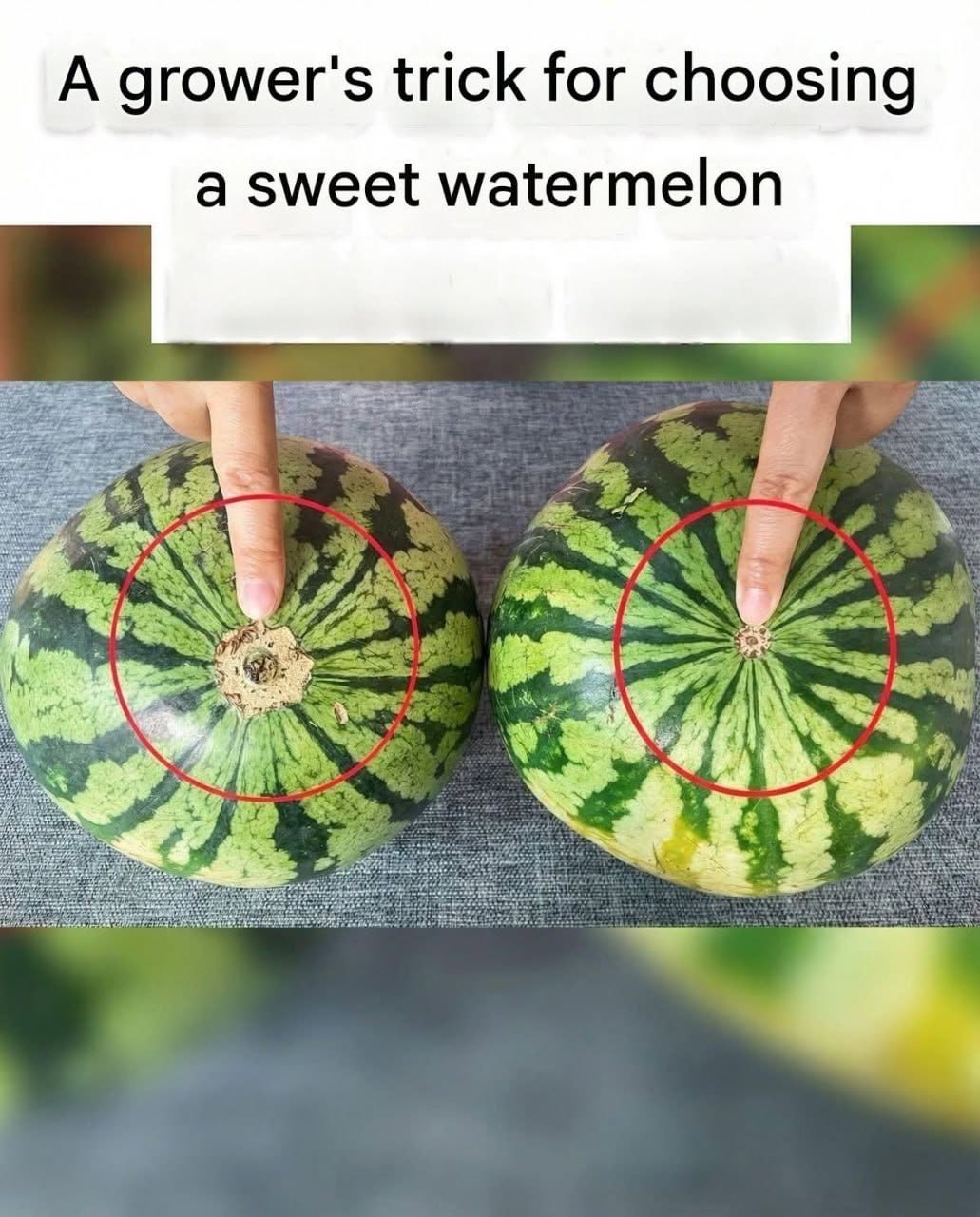
A viral social graphic titled “A grower’s trick for choosing a sweet watermelon” shows two green striped watermelons side by side. Red circles highlight the blossom end spot (navel) at the bottom of each melon: the left watermelon features a large, wide scarring circle, while the right watermelon shows a small, tight, compact blossom mark.
In grower folklore, a smaller, tighter blossom circle (shown on the right) indicates a fully matured melon that received optimal pollination, yielding sweeter, denser sugar content inside.
Here is a full breakdown of how to inspect the blossom end, additional proven grower tricks for picking ripe watermelons, and proper fruit storage tips.
Key Visual Signs of a Sweet Watermelon
+-----------------------------------------------------------------------------------+
|                        WATERMELON RIPENESS CHECKLIST                              |
+-------------------+----------------------------+----------------------------------+
| Visual / Physical | Ripe & Sweet Indicator     | Unripe / Flavorless Indicator    |
+-------------------+----------------------------+----------------------------------+
| Blossom End Spot  | Small, tight, clean circle | Large, wide, or rough corky spot |
| Field Spot        | Creamy buttery-yellow patch | Pale white or green-tinted belly |
| Webbing / Scars   | Brown sugar webbing lines  | Smooth, spotless green rind      |
| Weight & Sound    | Heavy for size; deep hollow| Light for size; high metallic    |
|                   | thud sound                 | ping sound                       |
+-------------------+----------------------------+----------------------------------+
1. The Small Blossom End Spot (The Navel Trick)
The blossom end spot at the bottom of the watermelon marks where the flower originally attached to the fruit.
- Small & Tight Circle: Experienced growers prefer watermelons with a small, neat blossom scar (as seen on the right melon in the image). A compact spot indicates uniform pollination and balanced fruit growth, which correlates with sweeter flesh and smaller core seed pockets.
- Large & Stretched Spot: A large, irregular scar often indicates uneven growth spurts, excess moisture during development, or thick rind walls.
2. The Creamy Yellow Field Spot
The field spot (or ground spot) is the patch where the watermelon rested on the soil while growing under the sun.
- Gold / Creamy Yellow: A deep creamy-yellow or butter-gold patch indicates the melon spent sufficient time maturing on the vine before harvest.
- White or Pale Green: A pale white or greenish field spot means the melon was picked prematurely and will lack sweet flavor.
3. Webbing and Sugar Scratches
Look for dry, brown, net-like webbing lines along the rind. These brown scars are caused by bees pollinating the flower during early development. The more webbing lines a melon has, the higher the sweetness level tends to be.
4. Weight and Sound Density
- Heavy for Its Size: A ripe watermelon consists of up to 92% water packed with dissolved natural sugars. Always compare two melons of similar size and choose the heavier one.
- The Sound Test: Give the melon a firm slap. A deep, hollow “thunk” indicates crisp, water-dense interior flesh, whereas a high-pitched “ping” suggests an under-ripe interior and a thick rind.
Financial Impact: Getting Maximum Value at the Produce Aisle
Selecting high-quality produce prevents food waste and stretches your grocery budget:
- Avoiding Wasted Whole Melons: Buying a single dull, tasteless watermelon wastes $5 to $10 per purchase. Learning simple visual inspection tricks guarantees high sugar quality every time.
- Better Value Than Pre-Cut Fruit: Pre-sliced watermelon containers cost significantly more per pound than whole melons. Buying a sweet whole melon offers maximum cost savings while staying fresh longer in the fridge.
Fascinating Facts About Watermelon Cultivation
- Non-Climacteric Fruit: Watermelons are non-climacteric, meaning they stop ripening and accumulating sugar the moment they are severed from the vine. Unlike bananas or avocados, a green watermelon will never get sweeter on your kitchen counter.
- Lycopene Powerhouse: Deep red watermelons contain higher concentrations of lycopene—a powerful antioxidant—than fresh tomatoes, delivering high nutritional value alongside natural hydration.
Conclusion: Inspect the Rind Before You Buy
Choosing a delicious, sweet watermelon comes down to checking key physical indicators. By picking melons with a small blossom end spot, a deep yellow field spot, prominent brown webbing, and a heavy weight, you ensure maximum sweetness and crisp texture with every slice.
Frequently Asked Questions
Q1: Does a watermelon keep ripening after it is picked?
A1: No. Watermelons do not gain additional sugar content after harvest. They only soften or spoil over time, so choosing a fully ripe melon in the store is critical.
Q2: What does a small circle on the bottom of a watermelon mean?
A2: A small, tight blossom end spot typically indicates steady fruit growth and uniform pollination, which growers associate with sweet, compact flesh.
Q3: What color should the field spot on a ripe watermelon be?
A3: The field spot should be a rich, creamy yellow or buttery gold color. Avoid melons with stark white or greenish ground patches.
Q4: Should a good watermelon be shiny or dull?
A4: A ripe watermelon should have a relatively dull green rind. A bright, shiny outer skin usually indicates an under-ripe melon harvested too early.
Q5: How should you store a whole uncut watermelon?
A5: Store whole uncut watermelons at room temperature out of direct sunlight for up to 1 to 2 weeks. Once sliced, cover tightly and refrigerate for up to 3 to 4 days.
