
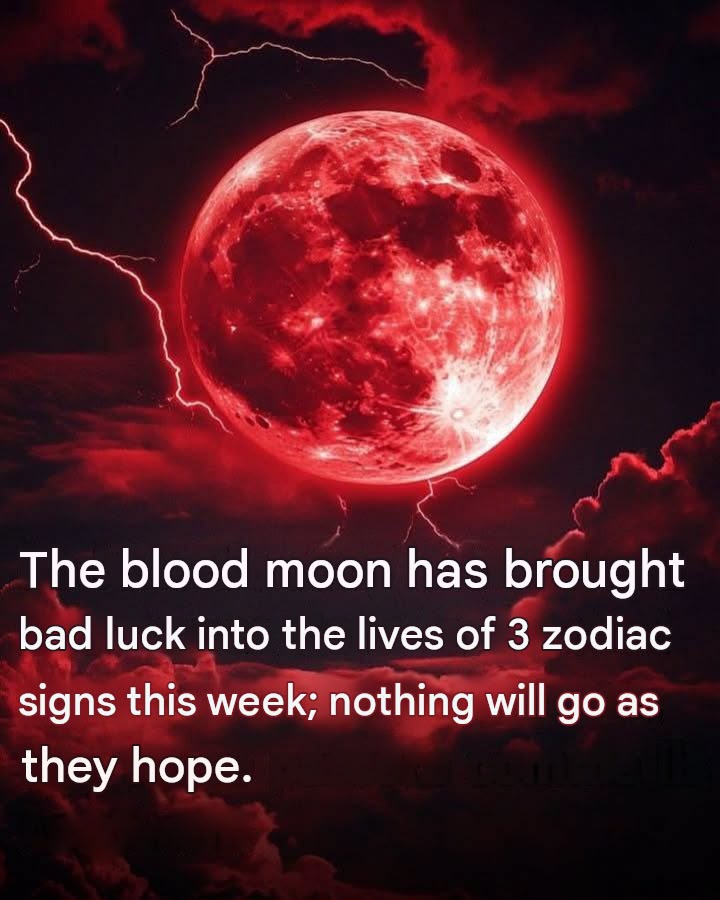
Astronomical events like total lunar eclipses—popularly known as “Blood Moons”—have captivated human imagination for millennia. Social media feeds regularly feature dramatic graphics showing glowing red moons and lightning strikes accompanied by text like: “The blood moon has brought bad luck into the lives of 3 zodiac signs this week; nothing will go as they hope.”
While dramatic posts online frame lunar phenomena as harbingers of hardship, both modern astronomy and contemporary astrology offer much more nuanced perspectives. In this comprehensive guide, we explore the scientific mechanics of a Blood Moon, its traditional and astrological symbolism, how to navigate periods of cosmic change, and practical mindfulness strategies for every zodiac sign.
1. What Is a “Blood Moon”? The Science Behind the Red Glow
A Blood Moon occurs during a total lunar eclipse, a precise celestial alignment involving the Sun, Earth, and Moon:
- Rayleigh Scattering: When the Earth passes directly between the Sun and the Moon, the Earth blocks direct sunlight from reaching the lunar surface. Sunlight passing through Earth’s atmosphere gets filtered; shorter blue wavelengths of light scatter outward, while longer red wavelengths refract inward toward the Moon, giving it a deep coppery-red hue.
- Atmospheric Quality Matters: The exact shade of red during a lunar eclipse depends on volcanic dust, smoke, and cloud cover in Earth’s atmosphere at the time of the event.
- Predictable Cycles: Lunar eclipses are completely natural, predictable scientific events that follow regular celestial patterns known as Saros cycles.
2. Astrological Meaning: Transition, Culmination, and Breakthroughs
In astrology, eclipses are viewed not as bringers of “bad luck,” but as powerful catalysts for growth, closure, and necessary change:
Key Astrological Themes of Eclipses:
- Culmination and Completion: Full moon eclipses mark the natural end of a cycle, encouraging individuals to release habits, relationships, or mindsets that no longer serve them.
- Uncovering Hidden Truths: Eclipses often illuminate unseen aspects of our lives, prompting sudden realizations or shift in perspective.
- Paving the Way for New Opportunities: While unexpected shifts can feel uncomfortable initially, astrologers emphasize that eclipses clear away obstacles to create space for fresh beginnings.
3. How Different Zodiac Sign Groups Navigate Lunar Energy
Astrological interpretations group zodiac signs by elements to explain how individuals process intense planetary transit periods:
- Fire Signs (Aries, Leo, Sagittarius): May experience heightened energy or sudden inspiration. The key is channeling enthusiasm into creative outlets rather than impulsive decisions.
- Earth Signs (Taurus, Virgo, Capricorn): Best served by focusing on grounding routines, financial planning, and stress reduction during periods of unexpected change.
- Air Signs (Gemini, Libra, Aquarius): Advised to practice active listening, clear communication, and avoiding mental overthinking during emotional full moon cycles.
- Water Signs (Cancer, Scorpio, Pisces): Naturally sensitive to lunar cycles, water signs benefit from mindfulness, journaling, and self-care practices.
4. Practical Mindset Strategies During Celestial Shifts
Regardless of your astrological beliefs, eclipse energy offers a great opportunity to practice personal reflection and wellness habits:
- Practice Mindful Reflection: Take time to journal about your goals, achievements, and personal development over the past six months.
- Avoid Impulsive Reactions: Give yourself 24 to 48 hours before making major life choices during high-stress weeks.
- Prioritize Stress Management: Engage in relaxing activities like meditation, gentle yoga, or nature walks to stay balanced.
Fascinating Facts About Eclipses and History
- Ancient Myths: Throughout history, ancient cultures interpreted lunar eclipses in unique ways—some saw the red moon as a mythic transformation, while others viewed it as a sign to perform rituals for protection.
- Christopher Columbus and the Eclipse: In 1504, Christopher Columbus famously used astronomical tables predicting a lunar eclipse to impress local leaders in Jamaica and secure provisions.
- Multiple Eclipses Every Year: Earth experiences between two to five lunar eclipses every year in various parts of the world, though total “Blood Moon” eclipses happen less frequently.
Frequently Asked Questions (FAQ)
Can a Blood Moon actually cause bad luck?
No. Scientifically, a Blood Moon is simply a total lunar eclipse caused by sunlight refracting through Earth’s atmosphere. In modern astrology, eclipses represent periods of realignment and transformation rather than bad luck.
How often do total lunar eclipses occur?
Total lunar eclipses occur roughly every 1.5 to 3 years visible from any given location on Earth, though partial and penumbral lunar eclipses happen more frequently.
Why does social media post dramatic horoscopes during eclipses?
Dramatic, fear-based headlines spark high emotional engagement—leading to more shares, comments, and views across social media algorithms.
Conclusion
Sensational viral headlines claiming a Blood Moon brings doom or bad luck rely on clickbait tactics to drive online engagement. By understanding the natural science behind total lunar eclipses and embracing eclipse energy as a time for personal reflection, you can navigate cosmic shifts with clarity, balance, and confidence.
