
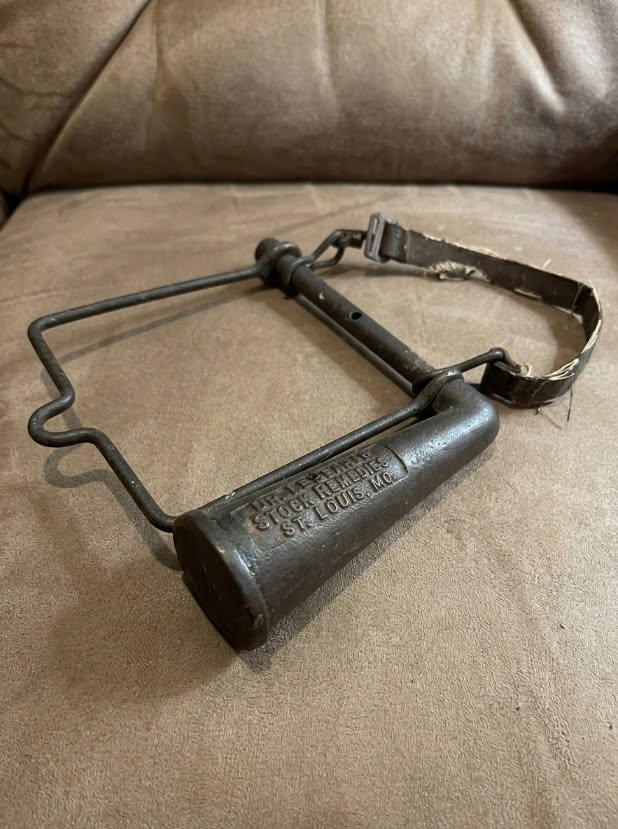
Featuring a heavy iron cylinder stamped with prominent embossing, a rectangular wire frame, and a worn leather headstrap, this tool is an early 20th-century equine mouth speculum (also known as a horse mouth gag or bit).
In this antique tool identification and agricultural history guide, we will examine the history of Dr. LeGear’s Stock Remedies, explain how this veterinary tool functioned on the farm, provide valuation tips for antique collectors, and answer frequently asked questions.
- What Is This Tool and How Did It Work?
This device is a horse mouth gag/speculum designed to safely hold a horse’s mouth open during veterinary procedures, dental floating, or oral medicine administration.
+————————–+——————————————————+
| Feature / Component | Historical & Practical Function |
+————————–+——————————————————+
| Embossed Cylinder | Cast-iron body stamped “Dr. LeGear’s Stock Remedies” |
| Leather Strap | Secures the device around the animal’s head/poll |
| Rectangular Wire Frame | Fits into the horse’s mouth to keep jaws separated |
| Manufacturer Location | St. Louis, Missouri, USA |
| Era of Manufacture | Late 19th Century to Early 20th Century (~1900–1930s)|
+————————–+——————————————————+
How the Speculum Was Used on Horses
Securing the Jaw: The metal bit/bar was placed into the horse’s mouth, sitting behind the incisors in the natural interdental space (the bars of the mouth).
Fixing the Headstrap: The leather strap was buckled over the ears and behind the head to hold the speculum securely in place so the animal could not shake it loose.
Veterinary Operations: Once locked open, veterinarians or livestock owners could safely inspect teeth (equine floating), treat mouth sores, or use a drenching gun/pill balling gun to deliver medicines without risk of being bitten.
- History of Dr. LeGear’s Stock Remedies
Dr. LeGear was one of America’s most recognizable early livestock medicine brands during the golden age of patent veterinary remedies.
+————————–+——————————————————+
| Company Milestone | Historical Context |
+————————–+——————————————————+
| Founder | Dr. L.D. LeGear (Graduate Veterinarian) |
| Core Products | Poultry powders, stock tonics, liniments, wormers |
| Headquarters | St. Louis, Missouri |
| Promotional Tools | Branded iron tools, farm thermometers, trade cards |
+————————–+——————————————————+
The Rise of Farm Patent Remedies
Self-Reliant Farming: In the late 1800s and early 1900s, rural farmers often lived far from certified veterinarians. Companies like Dr. LeGear’s produced ready-to-use tonics, powders, and specialty tools so farmers could treat their own horses, cows, and poultry.
Promotional Veterinary Gear: Dr. LeGear sold or distributed branded iron speculums, thermometers, and drenchers both as practical tools and as promotional advertising to encourage farmers to purchase their line of stock remedies.
- Antique Value & Collecting Tips
Early cast-iron veterinary tools have a strong niche market among farm tool collectors, equine enthusiasts, and advertising memorabilia buyers.
Collector Factors
Condition of Embossing: Clear, crisp raised lettering stating “Dr. LeGear’s Stock Remedies, St. Louis, MO” significantly boosts value compared to heavily rusted or pitted examples.
Original Leather Components: Having intact (even if aged) leather straps adds historical authenticity and display appeal.
Estimated Market Value: Antique Dr. LeGear horse speculums typically range in value from $40 to $120 USD, depending on metal preservation, patina, and overall completeness.
Conclusion: A Piece of Early American Veterinary History
This cast-iron Dr. LeGear mouth speculum stands as an intriguing artifact from the era when horse-drawn agriculture relied heavily on specialized veterinary tools and home-farm remedies.
Whether displayed in a barn restoration, antique collection, or veterinary clinic, it offers a tangible connection to early 20th-century farm life!
Practical Collector & Restoration Tips
Preserve Natural Patina: Avoid using harsh chemicals or wire wheels on vintage cast iron, as aggressive cleaning strips the desirable historic dark patina.
Condition Vintage Leather: Treat original leather straps gently with specialized leather conditioners or mink oil to prevent further dry rot and flaking.
Display Securely: Mount the speculum on a wooden shadowbox or plaque to showcase the embossed manufacturer markings clearly.
FAQ Section
Q: What was Dr. LeGear’s Stock Remedies famous for?
A: Dr. LeGear’s was a prominent 20th-century Missouri company that manufactured livestock medicines, poultry tonics, wormers, fly sprays, and specialized farm veterinary tools.
Q: Is a horse mouth speculum dangerous for the horse?
A: When used properly by experienced handlers, speculums prevent horses from biting down on glass or metal medical instruments and protect both the animal and the vet during procedures.
Q: How can you tell if a metal farm tool is cast iron or wrought iron?
A: Cast-iron tools like this speculum feature poured mold seams, heavy weight, and raised embossed lettering, whereas wrought iron is forged by hand and usually smooth or hammered.
