
Introduction
Quality sleep is essential for physical recovery, but poor sleeping posture can lead to chronic back pain, neck stiffness, and spinal misalignment. Many people wake up with aching joints simply because their spine collapses into an unnatural curve overnight.
By making simple adjustments to your pillow placement—such as supporting your neck properly, placing a pillow under your knees when sleeping on your back, or placing a pillow between your knees when side sleeping—you can maintain neutral spinal alignment throughout the night.
In this posture and ergonomic health guide, we will analyze correct vs. incorrect sleeping positions, explore how supportive pillows reduce lumbar strain, outline practical sleep habits, and answer frequently asked questions.
1. Ergonomic Sleeping Postures: Correct vs. Incorrect
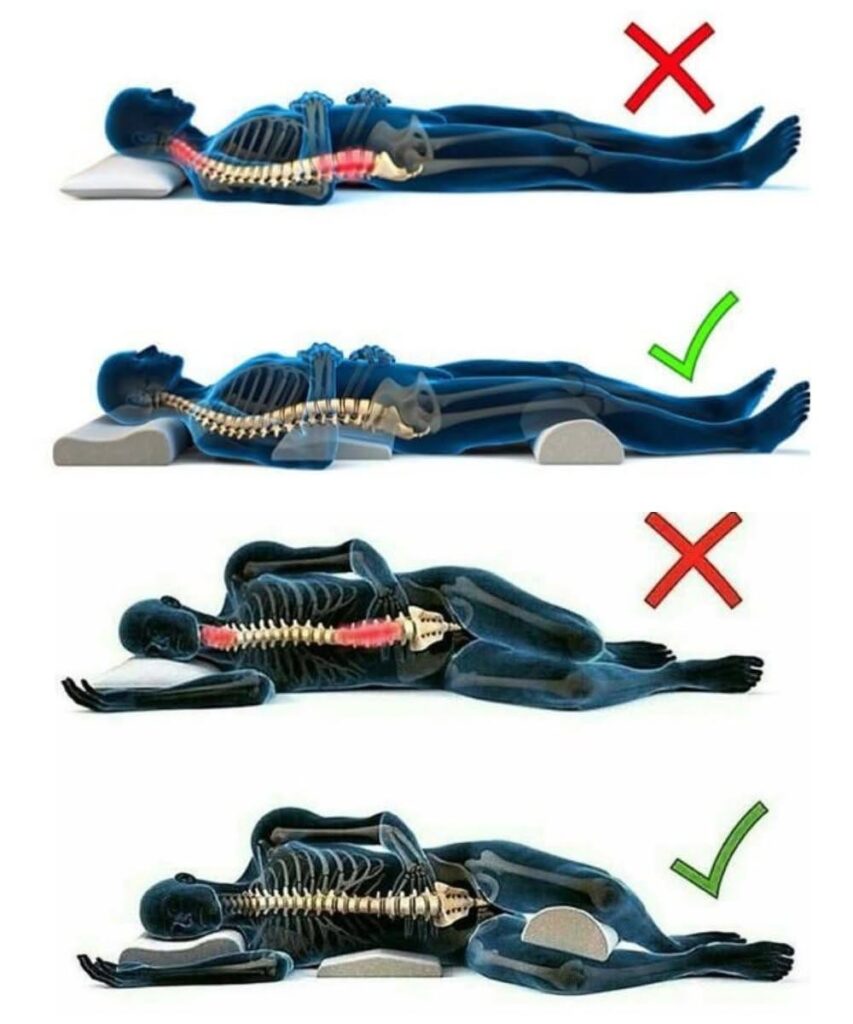
Proper pillow placement supports the natural curves of the spine and prevents unnatural twisting or sagging.
+--------------------------+------------------------------------------------------+
| Sleeping Position        | Correct Ergonomic Setup                              |
+--------------------------+------------------------------------------------------+
| Back Sleeping (Correct)  | Contour pillow under head/neck, bolster under knees,|
|                          | small lumbar cushion under lower back.               |
| Back Sleeping (Incorrect)| Flat or overly high head pillow, unsupported legs    |
|                          | causing lumbar hyperextension.                       |
| Side Sleeping (Correct)  | Firm head pillow matching shoulder height, bolster  |
|                          | between knees, small cushion under waist curve.     |
| Side Sleeping (Incorrect)| Unsupported top leg dropping forward, twisting the   |
|                          | pelvis and lower spine.                              |
+--------------------------+------------------------------------------------------+
Why Proper Pillow Placement Matters
- Back Sleeping Alignment: Sleeping flat on your back without leg support can flatten or hyperextend the natural lumbar curve. Placing a pillow under your knees flattens the lower back comfortably against the mattress, relaxing the hip flexors and easing lower back tension.
- Side Sleeping Alignment: When sleeping on your side, your top leg naturally drops forward, pulling your pelvis out of alignment and twisting your lumbar spine. Placing a pillow between your knees keeps hips, pelvis, and spine parallel.
- Cervical Neck Support: A contour pillow fills the gap between your neck and the mattress, keeping your cervical spine aligned with your torso rather than bending your neck upward or downward.
2. Common Causes of Sleep-Related Back Pain
Understanding how poor sleep alignment impacts muscle and joint mechanics helps prevent long-term discomfort.
+--------------------------+------------------------------------------------------+
| Postural Error           | Impact on Spine & Muscles                            |
+--------------------------+------------------------------------------------------+
| Unsupported Lumbar Curve | Creates constant muscular tension in lower back.     |
| Pelvic Rotation (Side)   | Strains sacroiliac (SI) joints and lower spinal discs.|
| Improper Head Height     | Causes neck muscle strain and tension headaches.     |
+--------------------------+------------------------------------------------------+
3. Practical Steps for Better Spinal Ergonomics
Optimizing your sleeping environment takes only a few minor adjustments to your bed setup.
Ergonomic Sleep Tips
- Choose the Right Head Pillow: Select a pillow height that keeps your head in line with your sternum—neither tilted too high nor dipping too low.
- Use a Knee Pillow for Side Sleeping: Place a firm pillow between your knees and ankles to prevent hip rotation and reduce friction between knee joints.
- Add Lumbar or Knee Support for Back Sleeping: Place a small bolster or rolled towel under your knees and lower back curve to maintain neutral posture.
- Evaluate Mattress Firmness: A medium-firm mattress generally provides the best balance of spinal support and pressure relief for side and back sleepers.
Conclusion: Restoring Your Spine While You Sleep
Small adjustments to your sleeping posture can yield significant benefits for back and neck health. By supporting your head, waist, and knees with proper pillow placement, you allow your spinal muscles to fully relax and recover overnight.
Improve your sleep quality and wake up pain-free with smart spinal ergonomics!
Practical Sleep Hygiene & Ergonomic Tips
- Avoid Stomach Sleeping: Sleeping on your stomach forces your neck to rotate sideways for extended periods, straining cervical vertebrae and flattening the lower back curve.
- Replace Worn-Out Pillows: Soft, flattened pillows fail to support the weight of your head or legs; replace sleeping pillows every 1 to 2 years.
- Stretch Before Bed: Gentle hip-opener and lower back stretches before sleep help relax tight muscles and ease transition into neutral alignment.
FAQ Section
Q: Why does placing a pillow under your knees help lower back pain?
A: Raising your knees slightly tilts your pelvis backward, reducing strain on the hip flexors and flattening the lower spine against the mattress to relieve pressure.
Q: What is the best pillow height for side sleepers?
A: Side sleepers need a pillow thick enough to fill the entire gap between the ear and the shoulder, keeping the neck parallel to the mattress surface.
Q: Is it better to sleep on your side or back for back pain?
A: Both back sleeping (with a pillow under the knees) and side sleeping (with a pillow between the legs) are recommended by ergonomists for maintaining neutral spinal alignment.
