
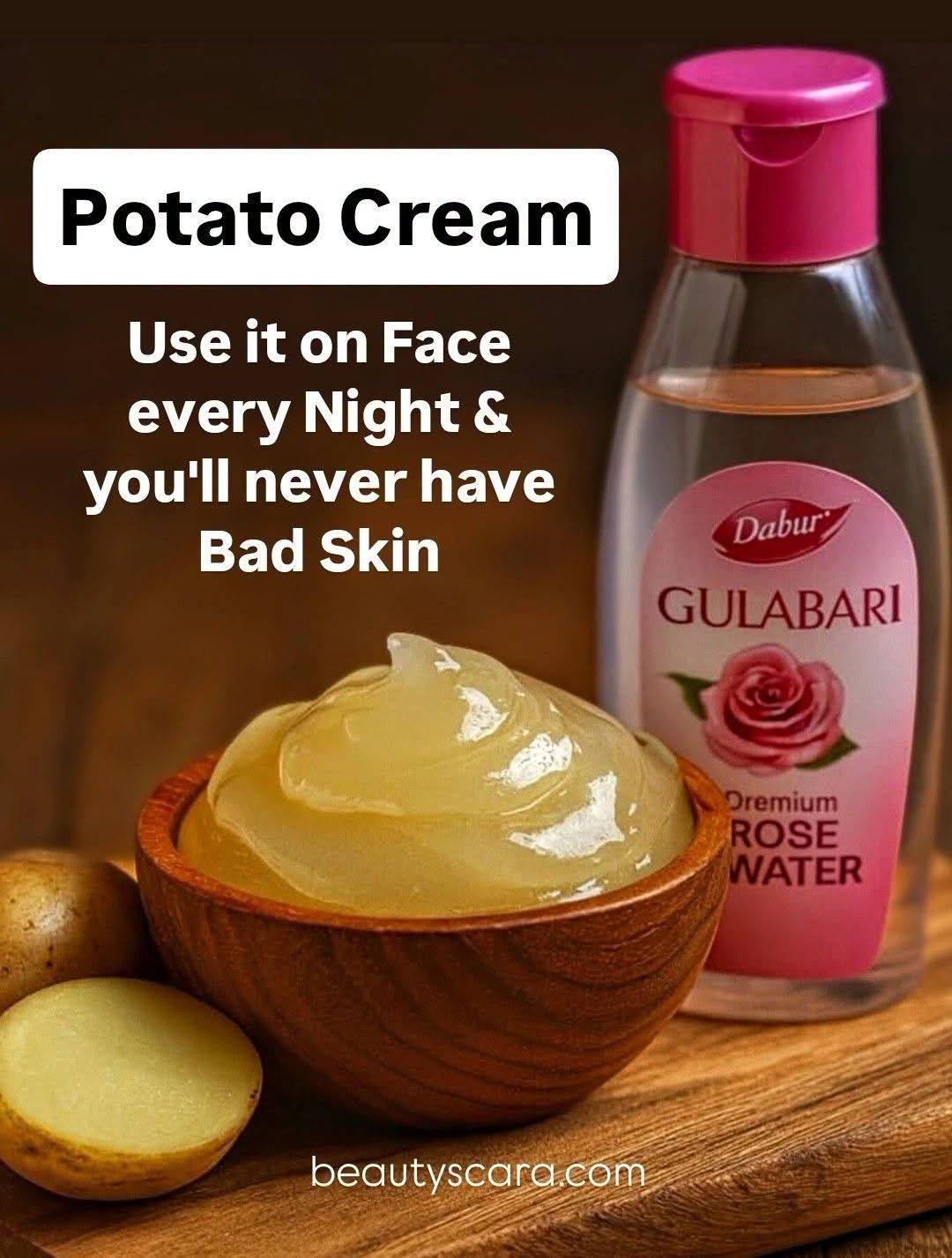
Natural DIY skincare remedies have experienced a massive surge in popularity across social media platforms. Among the countless homemade creams, serums, and masks gaining attention online, potato-based skincare remedies—often combined with rose water or aloe vera gel—frequently go viral for their reported ability to brighten complexion, reduce hyperpigmentation, and calm irritated skin.
While bold claims suggesting that a single ingredient can completely eliminate “bad skin” overnight oversimplify dermatologist-backed skincare science, raw potatoes and natural rose water do contain nutrient-dense compounds that offer genuine topical benefits. This comprehensive guide breaks down the biological science of raw potato juice, explores how rose water supports skin health, provides a safe step-by-step preparation recipe, and highlights important dermatological precautions.
The Science of Potato Juice in Skincare
To understand why raw potatoes (Solanum tuberosum) are commonly utilized in traditional home remedies, it helps to examine their natural chemical and micronutrient composition.
                   [ Skin-Nourishing Components of Potato Juice ]
                                         |
     +-----------------------------------+-----------------------------------+
     |                                   |                                   |
[ Catecholase Enzyme ]               [ Vitamin C (Ascorbic Acid) ]        [ Natural Starch & B-Complex ]
  - Natural Skin-Lightening Effect     - Powerful Antioxidant               - Absorbs Excess Sebum
  - Fades Dark Spots & Blemishes       - Supports Collagen Production       - Soothes Inflammatory Irritation
1. Catecholase Enzyme
Raw potatoes contain a naturally occurring enzyme called catecholase. In holistic skin care, catecholase is widely recognized for its mild skin-brightening properties. Regular application helps lighten hyperpigmentation, reduce dark circles under the eyes, and even out sunspots or acne marks over time.
2. L-Ascorbic Acid (Vitamin C)
Potatoes are a rich source of Vitamin C, an essential antioxidant in dermatological care. Vitamin C protects skin cells against free radical damage caused by ultraviolet (UV) radiation and environmental pollution, while simultaneously encouraging healthy collagen synthesis to support firm, smooth skin texture.
3. Starches and B-Complex Vitamins
Potato starch possesses natural astringent and anti-inflammatory characteristics. Applied topically, it helps absorb excess facial oil, calms redness, and provides temporary relief from mild skin irritation or sunburns. Meanwhile, B-vitamins like Niacin (Vitamin B3) support skin barrier protection and cellular renewal.
The Role of Rose Water in Topical Skincare
The addition of rose water (Rosa damascena) elevates DIY creams by introducing hydration, pH balance, and soothing botanical compounds.
- pH Balance Restoration: Natural rose water possesses a mild pH level that closely mirrors human skin’s natural acidic mantle ($4.5 \text{ to } 5.5$), helping maintain healthy skin flora and barrier function.
- Anti-Inflammatory Properties: Rich in polyphenols and flavonoids, rose water effectively calms redness, reduces puffiness, and soothes sensitive or reactive skin types.
- Natural Hydration: Rose distillate acts as a lightweight hydrator, making thick starch-based creams easier to smooth across the face without clogging pores.
Step-by-Step DIY Potato Cream Recipe
If you enjoy creating fresh, natural skincare treatments at home, follow this easy, hygienic method to prepare a smooth, nourishing potato face cream.
Ingredients & Tools Needed
- 1 medium organic raw potato (peeled and washed)
- 2–3 tablespoons of pure Rose Water (such as Dabur Gulabari or organic rose hydrosol)
- 2 tablespoons of 100% pure Aloe Vera Gel (acts as a natural emulsifier and preservative base)
- Fine grater or high-speed blender
- Clean cheesecloth or fine mesh strainer
- Small sterilized glass jar with lid
Preparation Instructions
- Extract the Juice: Fine-grate the clean, peeled raw potato. Transfer the grated potato into a cheesecloth and squeeze firmly over a bowl to extract pure, pulp-free raw potato juice.
- Settle the Starch: Allow the juice to sit undisturbed in the bowl for 5 to 10 minutes. A thick layer of white natural potato starch will settle at the bottom of the container. Carefully pour off the clear liquid on top, leaving the rich concentrated starch paste at the bottom.
- Blend the Cream Base: In a small mixing bowl, combine 2 tablespoons of the concentrated potato juice/starch mixture with 2 tablespoons of pure aloe vera gel and 2 tablespoons of rose water.
- Whip to Smooth Consistency: Whisk vigorously until the ingredients emulsify into a lightweight, gel-cream texture.
- Storage: Transfer the cream into a clean, sterilized glass jar. Refrigerate immediately.
Storage Notice: Because this homemade formulation contains fresh raw potato juice without synthetic preservatives, it must be stored in the refrigerator and used within 4 to 5 days to prevent bacterial contamination.
How to Apply DIY Potato Cream Safely
Integrating DIY creams into your evening skincare routine requires proper application techniques to prevent unexpected skin reactions:
- Perform a Patch Test First: Before applying any DIY concoction to your face, apply a small drop of the cream to the inner wrist or side of your neck. Wait 24 hours. If itching, redness, or irritation occurs, wash it off and discontinue use.
- Cleanse Thoroughly: Wash your face with a mild cleanser and pat dry before application.
- Evening Application: Apply a thin, even layer across your face and neck. Gently massage in upward circular motions.
- Rinse Option: If the natural starch creates a tight or dry film on your skin as it dries, leave the cream on for 20 to 30 minutes, then rinse off with lukewarm water before applying your standard night moisturizer.
Skincare Reality Check: Home Remedies vs. Dermatological Care
While natural potato cream provides temporary hydration, soothing benefits, and mild brightening support, it is important to maintain realistic expectations regarding home remedies:
| Expected Benefit | DIY Potato Cream | Medical-Grade Skincare (Retinoids, Vitamin C Serums) |
| Primary Mechanism | Mild natural enzymes & starches | Clinically tested active molecules at precise concentrations |
| Dark Spot Reduction | Subtle, gradual improvement with consistent use | Targeted inhibition of melanin production (e.g., Hydroquinone, Azelaic Acid) |
| Preservative Stability | Requires refrigeration; spoils in 4–5 days | Formulated with stable preservatives; lasts 6–12 months |
| Allergy Risk | Low, but raw plant enzymes can cause contact dermatitis | Dermatologist-tested to minimize allergic reaction risks |
Frequently Asked Questions (FAQ)
Can I leave raw potato cream on my face overnight?
If your skin tolerates raw potato without irritation, leaving a thin layer mixed with aloe vera and rose water overnight is generally safe. However, if you experience tightness or itching due to drying starch, rinse it off after 20 minutes and follow up with a gentle moisturizer.
How long does it take to see results from potato skin treatments?
Because natural enzyme concentrations in raw vegetables are low, noticeable improvements in skin brightness or dark spot reduction typically require 3 to 4 weeks of consistent, multi-weekly application alongside daily sunscreen use.
Does potato cream cure severe acne or cystic breakouts?
No. Potato cream helps soothe mild redness and absorb excess oil, but it does not contain antibacterial agents strong enough to cure hormonal or cystic acne. Severe acne conditions require evaluation by a board-certified dermatologist.
Final Thoughts
Making your own DIY potato cream with rose water and aloe vera is a fun, budget-friendly way to incorporate natural antioxidants and soothing botanical compounds into your self-care routine. By practicing proper hygiene, storing the fresh mix in the refrigerator, and performing a patch test before use, you can safely enjoy the refreshing and skin-brightening benefits of this popular holistic beauty remedy.
