
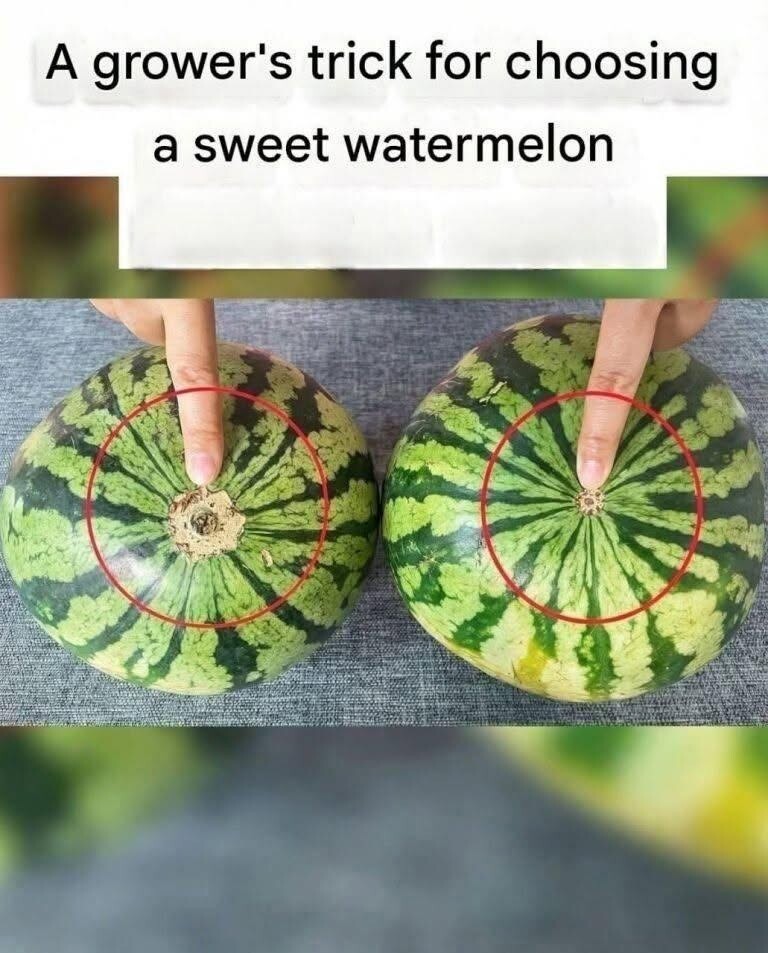
Nothing says summer quite like slicing into a fresh, juicy, perfectly sweet watermelon. However, standing in the grocery store or at a local farmers market in front of a giant bin of watermelons can feel like a high-stakes guessing game. There is nothing more disappointing than cutting into a melon at home only to find pale, dry, or tasteless flesh.
While many shoppers rely on traditional methods like knocking on the rind or checking the field spot, fruit growers and produce experts rely on subtle visual cues—like the size of the bottom navel, webbing patterns, and overall shape—to consistently pick the sweetest melons. In this comprehensive guide, we will break down the visual belly trick shown above, explore all major ripeness indicators, and share expert tips for storing and serving your melon for maximum flavor.
The Grower’s Secret: Looking at the Bottom “Navel” (Blossom End)
One of the most reliable yet overlooked visual tricks used by experienced melon growers involves turning the watermelon over and inspecting the blossom end—often referred to as the “navel” or belly circle.
Large vs. Small Navel Circles
When examining the bottom of a watermelon where the flower originally blossomed, you will notice a small circular mark surrounded by radiating stripe lines:
- Large, Wide Navel Circle (Left): A larger, wider circle at the bottom indicates that the melon matured fully on the vine, developed high natural sugar concentrations, and reached full ripeness before harvesting.
- Tiny, Tight Navel Circle (Right): A very small, tight, or pinpoint circle often indicates a melon that was picked too early or did not fully mature on the vine, resulting in a firm but less sweet, watery interior.
By simply comparing two melons side-by-side and selecting the one with the broader, more developed blossom circle, you immediately boost your chances of getting a sweet, flavorful fruit.
5 Essential Visual Checks for Choosing a Perfect Watermelon
To guarantee you pick a winner every single time, combine the bottom navel test with these five proven grower checks:
| Ripeness Indicator | What to Look For | What to Avoid | Why It Matters |
| Field Spot (Ground Spot) | Creamy, buttery yellow or golden patch | Pale white, greenish, or non-existent spot | Indicates where the melon rested on the ground to ripen |
| Sugar Webbing (Brown Spots) | Brown, net-like webbing or scars | Completely smooth, unblemished skin | Shows bee pollination frequency during flowering |
| Rind Finish | Dull, matte outer skin | Shiny, glossy outer rind | Dull skin means full maturity; shiny means under-ripe |
| Weight to Size Ratio | Heavy for its size | Light or hollow-feeling melon | High water content and density mean maximum juice |
| Melon Shape | Uniform, symmetrical oval or sphere | Irregular bumps, dents, or flat sides | Inconsistent watering/growth leads to uneven sweetness |
Step-by-Step Guide to Buying the Best Watermelon
Follow these simple steps next time you visit the grocery store or produce market:
+-------------------------------------------------------------------+
|                        PRO BUYER TRICK                            |
| Look for a creamy yellow field spot AND brown sugar webbing!      |
| A melon with both features will almost always be exceptionally    |
| sweet and juicy.                                                  |
+-------------------------------------------------------------------+
Step 1: Check the Weight First
Pick up two watermelons of roughly the same physical size and compare their weight. Choose the one that feels distinctly heavier. High weight indicates high water volume and dense, juicy interior flesh.
Step 2: Find the Golden Field Spot
Flip the melon over and inspect the spot where it sat on the soil while growing:
- A creamy, buttery yellow field spot means it spent plenty of time ripening naturally on the vine.
- A bright white or pale green spot means it was harvested prematurely.
Step 3: Inspect the Blossom End (The Navel Test)
Examine the small circle at the very bottom of the melon. Choose the melon with the wider, more pronounced circular mark and well-spaced, radiating stripe patterns.
Step 4: Look for Sugar Webbing
Don’t be afraid of brown, scratch-like webbing or sugar spots on the skin! These brown net-like patterns are left behind when bees pollinate the flower during early growth. More pollination directly correlates to higher sugar content inside the fruit.
Step 5: The Knock Test (Acoustic Check)
Give the center of the melon a firm tap with your knuckles:
- A deep, hollow, reverberating sound indicates a ripe, crisp interior full of water.
- A dull, flat thud means the melon is overripe or mushy.
- A high-pitched ping means the melon is under-ripe and tough.
How Proper Nutrition and Farming Impact Fruit Quality
High-quality produce doesn’t happen by chance; it requires expert agricultural practices, proper irrigation, and healthy soil management. Understanding the food supply chain highlights why quality sourcing matters across various lifestyle areas:
- Health & Wellness Benefits: Watermelons are rich in lycopene, vitamin C, potassium, and amino acids like L-citrulline. Incorporating nutrient-rich, hydrating fruits into your diet supports long-term cardiovascular health and lowers overall health and medical costs.
- Agricultural Investment: Modern farming techniques, soil testing, and sustainable irrigation systems require significant capital investment by commercial growers to produce high-yield, sweet crops.
- Consumer Budget Smartness: Wasting money on inedible, bland produce adds up over time. Learning practical food selection skills keeps your grocery budget efficient, allowing you to route extra savings into long-term wealth building like a retirement fund, mortgage payoff, or education plan.
Fascinating Facts About Watermelons
- Both a Fruit and a Vegetable: Watermelon belongs to the Cucurbitaceae plant family, making it botanically related to cucumbers, pumpkins, and squashes!
- Every Part is Edible: While most people only eat the sweet red or pink flesh, the green rind can be pickled, stir-fried, or juiced, and the black seeds are rich in protein, magnesium, and healthy fats when roasted.
- Extreme Hydration: Watermelons are composed of approximately 92% water, making them one of the most effective natural hydrating foods on the planet.
Proper Storage Tips for Maximum Sweetness and Shelf Life
Once you bring home your perfect watermelon, store it properly to preserve its fresh taste and crisp texture:
- Whole Uncut Melons: Keep whole watermelons at room temperature out of direct sunlight for up to 7 to 10 days. Avoid chilling whole melons in the fridge for extended periods, as temperatures below 50°F (10°C) can cause chill damage and flavor loss.
- Cut Watermelons: Once sliced, wrap exposed edges tightly in plastic wrap or store cut chunks in airtight glass containers. Keep refrigerated and consume within 3 to 4 days.
- Freezing for Smoothies: Cube leftover melon and freeze it on a baking sheet before transferring to freezer bags. Frozen watermelon cubes make fantastic bases for summer smoothies or frozen slushies.
Conclusion
Picking a sweet, juicy watermelon doesn’t have to be a guessing game. By turning the melon over to inspect the blossom end, checking for a creamy yellow field spot, looking for brown sugar webbing, and tapping for a hollow sound, you can easily pick the sweetest fruit in the bin. Apply these simple grower tricks on your next grocery run and enjoy perfect watermelon slices all season long!
Frequently Asked Questions (FAQ)
What makes a watermelon sweet?
A watermelon’s sweetness depends on the amount of sunshine it receives, proper pollination by bees, balanced soil nutrients, and letting the fruit ripen fully on the vine before harvesting. Watermelons do not continue to ripen or gain sweetness after being cut from the vine.
Should I pick a round or elongated watermelon?
Round watermelons (often called “female” melons by growers) tend to be sweeter and richer in flavor, while longer, oval-shaped “male” watermelons are often more watery and less sweet.
Are seedless watermelons naturally grown?
Yes! Seedless watermelons are created through natural hybridization by crossing a diploid watermelon (with two sets of chromosomes) with a tetraploid watermelon (with four sets). The resulting triploid seed produces sterile fruit with soft, translucent seed coats.
What causes a watermelon to taste mushy inside?
A mushy or mealy texture occurs when a watermelon becomes overripe on the vine or is stored for too long at high temperatures after harvesting, causing the cellular structure of the flesh to break down.
Why is my watermelon white on the inside?
White flesh inside a standard red watermelon usually indicates severe under-ripeness caused by early harvesting or insufficient sunlight during the growing period. However, some heirloom watermelon varieties are naturally bred to have white, yellow, or orange flesh!