
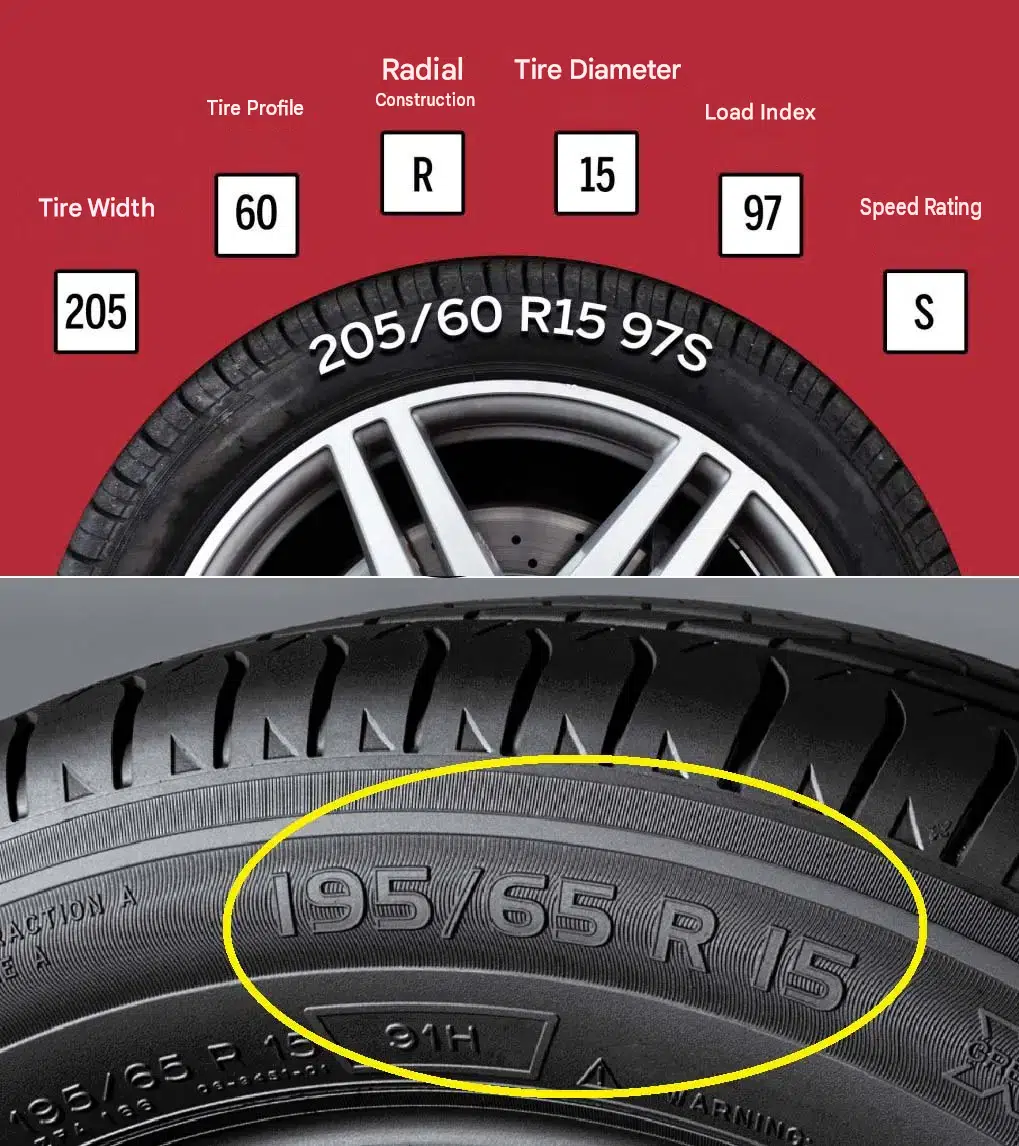
For most vehicle owners, tires are viewed simply as black rubber rings that keep a car moving. However, printed along the sidewall of every tire is a complex code of numbers, letters, and symbols that contains crucial information regarding safety, performance, and efficiency. Understanding how to read tire markings—such as tire width, profile, radial construction, rim diameter, load index, and speed rating—can significantly impact your driving experience, vehicle handling, and wallet.
Choosing the right tire specifications directly influences rolling resistance, which plays a major role in fuel efficiency. By learning to decode these sidewall numbers and selecting eco-friendly low-rolling-resistance options, drivers can cut fuel expenses, maximize safety, and optimize overall vehicle maintenance costs.
Decoding the Sidewall: What Tire Numbers Actually Mean
Reading a tire code like 205/60 R15 97S or 195/65 R15 may seem confusing at first, but each segment represents a standardized measurement.
1. Tire Width (e.g., 205 or 195)
- Measurement in Millimeters: The first three-digit number indicates the tire width in millimeters from sidewall to sidewall. A tire labeled “205” is 205 millimeters wide across its tread surface.
- Impact on Fuel Economy: Narrower tires (such as 195 mm vs. 205 mm) create a smaller contact patch with the road. This reduction in surface friction decreases rolling resistance, directly improving fuel efficiency and reducing gas consumption.
2. Aspect Ratio / Profile (e.g., 60 or 65)
- Percentage Comparison: The two-digit number following the slash represents the aspect ratio, or profile height, expressed as a percentage of the tire’s width. In a 205/60 specification, the sidewall height is 60% of the 205 mm width.
- Ride Comfort vs. Handling: Higher profile tires (like 65) provide extra rubber cushioning for a smoother ride over bumps, while lower profile tires (like 50 or 55) offer stiffer sidewalls for sharper cornering and high-speed stability.
3. Construction Type (e.g., R)
- Radial Construction: The letter “R” stands for Radial construction, which is the universal standard for modern passenger vehicles. Radial tires feature internal ply cords arranged perpendicularly to the direction of travel, providing flexibility, heat resistance, and long tread life.
4. Wheel Diameter (e.g., 15)
- Sizing in Inches: The two-digit number following the construction letter indicates the wheel rim diameter in inches. An “R15” designation means the tire is engineered specifically to fit a 15-inch wheel rim.
5. Load Index and Speed Rating (e.g., 97S or 91H)
- Load Index (e.g., 97 or 91): This numerical code corresponds to the maximum weight capacity a tire can safely support when inflated to its recommended pressure.
- Speed Rating (e.g., S, H, V): The final letter designates the maximum safe speed capability under full load conditions. For example, “S” indicates a maximum speed rating of 112 mph (180 km/h), while “H” ratings accommodate up to 130 mph (210 km/h).
Fuel-Saving Technology: How Low-Rolling-Resistance Tires Work
Rising fuel prices and environmental concerns have driven tire manufacturers to engineer specialized “green” or fuel-efficient tires.
1. The Physics of Rolling Resistance
Every time a tire rotates, it undergoes continuous deformation as it hits the road surface, absorbing and losing energy in the form of heat.
- Reducing Energy Loss: Low-rolling-resistance tires utilize advanced synthetic rubber compounds (often infused with silica) and optimized tread patterns to minimize energy loss.
- Measurable Fuel Savings: Switching to fuel-efficient tire specifications can improve fuel economy by up to 3% to 5%, resulting in substantial long-term savings at the gas pump over the lifespan of the tires.
Financial, Insurance, and Legal Considerations for Vehicle Owners
Tire maintenance and correct specification selection directly intersect with financial budgeting, automotive insurance policies, and legal driving standards.
Ensuring Safety and Insurance Compliance
- Insurance Claim Integrity: Driving on tires that do not meet your vehicle manufacturer’s specified load index or speed rating can compromise road safety and potentially complicate auto insurance claims following an accident.
- Preventing Unexpected Expenses: Proper inflation, routine tire rotations, and wheel alignments prevent premature tread wear, protecting your financial investment and extending tire replacement intervals.
- Auto Loans and Vehicle Resale Value: Vehicles equipped with well-maintained, brand-matched, fuel-efficient tires retain higher resale value and reduce general operating costs during finance terms.
Practical Maintenance Tips to Maximize Tire Life and Efficiency
Maintaining proper tire health ensures maximum safety and optimal fuel economy:
- Check Inflation Pressures Monthly: Under-inflated tires increase rolling resistance significantly, causing higher fuel consumption and accelerated outer tread wear.
- Rotate Tires Every 5,000 to 7,500 Miles: Even out tread wear across front and rear axles to maximize overall tire lifespan.
- Inspect Tread Depth Regularly: Use the penny test or build-in tread wear indicator bars to ensure tires meet safe driving depth requirements (at least 2/32 of an inch).
- Maintain Proper Wheel Alignment: Misaligned wheels cause uneven dragging, which consumes excess fuel and ruins tire tread rapidly.
- Match Specifications Across Axles: Always install tires with identical dimensions, load indices, and speed ratings on the same axle to maintain balanced vehicle handling.
Fascinating Insights into Automotive Tire Engineering
- The World’s Largest Tire Manufacturer: LEGO holds the world record for manufacturing the highest number of individual tires per year, producing over 300 million mini rubber tires annually!
- Natural Rubber Content: Although modern tires contain sophisticated synthetic polymers and steel belts, natural rubber harvested from rubber trees remains a critical component for flexibility and durability.
- Eco-Friendly Composites: Modern manufacturers are testing sustainable tire materials made from dandelion rubber, orange oil, and recycled plant fibers to reduce environmental footprints without sacrificing traction.
Driving Smarter for Efficiency and Safety
Understanding the numbers on your tire sidewalls converts routine vehicle maintenance into an empowered cost-saving strategy. By selecting tires with optimal widths, proper aspect ratios, and fuel-efficient rubber compounds, you enhance road safety, extend vehicle performance, and save money every time you fill up your tank.
Frequently Asked Questions (FAQ)
Can I install a narrower tire on my car to save fuel?
Yes, as long as the replacement tire size falls within the acceptable tolerance range specified in your vehicle owner’s manual. Installing an approved narrower tire reduces rolling resistance and improves gas mileage.
What happens if I use tires with a lower load index than recommended?
Using a lower load index can overload the tire, leading to excessive heat buildup, accelerated wear, poor vehicle stability, and an increased risk of tire blowout.
How much fuel can I really save with low-rolling-resistance tires?
On average, high-efficiency tires reduce rolling resistance enough to improve overall fuel economy by 3% to 5%, which translates to hundreds of dollars saved over the life of the tire set.
What does the “R” mean in 205/60 R15?
The “R” stands for Radial construction, indicating that the internal ply cords run radially across the tire rather than diagonally.
