
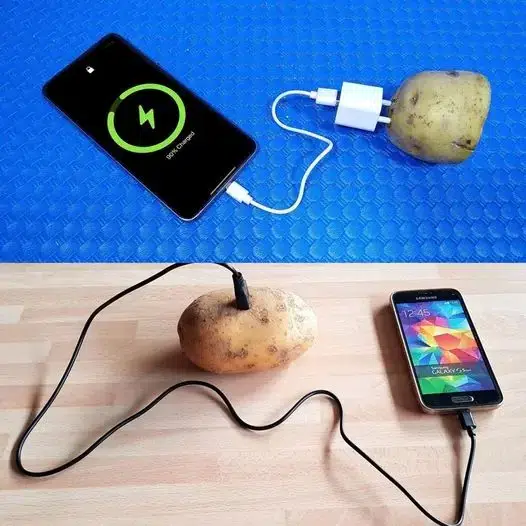
The intersection of science, everyday household items, and alternative energy experiments has always fascinated curious minds of all ages. From classic elementary school science fairs to viral internet demonstrations, the concept of using a humble potato to generate electricity is a widely recognized phenomenon. Images and videos showing a potato connected to mobile devices or lighting fixtures often spark wonder and skepticism alike.
Can a single potato actually power a lamp for days, or charge a modern smartphone? Exploring the electrochemistry behind fruit and vegetable batteries reveals the fascinating scientific principles at play, separating viral myths from genuine scientific reality while examining how alternative energy concepts apply to broader technological innovations.
The Electrochemical Principles Behind Potato Power
To understand how a potato can generate an electrical current, it is necessary to examine basic electrochemistry and how galvanic cells operate.
1. How a Potato Battery Works
A potato itself is not a power source; rather, it acts as an electrolyte solution that facilitates the chemical reaction between two different metal electrodes.
- Dissimilar Metals: A typical potato battery setup requires two different metals, such as a galvanized zinc nail and a copper penny or wire.
- The Electrolyte Solution: The phosphoric acid, water, and salts contained within the potato’s cellular structure allow ions to flow freely between the two metal electrodes.
- Electron Transfer: Oxidation-reduction (redox) reactions occur as zinc atoms lose electrons, which travel through an external wire to the copper electrode, generating a small electric current.
2. Voltage and Power Limitations
While a potato cell successfully generates voltage, its electrical output is extremely limited.
- Low Voltage Output: A single potato typically produces roughly 0.5 to 1 volt of electricity with very low amperage.
- Insufficient Power for Smartphones: Modern smartphones require specific voltage and current thresholds (typically 5 volts and an amp or more) regulated through charging circuits, making it physically impossible for a raw potato to charge a phone battery as depicted in viral stunts.
- LED Illumination: While a single potato cannot run high-draw appliances, multiple interconnected potato cells can produce enough current to illuminate a small, low-voltage LED bulb for a limited duration.
Exploring Alternative Energy, Technology, and Innovation
While powering a home or charging devices with kitchen vegetables is practically unviable, the underlying principles of chemical energy conversion drive massive global industries.
1. Battery Technology and Energy Storage
- Advanced Chemical Cells: Modern lithium-ion, solid-state, and flow batteries utilize sophisticated electrolyte solutions and advanced materials to store and deliver high-density electrical power.
- Sustainable Power Solutions: Engineers and researchers continually investigate organic compounds, bio-batteries, and renewable materials to develop eco-friendly energy storage alternatives.
- Economic Investments: Global financial markets invest heavily in energy infrastructure, renewable technology research, and smart grid systems to meet rising electricity demands efficiently.
Practical Tips for Safe Science Experiments and Education
Conducting potato battery experiments at home is a fantastic educational activity for children and students when approached correctly:
- Use Safe Materials: Standard copper pennies and zinc-coated nails or strips work effectively and safely for educational demonstrations.
- Connect in Series: To increase voltage output, link multiple potatoes together by connecting the copper electrode of one potato to the zinc electrode of the next.
- Monitor Component Wear: Clean the metal electrodes regularly to remove oxidation buildup, which can impede electrical conductivity.
- Supervise Children: Ensure younger participants wash their hands after handling experimental hardware and untreated produce.
Fascinating Insights into Bio-Electrochemistry
- The Potato’s Secret Ingredient: Research has shown that boiling a potato before inserting the electrodes can break down internal cell membranes, reducing internal resistance and significantly increasing the electrical output of the cell.
- Historical Origins: The principles behind fruit and vegetable batteries date back to Alessandro Volta’s invention of the voltaic pile in the early 19th century.
- Alternative Organic Batteries: Scientists have successfully powered small sensors using lemons, apples, and even mud, demonstrating that chemical energy is widely accessible in organic matter.
Bridging Curiosity and Scientific Literacy
The viral imagery surrounding potato-powered devices highlights our ongoing fascination with alternative energy and ingenious hacks. While a single potato cannot sustain household lighting for weeks or charge modern mobile devices independently, these classic experiments serve as a gateway to understanding electrochemistry, physics, and the continuous evolution of power generation technology.
Frequently Asked Questions (FAQ)
Can a potato actually charge a mobile phone?
No. While a potato generates a minuscule electrical current through chemical reactions, it lacks the voltage and amperage required to power or charge a smartphone’s internal battery. Viral videos demonstrating this are typically staged or digitally edited.
How long can a potato power an LED light?
A series of interconnected potato cells can illuminate a small, low-power LED light for a few hours, but the potato will eventually dry out, and the chemical reaction will cease as the zinc electrode corrodes.
Why does boiling the potato help generate more electricity?
Boiling disrupts the cellular walls of the potato, reducing internal electrical resistance and allowing ions to move more freely between the copper and zinc electrodes.
Are potato batteries dangerous?
No. Potato batteries produce extremely low voltages and safe, negligible currents, making them completely safe for classroom science projects and children’s experiments.
