
Encounters with wildlife can happen unexpectedly while hiking through wooded trails, gardening in the backyard, or exploring rural environments. Among the most startling wildlife encounters is running into a snake. While the vast majority of snake species are shy, non-venomous, and prefer to slither away from humans, encountering any snake—especially if a bite occurs—instantly triggers intense panic and fear.
For generations, popular folklore has taught people various ways to identify venomous versus non-venomous snake bites based on bite patterns, head shapes, or slit pupils. However, relying on myths can be dangerous in an emergency. Knowing how to recognize true medical symptoms, understanding what first steps to take immediately following a snakebite, and learning how emergency medical care and health insurance intersect can save lives.
In this comprehensive guide, we will explore the reality of snakebite identification, examine the essential first aid steps you must take immediately after a bite, discuss medical treatment protocols, and provide practical tips for staying safe outdoors.
The Myth vs. Reality of Snakebite Identification
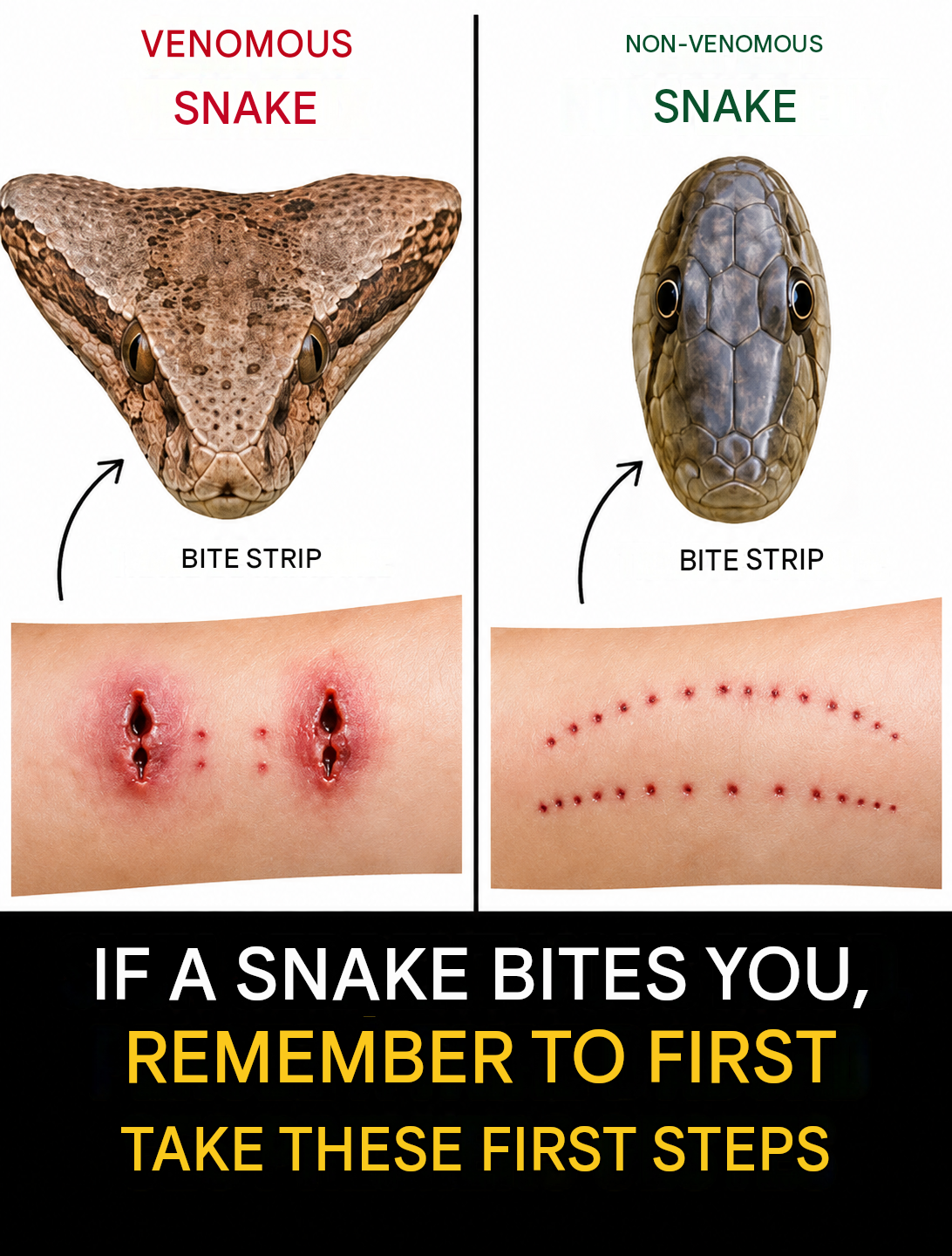
The image circulating online often points to distinct physical differences—such as triangular heads or specific puncture wounds versus rows of teeth marks. While these generalizations are sometimes taught, herpetologists and emergency medical physicians warn that they are unreliable in the wild.
Why Visual Identification Can Be Misleading
- Head Shape Variation: Many non-venomous snakes (such as water snakes) can flatten their heads into a triangular shape when threatened to mimic vipers. Conversely, some venomous snakes have slender heads.
- Bite Mark Variability: The pattern left on human skin depends heavily on the angle of the strike, the species of snake, whether it struck a clothing layer, and whether it delivered a warning “dry bite” (where no venom is injected) versus a defensive envenomation.
Immediate First Steps: What to Do If Bitten by a Snake
If you or someone near you is bitten by a snake, remaining calm is the single most important factor. Panic increases heart rate and blood circulation, which causes venom to spread through the bloodstream much faster. Follow these crucial first steps immediately:
1. Move to a Safe Distance Safely
Step back immediately to get away from the snake and prevent a secondary strike. Never attempt to capture, corner, or kill the snake, as most bites occur when people try to handle or attack the reptile.
2. Keep the Victim Calm and Still
Have the victim sit or lie down with the affected bite area positioned at or slightly below heart level. Restricts movement as much as possible to slow down potential venom circulation.
3. Remove Tight Clothing and Jewelry
Remove rings, watches, bracelets, or tight shoes near the bite area immediately. If swelling begins, restrictive jewelry and tight garments can act like a tourniquet and cause severe tissue damage.
4. Clean the Wound Gently
Wash the bite area gently with clean soap and water if available, and cover it loosely with a clean, dry dressing.
+------------------------------------+---------------------------------------+
| Essential Snakebite First Step     | What to Avoid / Never Do              |
+------------------------------------+---------------------------------------+
| Move away from the snake safely    | Do NOT try to catch or kill the snake |
| Keep victim calm and still         | Do NOT panic or run around            |
| Remove tight rings and watches     | Do NOT apply a tight tourniquet       |
| Seek emergency medical help ASAP   | Do NOT cut the wound or try to suck venom|
+------------------------------------+---------------------------------------+
Dangerous First Aid Myths: What NOT to Do
Over decades, Hollywood movies and outdated survival myths have popularized harmful first aid techniques that can cause more harm than good. Never attempt the following:
- Do Not Apply a Tourniquet: Restricting arterial blood flow entirely can cause severe tissue necrosis and lead to the amputation of a limb.
- Do Not Cut the Wound: Making incisions across the bite marks does not remove venom; instead, it damages nerves, blood vessels, and tendons while introducing severe bacterial infection risks.
- Do Not Attempt Oral Suction: Trying to suck venom out with your mouth or commercial suction devices is ineffective and introduces oral bacteria directly into the wound.
- Do Not Apply Ice or Cold Packs: Extreme cold causes vasoconstriction and tissue damage, worsening local injury.
- Do Not Consume Alcohol or Caffeine: Drinking alcohol or stimulants dilates blood vessels and accelerates venom absorption throughout the body.
Emergency Medical Treatment and Antivenom
If you suspect a venomous snakebite, time is of the essence. Transport the victim to the nearest emergency medical facility immediately, or call emergency services (such as 911).
Medical Evaluation
Emergency physicians will monitor vital signs, perform blood clotting and laboratory tests, and observe the patient for systemic symptoms (such as swelling, numbness, nausea, difficulty breathing, or localized tissue changes).
Antivenom Therapy
If envenomation is confirmed, hospital specialists administer antivenom—a specialized biological product derived from antibodies that neutralizes snake venom proteins, halting further tissue damage and systemic complications.
Health Insurance, Emergency Care, and Financial Preparedness
Emergency medical treatments, ambulance transport, and antivenom administration can involve substantial healthcare costs. Understanding your coverage is an essential component of financial planning.
1. Emergency Medical Coverage
Review your health insurance policy to ensure you understand emergency room copays, ambulance transport benefits, and out-of-network hospital coverage. Knowing your policy details provides peace of mind during unexpected medical crises.
2. Utilizing Health Savings Accounts (HSAs)
Using tax-advantaged health savings accounts (HSAs) or flexible spending accounts (FSAs) helps cover qualified medical expenses, emergency deductibles, and out-of-pocket healthcare costs efficiently.
Practical Tips for Preventing Snakebites Outdoors
Prevention is always the best defense when exploring natural habitats. Protect yourself and your family with these practical safety guidelines:
Wear Sturdy Footwear and Long Pants
When walking through tall grass, brush, or rocky terrain, always wear thick leather boots that cover your ankles and durable long pants.
Watch Where You Step and Place Your Hands
Never step blindly over fallen logs, boulders, or dense brush. Use a walking stick to rustle ahead of you, and look closely before placing your hands on rocks or tree branches.
Keep Campsites Clear
Keep your campsite or yard free of tall weeds, woodpiles, and debris piles where rodents—the primary prey for snakes—tend to nest, which in turn attracts snakes.
Fascinating Facts About Snakes and Venoms
- The Purpose of Venom: Snake venom is not a defensive weapon; it is primarily a specialized, fast-acting digestive cocktail used to immobilize and digest prey.
- Dry Bites: Pit vipers and other venomous snakes can consciously control the amount of venom they inject, delivering “dry bites” (warnings without venom) in up to 25% to 50% of defensive strikes.
- Global Diversity: There are over 3,000 known snake species worldwide, inhabiting every continent except Antarctica, though only a fraction possess venom medically significant to humans.
Frequently Asked Questions (FAQ)
Can you tell if a snake is venomous just by looking at its head shape?
No. While many vipers have broad, triangular heads, many non-venomous snakes can flatten their heads when threatened. Visual identification in the wild is unreliable and dangerous.
What is the very first thing you should do if bitten by a snake?
Move away from the snake to a safe distance, remain as calm and still as possible to slow your heart rate, remove restrictive jewelry, and seek emergency medical care immediately.
Should I try to kill or catch the snake to show the doctor?
No. Never attempt to catch or kill the snake. Modern emergency physicians do not need to see the snake to treat a bite successfully; antivenom is selected based on clinical symptoms and regional species distribution.
Are all snakebites venomous?
No. Many defensive strikes are “dry bites” where the snake injects little to no venom. However, every snakebite should always be treated as a medical emergency until evaluated by a doctor.
Does sucking out venom with a mouth or pump work?
No. Medical studies have proven that oral suction and commercial extraction pumps do not remove venom and instead cause additional tissue trauma and infection risks.
Conclusion
Encountering a snake and experiencing a bite is a frightening ordeal, but knowing the correct first steps can make all the difference. By staying calm, avoiding dangerous folklore myths, removing restrictive clothing, and getting to an emergency medical facility promptly, you ensure the best possible medical outcome.
Stay safe, respect wildlife from a distance, and combine outdoor adventures with smart, prepared habits!
