
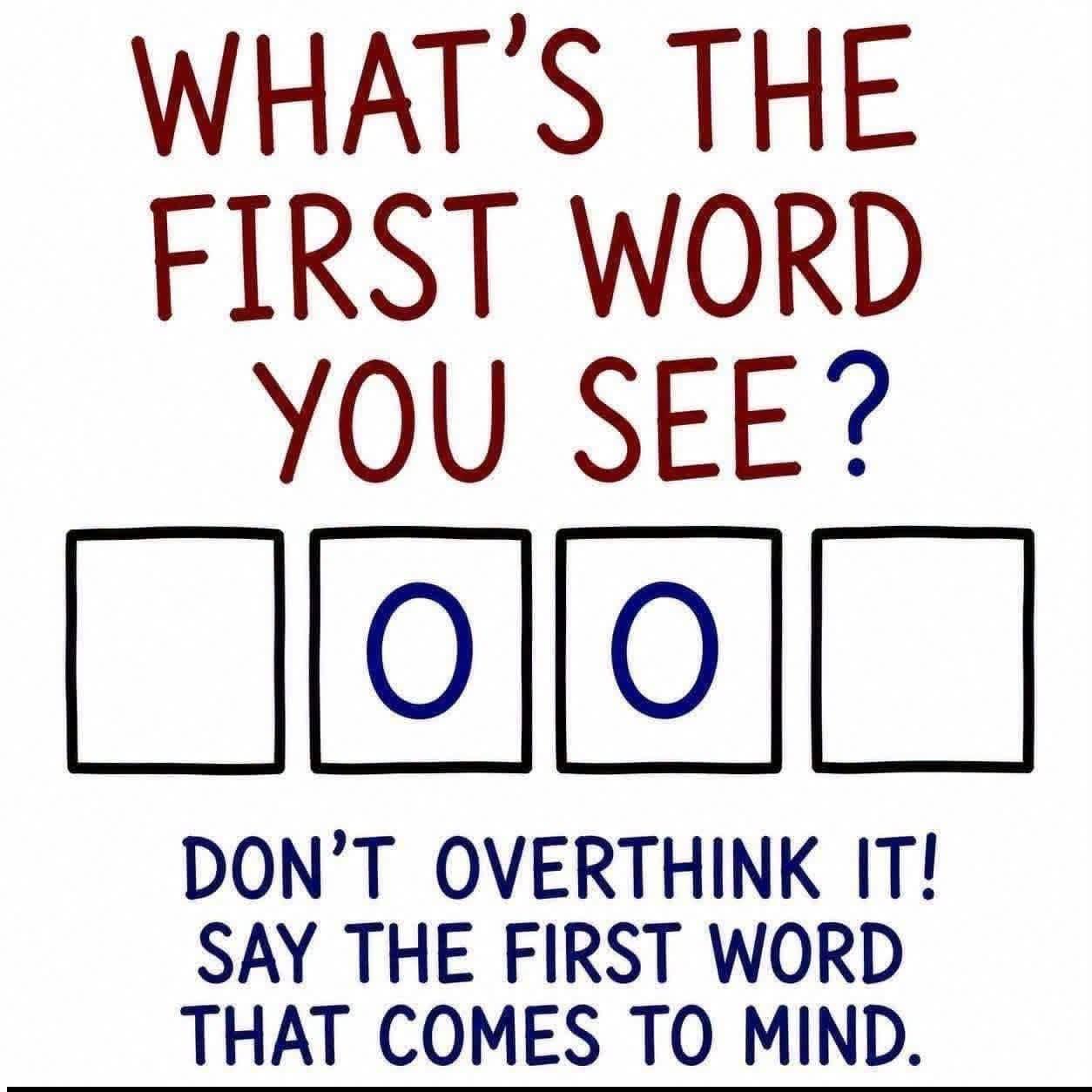
Visual puzzles and psychological perception tests have a unique way of captivating social media audiences, sparking instant curiosity, and driving active comment sections. When an online graphic asks, “What’s the first word you see? Don’t overthink it! Say the first word that comes to mind.” alongside a puzzle box layout featuring two center letters, it immediately hooks users into testing their quick-wit and pattern recognition. Let’s explore how the human brain processes visual cues, why perception tests are so popular online, and how quick psychological games keep us entertained.
Decoding Visual Perception and Word Recognition
When we look at incomplete words, letters in boxes, or ambiguous visual patterns, our brains naturally rely on heuristic processing to fill in the gaps instantly.
- Pattern Completion: The human mind is hardwired to recognize familiar words and shapes rapidly, often completing a word before we consciously analyze every individual letter.
- The Role of Intuition: Quick-response tests bypass slow, analytical thinking, relying instead on immediate subconscious associations and language habits.
- Individual Variation: Depending on your vocabulary, daily focus, and visual scanning habits, different people will naturally spot different words first.
Why Visual Puzzles Go Viral
Social media platforms thrive on content that requires minimal effort yet triggers a strong personal response. Perception tests succeed because:
- The Personal Connection: Everyone loves discovering what their immediate reaction might “say” about them or how their brain works compared to their friends.
- High Comment Rates: Asking users to drop their first answer in the comments creates a massive wave of engagement and friendly debate.
- Instant Gratification: Solving a quick visual puzzle takes only a second, delivering immediate satisfaction to the reader.
Digital Marketing and Content Strategy
For publishers and web creators, engagement-driven visual posts serve as an effective mechanism for capturing audience attention. By presenting a compelling question on social media, creators guide users to click through to an external website to read the full breakdown, explore alternative answers, and check out similar brain teasers. This steady inflow of social traffic supports online monetization models like Google AdSense, helping publishers sustain their digital presence.
Practical Tips for Keeping Your Mind Agile
While engaging with lighthearted internet puzzles is primarily for fun, keeping your brain sharp and your cognitive processing flexible brings wonderful benefits:
- Embrace Curiosity: Regularly challenging your brain with word games, puzzles, and new concepts helps maintain strong neural pathways.
- Pause and Reflect: While quick intuition is fun for games, taking a moment to slow down in daily life helps prevent rushed judgments.
- Prioritize Rest: Quality sleep and proper mental downtime are essential for optimal focus, memory retention, and cognitive well-being.
Conclusion: The Fun of Instant Perception Tests
Perception games like “What’s the first word you see?” offer a delightful mental break from the daily routine. Whether your mind instantly jumped to one word or spotted something completely different, these playful brain teasers highlight just how uniquely each of us perceives the world around us.
FAQ Section
Q: What is the main purpose of “first word you see” perception posts? A: They are designed to spark instant curiosity, encourage quick participation, and drive high user engagement in the comments.
Q: Why do different people see different words first?
A: Individual vocabulary, scanning habits, and subconscious pattern recognition lead people to notice different words or completions immediately.
Q: Do visual perception tests reveal hidden personality traits?
A: While they are entertaining and fun to share, viral tests are primarily crafted for social media engagement rather than formal psychological evaluation.
Q: Why do brain teasers generate so much traffic for websites? A: By prompting curiosity on social media platforms, they successfully encourage users to click through to publisher websites to read the full content.
Q: How can I keep my mind sharp using puzzles?
A: Regularly engaging with word searches, crosswords, logic puzzles, and brain teasers helps stimulate critical thinking and cognitive flexibility.
