
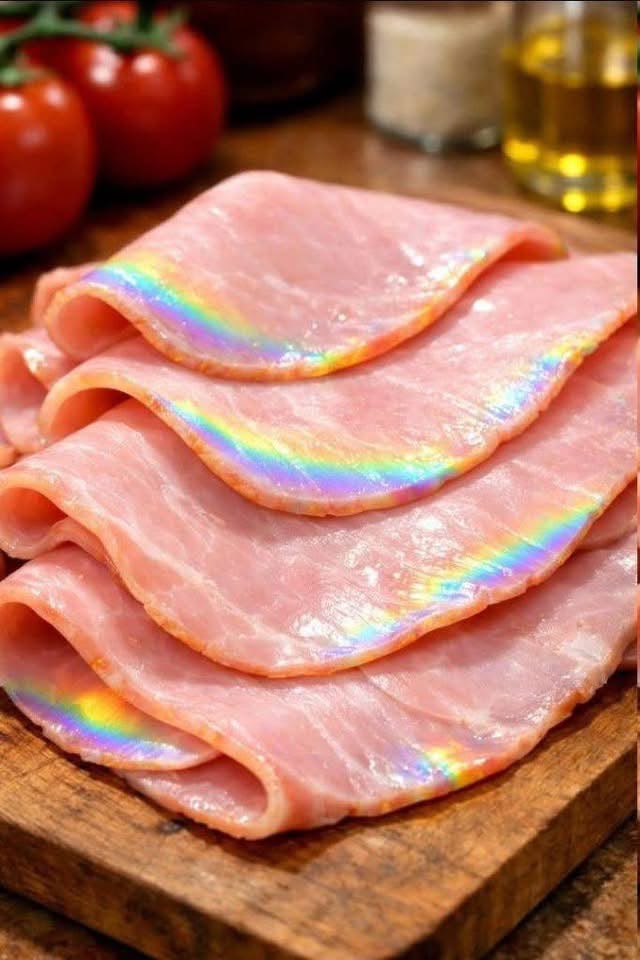
In the digital age, food science trivia, kitchen mysteries, and everyday produce observations have become an undeniable staple of social media feeds. Every single day, millions of users stop scrolling to examine unusual photos of groceries, check their food for unexpected physical characteristics, or read about culinary phenomena.
What is the science behind the rainbow colors sometimes seen on sliced meats, and how do food safety observations intersect with physics, nutrition, and everyday consumer awareness? This comprehensive guide explores the optics of iridescence, the structure of cured meats, and the reality behind viral food photos.
The Science of Meat Iridescence and Optics
When people slice open packaged ham or deli meat and discover shimmering rainbow colors along the surface, curiosity and concern often follow.
1. Understanding the Optical Phenomenon
The colorful sheen seen on cured meats is a well-documented physical effect caused by light refraction rather than spoilage.
- Muscle Fiber Structure: Meat is composed of muscle fibers arranged in a regular, orderly pattern. When a knife slices cleanly across these fibers at a specific angle, it creates a microscopic diffraction grating.
- Light Refraction: When light hits these microscopic ridges, it splits into its component wavelengths, producing a natural rainbow iridescence similar to light hitting a compact disc or a soap bubble.
2. Is It Safe to Eat?
While unusual visual effects can sometimes look alarming, a rainbow sheen on fresh deli meat is entirely safe.
- Quality and Flavor: Sliced ham displaying iridescent colors is generally just as fresh, safe, and flavorful as meat with a uniform matte appearance.
- Not Bacterial Spoilage: Unlike discoloration caused by harmful bacteria or mold (which typically appears slimy, gray, or foul-smelling), structural iridescence is purely a physical interaction between light and protein fibers.
H2: The Broader Impact: Food Literacy, Science, and Digital Content
Encountering food science trivia and unusual kitchen photos online sparks a broader conversation about how everyday products are made, how we evaluate quality, and how digital media spreads information.
H3: Promoting Scientific Literacy in the Kitchen
Understanding why familiar foods exhibit unexpected physical properties helps consumers appreciate basic optical physics and food science.
- Reducing Food Waste: Recognizing that harmless physical characteristics—such as a rainbow sheen on protein—do not make food unsafe prevents unnecessary food waste at home.
- Demystifying Food Manufacturing: Learning about how slicing angles affect light helps clear up common misconceptions about grocery store products.
H3: The Financial and Practical Side of Digital Publishing
Understanding what drives food-related engagement ties directly into business, digital publishing, and online content strategies.
- Engagement Dynamics: Content featuring surprising everyday visuals—like shimmering deli meat—reliably sparks high click-through rates, shares, and comment debates as users compare shopping experiences.
- Balancing Online Curiosity: Maintaining factual accuracy when publishing viral food content helps build a trusted, informed digital audience.
H2: Practical Tips for Inspecting Deli Meat and Food Safety
If you want to know what to look for when evaluating packaged or deli meats at home, use this step-by-step approach:
- Check for Iridescence vs. Spoilage: If the meat shows a clean rainbow or oil-slick sheen under the light but feels firm and smells fresh, it is simply structural iridescence and is safe to consume.
- Inspect Texture and Odor: Always check for true signs of spoilage, such as a slimy texture, sticky residue, sour odor, or gray-green discoloration.
- Proper Storage: Keep deli meats properly sealed and refrigerated at or below 40°F (4°C) to maintain peak freshness and safety.
- Consult Experts: If food ever shows definitive signs of spoiling or mold growth, discard it immediately.
H2: Interesting Facts About Food Physics and Optics
- Common Across Proteins: Iridescence is not unique to ham; it can also appear on roast beef, smoked salmon, and poultry due to the alignment of muscle fibers.
- Natural Diffraction: The phenomenon is governed by the same optical principles that create shimmering colors in peacock feathers and butterfly wings.
- Viral Appeal: Content focusing on unexpected kitchen discoveries and optical science in everyday items consistently attracts high engagement across social media platforms.
- Historical Misconceptions: Before food science explained structural iridescence, many consumers incorrectly assumed colored sheens were caused by chemical additives or contamination.
Conclusion
Discovering shimmering rainbow colors on a slice of ham can be surprising, but it is simply a fascinating optical phenomenon governed by light and protein structure. Understanding the science behind everyday groceries helps demystify food characteristics and prevents unnecessary waste.
Beyond kitchen tips, exploring food science fosters a greater appreciation for the physics all around us. The next time an unusual food photo crosses your feed, approach it with informed curiosity and scientific knowledge!
FAQ Section
Q1: What causes the rainbow sheen on slices of ham?
A: It is caused by light reflecting off the regular, microscopic ridges left by the knife blade when the meat is sliced, creating a natural diffraction effect.
Q2: Is ham with a rainbow sheen safe to eat?
A: Yes. Structural iridescence is entirely harmless and does not affect the safety, quality, or taste of the meat.
Q3: How can you tell the difference between iridescence and actual spoilage?
A: True spoilage is usually accompanied by a slimy or sticky texture, a sour or foul odor, and a gray or green discoloration, whereas iridescent meat feels normal and smells fresh.
Q4: Does this happen to other types of meat?
A: Yes, iridescence can also appear on beef, turkey, and other cured or roasted meats due to similar protein fiber alignments.
Q5: Are chemical additives responsible for the colorful reflection?
A: No, the colors are purely optical and result from the physical interaction of light waves with the protein structure of the meat.
