
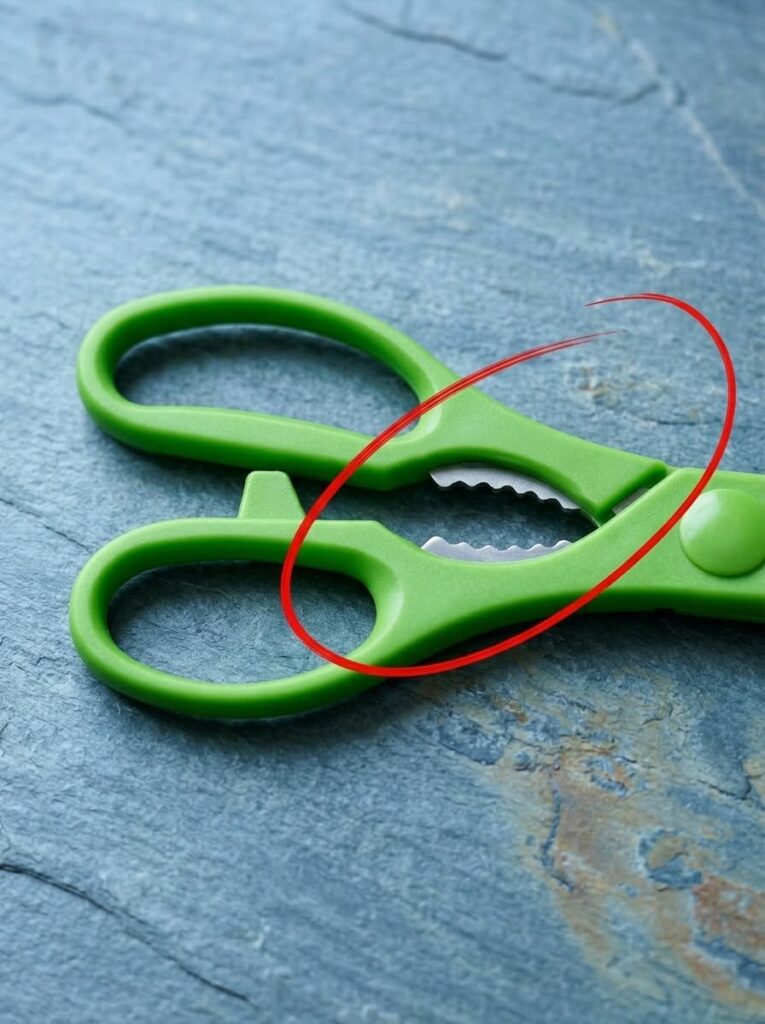
Kitchen shears are one of the most versatile and essential multi-tools in modern culinary preparation. While most people use them primarily for cutting poultry, snipping fresh herbs, or opening food packaging, kitchen shears built with steel inserts feature hidden functionality right between the handles.
A detailed close-up photo highlights a pair of bright green kitchen shears, with a red circle drawn around the steel serrated teeth positioned between the finger loops and the central pivot screw.
These steel teeth—often referred to as a center-toothed grip, nutcracker, or bottle opener—are built to deliver high leverage for tough kitchen tasks without dulling or damaging the main cutting blades.
Here is a full breakdown of what those steel serrations do, how to use them effectively, and other hidden features built into multi-purpose kitchen shears.
3 Hidden Uses for the Serrated Center Teeth
+-----------------------------------------------------------------------------------+
|                     KITCHEN SHEARS CENTER TEETH FUNCTIONALITY                     |
+-------------------+----------------------------+----------------------------------+
| Primary Feature   | Mechanical Action          | Key Kitchen Application          |
+-------------------+----------------------------+----------------------------------+
| Shell Cracker     | Concentrated pressure via  | Cracks tough walnut/pecan shells &|
| (Nutcracker)      | high-leverage pivot point  | hard lobster/crab claws          |
| Jar & Bottle Cap  | Non-slip steel serrations  | Grips and twists stubborn small  |
| Opener            | bite into plastic/metal    | twist-off caps & vacuum seals    |
| Herb Stem & Bone  | Firm gripping power without| Strips woody rosemary/thyme leaves|
| Crusher           | cutting blade dulling      | & snaps small chicken bones      |
+-------------------+----------------------------+----------------------------------+
1. Cracking Nuts and Shellfish Claws
The most common intended use for the center serrated steel teeth is as a built-in nutcracker and shellfish tool.
- High Leverage: Because the teeth are located close to the central pivot fulcrum, squeezing the handles applies maximum mechanical force to hard objects placed inside the gap.
- Controlled Cracking: The serrated ridge grips round surfaces like walnuts, pecans, hazelnuts, or hard crab and lobster claws, preventing them from slipping while you apply pressure.
2. Opening Stubborn Caps and Jars
The curved, toothy cutout is designed to fit around small bottle caps, plastic twist-off caps, and stubborn jar lids. The sharp steel ridges bite into smooth plastic or metal caps, giving you extra torque and leverage to break tight factory seals effortlessly.
3. Stripping Herbs and Crushing Tough Stems
Placing woody herb stems (such as rosemary, thyme, or sage) into the serrated teeth allows you to clamp down lightly and pull the stem through, instantly stripping off fresh leaves. Culinary professionals also use the center grip to crack tough herb stems or crush delicate bird bones before making stocks.
Other Hidden Features in Multi-Purpose Kitchen Shears
Modern culinary shears frequently incorporate additional multi-tool elements built directly into the handles and blades:
- Bottle Cap Pryer: Many shears feature a notched pry-hook built into the outer edge of one handle to pop off crown bottle caps.
- Flathead Screwdriver Tip: The flat metal end of certain handle tangs doubles as a light prying tool or flathead screwdriver for tightening loose appliance screws.
- Take-Apart / Shear Lock-Out: High-quality kitchen shears are designed with a detachable pivot notch so the two blades can be separated for thorough washing, preventing bacterial buildup in the joint.
Maintenance and Care Tips for Kitchen Shears
To keep your shears sharp and sanitary:
- Always Hand-Wash: Avoid putting shears in the dishwasher, as harsh detergents and high heat can dull blade edges and corrode internal pivot screws.
- Dry Thoroughly: Moisture trapped between the blades or inside handle grips causes rust. Dry shears completely with a clean towel immediately after washing.
- Separate Blades During Cleaning: If your shears feature a take-apart mechanism, separate the blades to scrub grease and food particles out of the center pivot pin.
Financial Impact: Replacing Single-Use Kitchen Gadgets
Leveraging all built-in features of your kitchen shears offers practical kitchen savings:
- Eliminating Extra Utensils: Utilizing built-in nutcrackers, bottle openers, and herb strippers eliminates the need to buy separate single-purpose tools, saving drawer space and money.
- Preventing Blade Damage: Using the serrated center teeth to crack hard shells or open caps preserves the primary cutting edge of the blades, extending the life of your shears.
Fascinating Facts About Culinary Tool Design
- The Power of Leverage: The center serrated teeth function on the principle of a class 1 lever, where moving closer to the fulcrum increases mechanical output force exponentially compared to the tip of the blades.
- Stainless Steel Alloys: High-grade kitchen shears are manufactured using high-carbon stainless steel (such as 440C or 3Cr13) to provide structural rigidity for cracking hard shells without bending.
Conclusion: Maximize Your Kitchen Tools
That serrated steel gap between your shear handles is far more than a decorative design feature. By using it as a nutcracker, cap opener, and herb stripper, you can handle tough prep tasks with ease and keep your kitchen running efficiently.
Frequently Asked Questions
Q1: What are the jagged metal teeth on kitchen scissors used for?
A1: They are used to crack nuts and shellfish claws, twist open stubborn bottle caps, and clamp onto tough herb stems or small bones.
Q2: Why are the teeth placed between the handles instead of on the blades?
A2: Positioning the teeth near the pivot point provides maximum leverage and prevents hard objects (like walnut shells) from dulling or damaging the main cutting edges.
Q3: How do you use kitchen shears to crack crab claws?
A3: Place the thickest part of the claw inside the serrated central teeth, grip the handles firmly, and squeeze until the shell cracks cleanly.
Q4: Can you wash take-apart kitchen shears in the dishwasher?
A4: Hand-washing is strongly recommended. Dishwasher heat and high-humidity environments cause rust spots and dull the sharp cutting edges over time.
Q5: How do you open a stubborn plastic bottle cap with shears?
A5: Clamp the center serrated teeth around the outside of the cap and twist the handles counterclockwise to break the plastic seal with extra leverage.
