
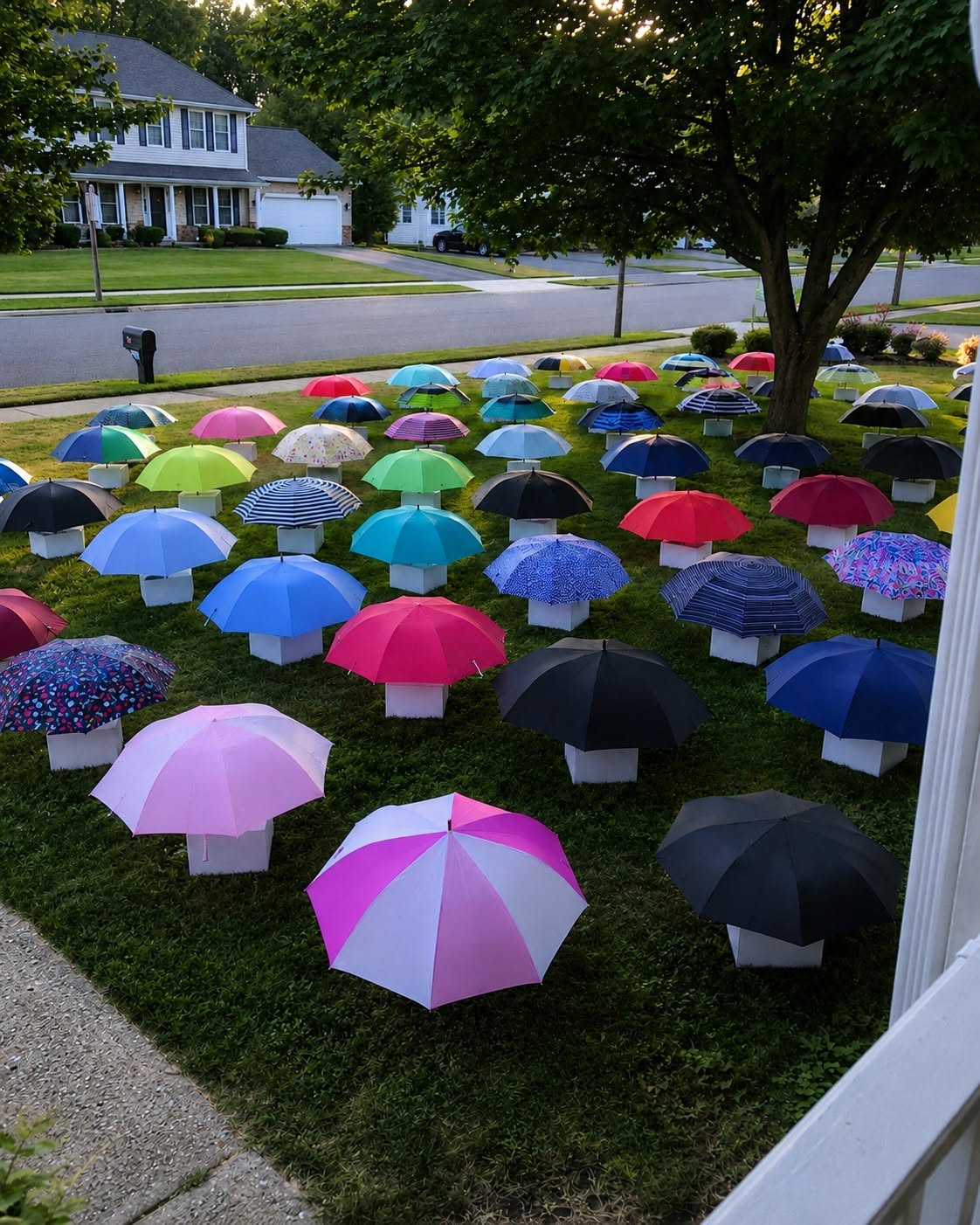
Suburban lawns occasionally present unusual visual sights, but few are as striking or intriguing as a yard covered in vibrant, open umbrellas standing over dozens of small white boxes.
A viral photo captures a green suburban front lawn filled with dozens of colorful umbrellas—ranging from bright pink, blue, and lime green to striped patterns—placed over rectangular white wooden containers beneath mature trees.
While it might look like an art installation or a whimsical neighborhood display, the white boxes are Langstroth beehives, and the umbrellas serve a vital agricultural purpose: protecting honeybee colonies from extreme heat waves and direct sun exposure.
Here is a full breakdown of why beekeepers shade their hives, how extreme temperatures affect honeybee colonies, and essential summer hive care practices.
Why Beekeepers Shade Beehives During Heatwaves
+-----------------------------------------------------------------------------------+
|                        SUMMER HEAT RISKS & HIVE PROTECTION                        |
+-------------------+----------------------------+----------------------------------+
| Heat Stress Risk  | Physical Impact on Hive    | Shade & Prevention Solution      |
+-------------------+----------------------------+----------------------------------+
| Comb Collapse     | Beeswax sags and melts,    | Umbrella shade reduces internal  |
|                   | spilling honey & brood     | ambient temperatures significantly|
| Resource Shift    | Foragers switch from nectar| Shading saves colony energy for  |
|                   | gathering to hauling water | honey production & brood care    |
| Thermal Stress    | High temps stress queen &  | Shade maintains target internal  |
|                   | increase colony aggression | brood temperature (93°F - 95°F)  |
+-------------------+----------------------------+----------------------------------+
1. Preventing Comb Melt and Structural Collapse
Beeswax is a natural building material with a melting point around 145°F (63°C). However, structural wax comb becomes soft and pliable at much lower temperatures. When dark hive boxes sit in direct afternoon sunlight during a 90°F+ (32°C+) heatwave, internal temperatures can spike rapidly, causing heavy honeycombs to collapse under their own weight. Spilled honey can drown bees and suffocate developing larvae.
2. Conserving Honeybee Energy for Food Gathering
Honeybees maintain a strict internal hive temperature between 93°F and 95°F (34°C – 35°C) to incubate their brood (developing eggs and larvae). When temperatures rise above this threshold, worker bees must work overtime to cool the hive:
- Evaporative Cooling: Bees forage for water, spread droplets along the comb edges, and fan their wings continuously to create an airflow-driven air conditioning effect.
- Saving Energy: Providing shade via umbrellas or shade cloth reduces internal thermal load, allowing foragers to focus on gathering nectar and pollen rather than spending energy bringing back water.
3. Reducing Colony Stress and Aggression
When bees become overheated, they often “beard”—accumulating in dense clusters outside the entrance of the hive box to reduce body heat inside. Extreme heat increases colony stress, which can lead to higher defensive aggression, reduced queen egg-laying, and potential absconding (leaving the hive entirely).
Practical Ways Beekeepers Protect Hives in Summer
In addition to using lawn umbrellas, beekeepers employ several low-cost strategies during peak summer months:
- Strategic Yard Placement: Positioning hives where they receive morning sun to wake up foragers but afternoon shade during peak heat hours.
- Elevated Screened Bottom Boards: Replacing solid bottom wooden plates with wire mesh boards improves cross-ventilation through the hive base.
- Providing Fresh Nearby Water: Placing shallow water baths filled with floating corks or stones near the apiary gives bees quick access to cooling water without drowning.
- Installing Shade Cloth or Board Shields: Placing light wooden boards, cardboard covers, or 70% sunblock agricultural shade cloth over metal hive lids reflects heat away.
Financial and Ecological Impact of Hive Shading
Protecting honeybee colonies from heat stress offers significant economic and environmental rewards:
- Preserving Honey Harvests: Preventing comb collapse saves full seasons of stored honey. Rebuilding destroyed honeycomb requires bees to consume roughly 6 to 8 pounds of honey just to synthesize a single pound of new wax.
- Supporting Local Crop Pollination: Healthy, non-stressed colonies continue foraging effectively, ensuring optimal pollination for neighborhood gardens, orchards, and local agricultural crops.
Fascinating Facts About Honeybee Thermoregulation
- Innate Air Conditioning: Honeybees are master climate-control engineers. By fanning their wings in synchronized formation at hive entrances, they generate air currents capable of lowering internal temperatures by more than 10°F to 15°F in minutes.
- Winter vs. Summer Temperature Control: While bees fan water droplets to cool the hive in summer, they form tight, shivering clusters around the queen to generate heat up to 95°F during freezing winter months.
Conclusion: A Creative Solution for Summer Bee Care
What looks like a playful display of colorful yard umbrellas is actually an ingenious, low-cost climate management technique. By providing quick shade during heatwaves, beekeepers protect delicate beeswax structures, keep colonies calm, and help bees conserve energy for essential pollination work.
Frequently Asked Questions
Q1: Why are umbrellas placed over the white boxes in the photo?
A1: The white boxes are beehives. The umbrellas provide temporary shade during hot summer days to prevent the internal temperature from overheating and melting the beeswax combs.
Q2: Can direct sun kill a honeybee colony?
A2: Extreme, unshaded heat can cause heat exhaustion, comb collapse, and brood mortality, potentially destroying an entire colony if internal temperatures rise unchecked.
Q3: How do bees naturally cool down their hives?
A3: Bees collect water droplets, deposit them inside the hive, and fan their wings rapidly to create evaporative cooling, acting like natural air conditioning.
Q4: Should beehives always be kept in full shade year-round?
A4: No. Partial sun is beneficial—especially morning sunlight, which warms up the hive early so foragers start working. A mix of morning sun and afternoon shade is ideal.
Q5: What is the ideal temperature inside a beehive?
A5: Honeybees keep their brood nest precisely regulated between 93°F and 95°F (34°C to 35°C) to ensure healthy larval development.
