
Maintaining a clean and fully functional bathroom is one of the most essential aspects of household maintenance. While many homeowners focus exclusively on scrubbing the toilet bowl, the real origin of mineral buildup, bad odors, and slow flushing often lies hidden inside the porcelain toilet tank.
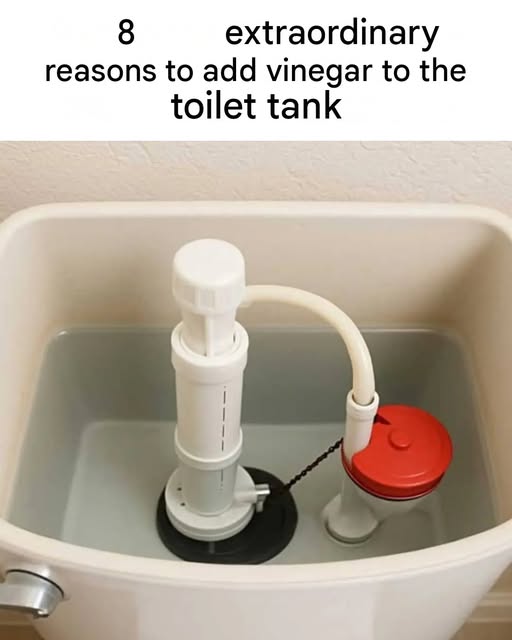
A viral social graphic displays an open porcelain toilet tank with clean water and internal flushing mechanisms under the title: “8 extraordinary reasons to add vinegar to the toilet tank”.
White distilled vinegar (dilute acetic acid) is a safe, eco-friendly, and powerful natural cleaning solution. Pouring vinegar into your toilet tank helps dissolve hard water scale, eliminate lingering odors, and maintain internal plumbing components without using harsh synthetic chemicals.
Here is the complete guide to 8 extraordinary reasons to add vinegar to your toilet tank, step-by-step usage instructions, and safety precautions.
8 Extraordinary Reasons to Use Vinegar in Your Toilet Tank
+-----------------------------------------------------------------------------------+
|                        TOILET TANK VINEGAR BENEFITS OVERVIEW                      |
+-------------------+----------------------------+----------------------------------+
| Primary Benefit   | Chemical / Physical Action | Household Impact                 |
+-------------------+----------------------------+----------------------------------+
| Mineral & Scale   | Acetic acid dissolves      | Prevents clogged rim jets &      |
| Dissolution       | calcium & magnesium (limescale)| maintains strong flush pressure  |
| Natural Odor      | Neutralizes alkaline odor  | Eliminates stale water smell     |
| Elimination       | molecules at the source    | without artificial fragrances    |
| Mold & Mildew     | Low pH environment inhibits| Keeps inner porcelain walls      |
| Prevention        | fungal and bacterial growth| free of black algae and mold     |
| Eco-Friendly      | Biodegradable, non-toxic   | Safe for home plumbing and       |
| Plumbing Care     | natural compound           | municipal septic systems         |
+-------------------+----------------------------+----------------------------------+
1. Dissolves Hard Water Limescale and Calcium Deposits
Tap water contains dissolved minerals like calcium and magnesium. Over time, these minerals form a hard white or yellowish scale (limescale) along the inner walls of the tank and around working valves. The acetic acid in vinegar naturally reacts with and breaks down mineral crusts.
2. Clears Clogged Rim Jets for Powerful Flushing
When water flows from the tank into the bowl during a flush, it travels through small rim holes under the bowl rim. Calcium deposits in the tank can break loose and clog these jets. Soaking the tank in vinegar keeps mineral debris from blocking water flow, ensuring a full-power flush.
3. Neutralizes Stale Odors at the Source
Stagnant water combined with mineral buildup and mild bacterial activity inside the tank causes persistent bathroom odors. Instead of masking bad smells with room sprays, pouring vinegar into the tank neutralizes odor-causing alkaline compounds directly at the source.
4. Inhibits Mold, Mildew, and Bacteria Growth
The damp, dark environment of a porcelain toilet tank is ideal for black mold, mildew, and slime-forming bacteria. Vinegar creates an acidic environment that inhibits fungal spores and keeps inner porcelain surfaces clean.
5. Prevents Rust and Metal Discoloration
Iron particles present in hard water can cause reddish-brown rust stains on internal metal bolts and fill valve stems. Vinegar lifts surface rust and prevents oxidation from staining the porcelain tank wall.
6. Cleans Internal Plastic and Rubber Valves
Submerged mechanical components—including the fill valve, overflow tube, and plastic flapper casing—accumulate slick mineral film. Periodic vinegar treatments remove mineral drag, helping moving parts rise and drop smoothly.
7. Safe and Septic-System Friendly
Unlike caustic chemical drain cleaners or harsh chlorine bleach tablets that can destroy beneficial bacteria in home septic tanks, white distilled vinegar is completely non-toxic and biodegradable.
8. Budget-Friendly Alternative to Expensive Tablets
Commercial drop-in cleaning tablets can cost several dollars apiece and often contain harsh blue dyes or bleaching agents. A standard bottle of white distilled vinegar costs less than $2 and provides multiple deep-cleaning treatments.
How to Deep Clean Your Toilet Tank with Vinegar: Step-by-Step
Follow this simple, safe routine to clean your toilet tank effectively:
- Shut Off Water and Drain Tank: Turn the water supply valve behind the toilet clockwise to shut it off. Flush the toilet to drain all water out of the tank.
- Pour Distilled White Vinegar: Fill the empty tank with 2 to 4 cups of plain white distilled vinegar (or enough to submerge the lower flapper and valve base).
- Allow Dwell Time: Let the vinegar sit in the tank for 30 minutes to a maximum of 2 hours so the acid can loosen mineral scale. (Caution: Avoid leaving concentrated vinegar in the tank overnight, as prolonged exposure can soften older rubber flapper seals).
- Scrub Gently and Flush: Use a long-handled scrub brush to wipe away loosened mineral crust along inner porcelain walls. Turn the water supply back on, let the tank fill, and flush twice to rinse.
Financial Impact: Protecting Plumbing and Reducing Repairs
Regular toilet tank maintenance delivers long-term financial benefits:
- Preventing Component Replacement: Mineral buildup causes rubber flappers to seat improperly, resulting in continuous running toilets that waste thousands of gallons of water per year. Vinegar keeps seals clean and flush valves tight.
- Saving on Plumber Call-Out Costs: Clearing clogged rim jets and sticky fill valves with simple home vinegar treatments avoids costly service calls from professional plumbers.
Fascinating Facts About Vinegar Chemistry
- Fermentation Science: Distilled white vinegar is produced through a two-step biological fermentation process: yeast converts plant sugars into alcohol, and Acetobacter bacteria then convert the alcohol into acetic acid.
- Optimal Acidity for Cleaning: Household cleaning vinegar typically contains 5% to 6% acetic acid, providing sufficient acidity to dissolve calcium carbonate ($CaCO_3$) into soluble calcium acetate without damaging porcelain glaze.
Conclusion: Keep Your Toilet Running Smoothly
Adding white distilled vinegar to your toilet tank is one of the simplest and most effective ways to eliminate hard water scale, control bathroom odors, and protect internal plumbing components. Incorporate this low-cost natural hack into your regular cleaning routine to keep your toilet operating efficiently.
Frequently Asked Questions
Q1: Is it safe to leave vinegar in the toilet tank overnight?
A1: It is best to limit soaking to 1 to 2 hours. Prolonged overnight exposure to acid can weaken older rubber flappers or synthetic gaskets over time.
Q2: Can you mix vinegar and bleach in a toilet tank?
A2: NO. Never mix vinegar and bleach. Combining acid and chlorine bleach produces dangerous toxic chlorine gas, which can cause severe respiratory distress.
Q3: How often should you put vinegar in your toilet tank?
A3: Using a vinegar treatment once every 1 to 3 months is sufficient to control mineral buildup and keep odors away in most households.
Q4: Does vinegar damage toilet tank flappers?
A4: Short exposures (1 to 2 hours) do not harm high-quality modern silicone or rubber flappers, but soaking continuously for days can eventually degrade thin rubber.
Q5: Can I use apple cider vinegar instead of white vinegar?
A5: While apple cider vinegar works, clear white distilled vinegar is preferred because it contains no organic fruit sugars or natural colorings that could stain porcelain.
