
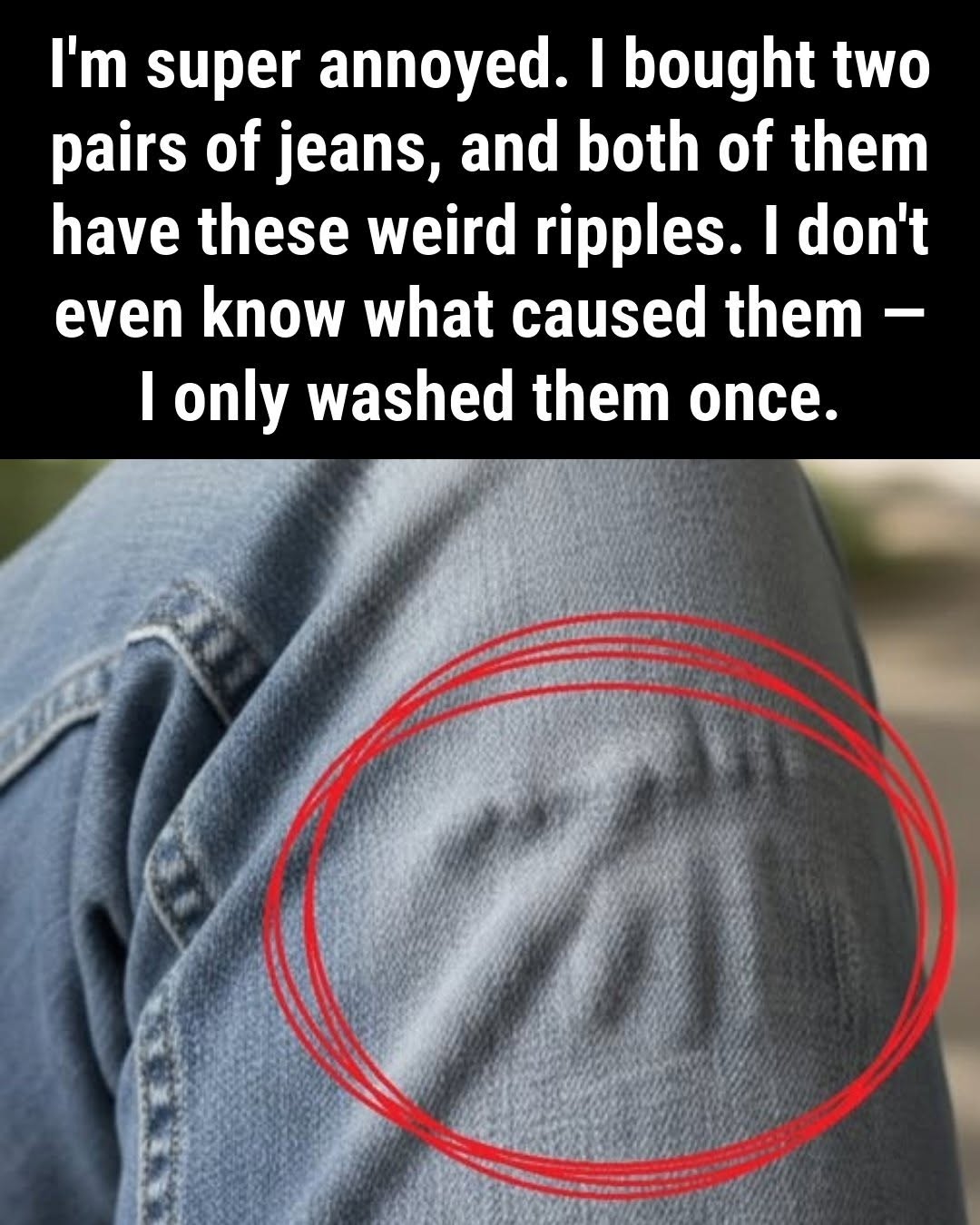
There is nothing quite like finding a pair of jeans with the perfect fit, stretch, and feel. However, many denim owners face a frustrating phenomenon after laundering their pants just a few times.
A viral social graphic—captioned “I’m super annoyed. I bought two pairs of jeans, and both of them have these weird ripples. I don’t even know what caused them — I only washed them once.”—shows a red circle highlighting distinct wavy, puckered ridges running across the denim fabric near the thigh.
Known in the garment industry as elastane blowout, spandex breakdown, or denim puckering, this issue occurs when the flexible elastic fibers woven inside stretch denim snap, degrade, or separate from the surrounding cotton strands.
Here is a full breakdown of what causes jeans to ripple, how to prevent spandex breakdown, and best practices for extending the life of stretch denim.
What Causes Denim Ripples?
Understanding the composition of modern stretch jeans explains why these wavy lines suddenly appear:
+-----------------------------------------------------------------------------------+
|                        STRETCH DENIM BREAKDOWN COMPARISON TABLE                   |
+-------------------+----------------------------+----------------------------------+
| Cause / Element   | Mechanism of Damage        | Visual Result                    |
+-------------------+----------------------------+----------------------------------+
| High Dryer Heat   | Melts internal elastane /  | Wavy ripples, puckering, lost    |
|                   | Lycra synthetic core fibers| stretch memory & sagging fit     |
| Fabric Softener   | Chemical breakdown of      | Permanent elastane snapping &    |
|                   | synthetic elastic bonds    | irreversible surface ridging     |
| Aggressive Agitation| Mechanical stretching of | Localized thread separation      |
|                   | wet elastic fibers         | along high-tension stress points |
+-------------------+----------------------------+----------------------------------+
1. Excessive Heat (The Primary Culprit)
Most modern jeans contain 1% to 5% synthetic elastic fibers (elastane, Spandex, or Lycra) core-spun with natural cotton yarn. Heat is the ultimate enemy of elastane. High dryer settings melt, warp, or snap these delicate synthetic micro-fibers. Once broken, the elastic recoils inside the fabric while the cotton remains flat, creating permanent raised ripples across the surface.
2. Fabric Softeners and Harsh Detergents
Liquid fabric softeners and harsh chemical bleaches penetrate deep into denim fibers and coat the elastane core. Over time, these chemicals break down the synthetic polymer chains, causing the elastic threads to lose tension and snap.
3. Violent Washing Machine Agitation
Washing jeans on heavy-duty cycles—especially in top-load washers with central agitators—stretches wet elastane strands beyond their elastic limit. When combined with warm or hot water, the fibers snap under mechanical tension.
Can You Fix Rippled Jeans?
Unfortunately, once elastane fibers snap or melt inside the denim matrix, the damage is permanent and irreversible. No amount of ironing, pressing, or re-washing will restore snapped elastic threads to their original shape.
However, you can prevent it from ever happening to your other stretch garments by upgrading your laundry routine.
4 Rules to Prevent Elastane Blowout in Jeans
To preserve the stretch, shape, and smooth appearance of your denim, follow these laundry guidelines:
- Wash in Cold Water: Always select cold water settings on your washing machine to prevent thermal stress on elastic fibers.
- Line Dry or Air Dry: Never put stretch jeans in a hot tumble dryer. Hang them to dry or lay them flat away from direct sunlight.
- Turn Jeans Inside Out: Flipping denim inside out prior to washing protects the outer face from friction damage against machine drums and other clothing fasteners.
- Skip Fabric Softeners: Avoid using liquid softeners or dryer sheets on any clothing items containing elastane, Lycra, or spandex.
Financial Impact: Making Denim Last for Years
Proper laundry habits offer clear financial savings on wardrobe maintenance:
- Extending Garment Lifespan: Premium stretch jeans cost anywhere from $60 to over $200 per pair. Air drying extends their wearable life from months to several years.
- Saving Energy Costs: Skipping the heated dryer cycle for heavy denim items reduces household electricity consumption and lowers utility bills.
Fascinating Facts About Denim Manufacturing
- 100% Cotton vs. Stretch Denim: Traditional 100% cotton rigid denim never suffers from elastane blowout because it contains no synthetic elastic fibers, though it lacks initial stretch flexibility.
- The “Zero Wash” Denim Trend: Denim enthusiasts often wear raw or selvedge jeans for 3 to 6 months before the first wash to set natural crease patterns without breaking down internal fibers.
Conclusion: Cold Water and Air Drying Save Your Denim
Wavy ripples on jeans are the direct result of melted or broken elastane fibers caused by dryer heat or harsh laundering. Treat stretch denim gently with cold water washes and air drying to keep your pants smooth, fitted, and ripple-free.
Frequently Asked Questions
Q1: Why did my jeans ripple after just one wash?
A1: Washing in hot water or drying on high heat can melt or snap delicate elastane (spandex) fibers in a single cycle, causing immediate surface puckering.
Q2: Can you iron out ripples in stretch jeans?
A2: No. Ironing may temporarily flatten the cotton fabric, but because the internal elastic strands are broken, the ripples will return as soon as the jeans flex.
Q3: How often should you wash a pair of jeans?
A3: Denim experts recommend washing jeans only after 5 to 10 wears (unless visibly dirty) to reduce fiber wear and preserve structural integrity.
Q4: Are expensive jeans immune to elastane blowout?
A4: No. Any jean containing elastane, Lycra, or spandex—regardless of brand or price point—will pucker if exposed to high heat or fabric softeners.
Q5: Is it better to hang dry jeans by the waist or hems?
A5: Hanging jeans upside down by the ankle hems using clip hangers allows the weight of the waistband to pull out natural wrinkles as they air dry.
