
When browsing the meat display at your local supermarket, you might notice that raw chicken breasts rarely look identical.
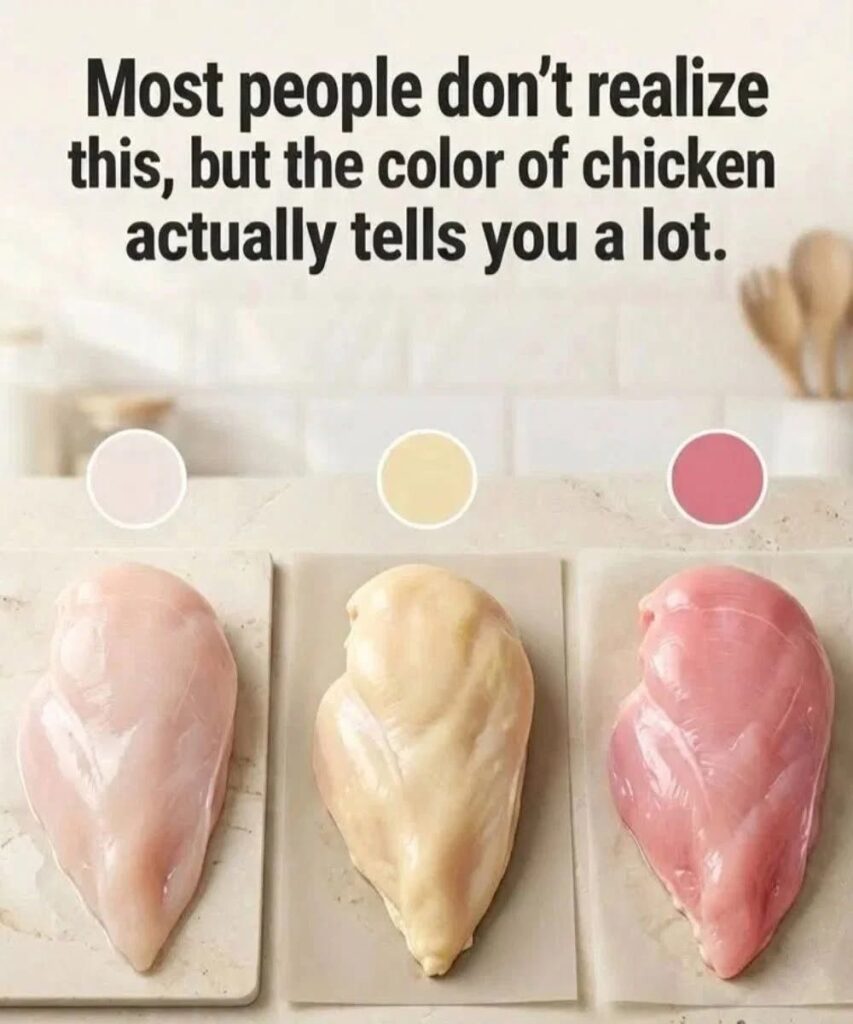
A viral social graphic—captioned “Most people don’t realize this, but the color of chicken actually tells you a lot”—shows three side-by-side chicken breasts ranging in hue: light pink/pale white, distinctly yellow, and deep reddish-pink.
While shoppers often wonder if these color variations indicate spoilage or artificial dyes, raw chicken color differences are primarily driven by the bird’s feed diet, age, exercise level, and processing method.
Here is a full breakdown of what each raw chicken color means, how diet shapes poultry appearance, and essential signs to detect spoiled chicken.
Decoding the 3 Primary Colors of Raw Chicken
Understanding the factors behind raw poultry pigmentation helps consumers make informed grocery choices:
+-----------------------------------------------------------------------------------+
|                        RAW CHICKEN COLOR COMPARISON CHART                         |
+-------------------+----------------------------+----------------------------------+
| Color Shade       | Primary Cause / Diet       | Quality & Flavor Profile         |
+-------------------+----------------------------+----------------------------------+
| Light Pink / Pale | Standard grain diet        | Standard commercial poultry;    |
| (Left)            | (corn & soybean blend)     | mild flavor, soft texture        |
| Yellow Tint       | Xanthophyll-rich diet      | Popular in pasture-raised/organic|
| (Center)          | (marigold petals, yellow corn)| rich flavor, firm fat layer   |
| Deep Pink / Red   | Higher myoglobin / activity| Free-range or older birds;       |
| (Right)           | or air-chilled processing  | deeper flavor, lean muscle       |
+-------------------+----------------------------+----------------------------------+
1. Light Pink to Pale White (Standard Commercial Poultry)
The most common shade seen in grocery stores is a soft, pale pink. This color results from conventional factory-raised broilers fed a standard, balanced grain diet composed primarily of white corn, sorghum, and soybean meal.
2. Distinct Yellow Hue (Diet Rich in Carotenoids)
A yellowish tint on raw chicken skin or fat is not a sign of disease or age. Instead, it indicates that the chicken consumed a diet high in carotenoids and xanthophylls—natural pigments found in yellow corn, alfalfa, and marigold flower petals.
- Pasture-Raised / Organic: Many pasture-raised or organic chicken farms intentionally supplement feed with marigold petals or yellow corn to produce vibrant yellow skin, a visual trait traditionally associated with farm-fresh poultry.
3. Deep Pink or Reddish Tint (Myoglobin & Chilling Methods)
A deeper pink or reddish hue typically points to higher levels of myoglobin—the protein that delivers oxygen to muscle tissue.
- Bird Activity & Age: Active free-range chickens that move around outdoors develop more myoglobin in their muscle tissue, yielding darker meat.
- Air-Chilled Processing: Chickens processed using air-chilling (rather than water-soaking baths) retain their natural juices and pigment, giving them a richer pink appearance without water dilution.
Warning Signs: When Chicken Color Indicates Spoilage
While pink, yellow, and deep pink are all completely normal and safe variations, certain color shifts signal dangerous spoilage:
- Gray, Green, or Dull Brown: If raw chicken turns grayish-green or dull brown, bacterial breakdown has begun. Discard it immediately.
- Slimy or Sticky Texture: Fresh chicken feels soft and moist. A sticky, slippery, or tacky residue indicates heavy bacterial growth.
- Sour or Ammonia-Like Odor: Fresh raw chicken has a very faint, neutral smell. A sharp, sour, or pungent odor is a clear sign of spoilage.
Financial Impact: Navigating Poultry Prices & Labels
Knowing what drives color variations protects your food spending budget:
- Avoiding Premium Markups for Color Alone: A yellow tint reflects feed ingredients (like marigold meal) rather than inherently higher nutritional value. Pay for organic or pasture-raised certification standards rather than cosmetic skin color alone.
- Air-Chilled Value: Air-chilled chicken may cost slightly more per pound, but you aren’t paying for absorbed water weight common in conventional water-chilled poultry (which can dilute meat by up to 8% to 12% water).
Fascinating Facts About Poultry Science
- Skin vs. Muscle Color: Skin color is almost entirely controlled by feed ingredients, while muscle meat color depends on muscle usage, bird age, and myoglobin concentrations.
- The “Woody Breast” Phenomenon: Fast-growing commercial broilers sometimes develop hard, pale, muscle fibers known as “woody breast,” which feels stiff to the touch and can be tough after cooking.
Conclusion: Trust Freshness Signs Over Cosmetic Shades
Whether your raw chicken breast appears light pink, rich yellow, or deep rose, all three are natural and safe to cook. Focus on checking for a neutral scent, firm texture, and clear expiration dates when purchasing meat.
Frequently Asked Questions
Q1: Is yellow chicken safe to eat?
A1: Yes. A yellow tint simply means the chicken was fed a diet rich in yellow corn, alfalfa, or marigold petals. It is fully safe and nutritious.
Q2: Why does some raw chicken look deep pink or red?
A2: Deeper pink meat usually comes from active free-range birds with higher muscle myoglobin levels or poultry processed using air-chilling rather than water baths.
Q3: How can you tell if raw chicken has gone bad?
A3: Spoiled chicken turns grayish-green, smells sour or like ammonia, and feels sticky or slimy to the touch.
Q4: Does skin color affect the nutritional value of chicken?
A4: No. The nutritional profile (protein, vitamins, and fat content) remains virtually identical regardless of whether the skin or fat appears white or yellow.
Q5: What is the difference between water-chilled and air-chilled chicken?
A5: Water-chilled chicken is cooled in ice water baths, which adds water weight and pales the meat color. Air-chilled chicken is cooled in refrigerated chambers, preserving natural color and texture.
