
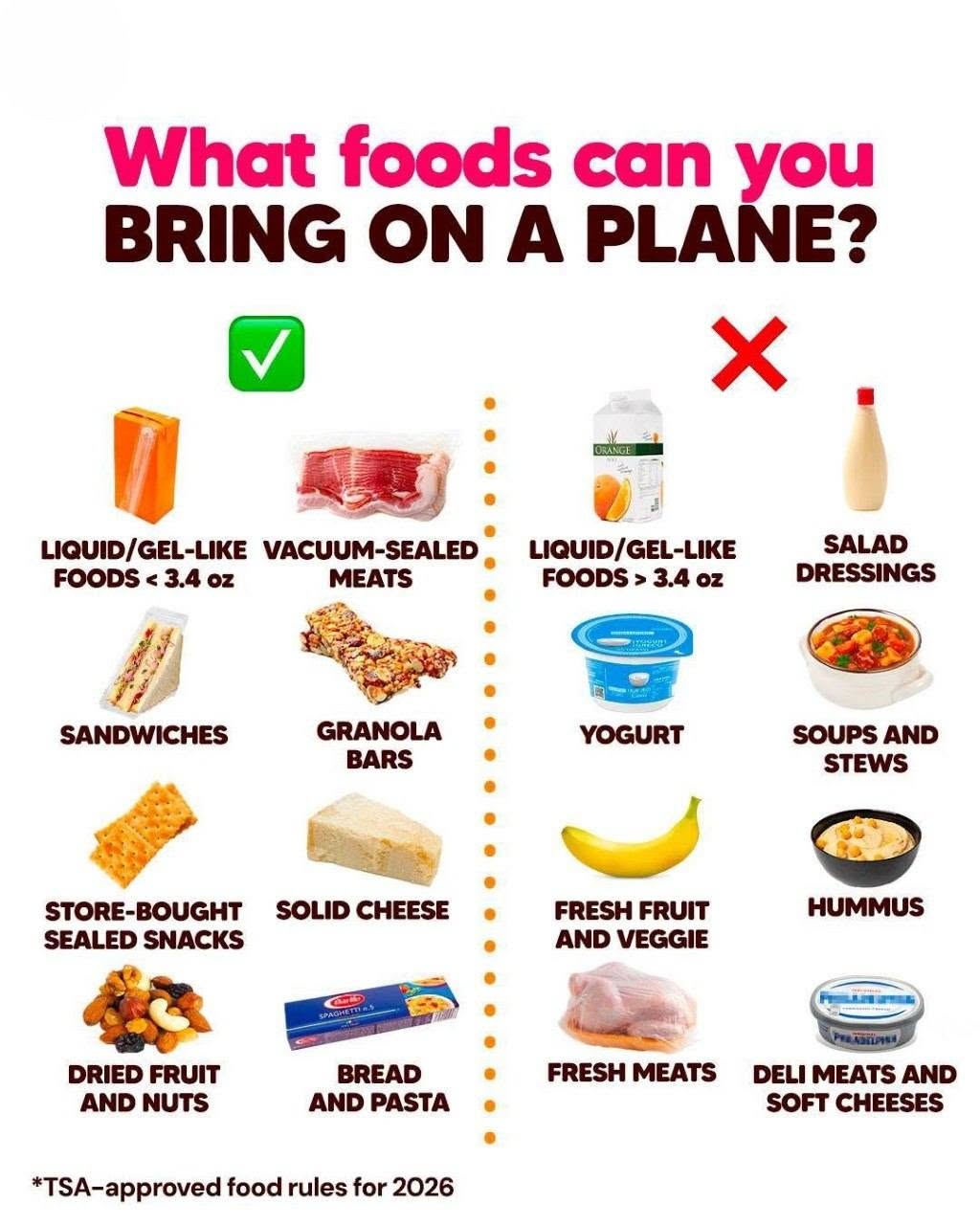
Navigating airport security checkpoints with food items can be confusing. Many travelers are surprised to find out that favorite travel snacks—like a tub of hummus, creamy yogurt, or salad dressing—can be confiscated by transportation security officers if they break airport liquid limits.
An informative travel guide visual titled *”What foods can you BRING ON A PLANE? TSA-approved food rules” outlines the clear distinction between solid travel snacks and liquid or gel-like food restrictions.
Knowing which foods pass smoothly through screening checkpoints and which items belong in checked luggage saves time, prevents delays, and keeps your travel day hassle-free.
Here is a comprehensive breakdown of TSA food regulations, the 3-1-1 liquids rule explained, allowable solid foods, and key agricultural rules for international air travel.
Understanding the 3-1-1 Liquids, Aerosols, and Gels Rule
The primary reason food items get confiscated at airport security checkpoints is the 3-1-1 Liquids Rule.
TSA regulations define liquids, gels, pastes, and aerosols very broadly. If a food item can be poured, pumped, squeezed, spread, smeared, or sprayed, it must follow liquid quantity restrictions in carry-on bags:
- 3.4 Ounces (100ml) or Less: Containers carrying liquid or gel-like food must be 3.4 fluid ounces or smaller.
- 1 Clear Quart-Sized Bag: All small liquid containers must fit comfortably inside a single clear, zip-top quart-sized bag.
- 1 Bag per Passenger: Each traveler is permitted one liquids bag through security.
Allowed vs. Restricted Carry-On Foods
+-----------------------------------------------------------------------------------+
|                           TSA CARRY-ON FOOD CLASSIFICATION                        |
+-------------------+----------------------------+----------------------------------+
| Food Category     | Carry-On Allowed?          | Key Condition / Rule             |
+-------------------+----------------------------+----------------------------------+
| Solid Snacks      | YES (Allowed)              | Pretzels, Crackers, Granola Bars |
| Solid Cheeses     | YES (Allowed)              | Cheddar, Swiss, Parmesan Blocks  |
| Vacuum-Sealed Meats| YES (Allowed)             | Sealed Cured Meats & Jerky       |
| Liquids / Spreads | RESTRICTED                 | Under 3.4 oz Container Limit     |
| Fresh Meats       | RESTRICTED / CHECKED       | Ice Packs Must Be Frozen Solid   |
| Fresh Produce     | CONDITIONAL                | Subject to Customs Regulations   |
+-------------------+----------------------------+----------------------------------+
Approved Carry-On Foods (Green Light)
- Solid Baked Goods & Dry Snacks: Sandwiches, bread, dry pasta packages, crackers, store-bought sealed snacks, chips, and granola bars pass through security without restriction.
- Dried Fruit & Nuts: Trail mixes, dried cranberries, almonds, and walnuts are excellent solid, mess-free travel snacks.
- Solid Hard Cheeses: Hard cheese blocks (such as sharp cheddar, gouda, or parmesan) are classified as solids and allowed in carry-on bags.
- Vacuum-Sealed Cured Meats: Sealed prosciutto, salami, or beef jerky packages are permitted through security screening checkpoints.
- Small Liquid / Gel Foods: Juice boxes, travel condiments, or sauce packets contained in 3.4 oz (100ml) containers or smaller inside your 1-quart liquids bag are fully allowed.
Restricted or Banned Carry-On Foods (Red Light)
- Spreads and Dips: Hummus, peanut butter, cream cheese, jam, and guacamole are legally classified as gels. Containers larger than 3.4 oz will be confiscated.
- Dairy & Soups: Yogurt containers, cottage cheese, puddings, canned soups, and stews exceed liquid volume limits and must go in checked luggage.
- Salad Dressings & Oils: Bottled dressings, olive oil, and liquid sauces are subject to standard carry-on liquid limits.
- Fresh Meats & Raw Poultry: Raw meat packages carry leak and temperature risks. While solid frozen meats packed with ice packs may pass if the ice is 100% solid, unfrozen raw meats are best placed in checked baggage.
- Soft & Spreadable Cheeses: Brie, camembert, ricotta, spreadable deli cheeses, and blue cheese spreads fall under liquid/gel regulations.
Special Exceptions: Baby Food, Milk, and Medications
TSA grants important medical and parental exceptions to the standard 3-1-1 liquids rule:
- Infant Nutrition: Formula, breast milk, toddler drinks, and baby food pouches in quantities exceeding 3.4 ounces are allowed in carry-on bags. Declare these items to security officers at the beginning of the screening lane for separate inspection.
- Medically Necessary Liquids: Essential liquid medications, nutritional supplements, and specialized dietary liquids are exempt from container size limits upon declaration.
Agricultural and International Border Regulations
Passing through airport security screening is separate from customs and border protection inspections:
- Fresh Fruits and Vegetables: While fresh bananas, apples, or salads may pass domestic TSA security checkpoints, international border control agencies strictly prohibit bringing fresh produce across borders to prevent invasive agricultural pests. Always consume fresh fruit before landing or declare it at customs.
- International Meat Regulations: Cured, fresh, or canned meat products carried across international borders are subject to strict bio-security declarations and confiscation fines.
Practical Money-Saving Travel Tips
Packing your own flight snacks offers considerable financial and health perks:
- Avoid Airport Price Inflation: Airport terminal concessions frequently mark up snack prices by 100% to 200%. Packing solid homemade sandwiches, trail mix, and granola bars keeps travel expenses low.
- Pack Empty Water Bottles: Bring an empty reusable water bottle through security, then fill it at airport water refill stations past the checkpoint to avoid paying high prices for bottled water.
Conclusion: Pack Smart for Smooth Flying
Knowing the difference between solid snacks and gel-like spreads makes airport security effortless.
By keeping solid dry foods, sandwiches, hard cheeses, and dried fruits in your carry-on while packing soups, dips, salad dressings, and large spread jars in your checked luggage, you can fly through security lines and enjoy delicious snacks at 30,000 feet.
Frequently Asked Questions
Q1: Can I bring a peanut butter sandwich on a plane?
A1: Yes! A prepared peanut butter and jelly sandwich is allowed in carry-on luggage. However, a jar of peanut butter by itself is classified as a gel and must be 3.4 ounces or smaller.
Q2: How do I pack ice packs for food in carry-on bags?
A2: Ice packs, gel freezer packs, and frozen water bottles are allowed through security only if they are 100% completely frozen solid at the time of screening. If they are partially melted or slushy, they will be confiscated.
Q3: Are canned foods allowed in carry-on luggage?
A3: Most canned foods contain liquid or oil packing (such as tuna in oil, canned soup, or canned fruit). Because you cannot verify liquid volume without opening the can, TSA requires canned foods over 3.4 oz to go in checked luggage.
Q4: Can I buy large beverages past the security checkpoint and take them on the plane?
A4: Yes. Once you pass through the main security screening area, any beverages, soups, or food items purchased inside the secure airport terminal can be carried directly onto your flight.
Q5: Is chocolate considered a solid or a liquid?
A5: Solid chocolate bars and foil-wrapped chocolates are treated as solid foods and allowed in carry-on bags. Liquid chocolate syrup, fountain chocolate, or soft chocolate spreads (like Nutella) fall under liquid/gel restrictions.
