
Dining out is a social ritual where subtle, automatic behaviors often reveal deep-seated personality traits and subconscious social conditioning.
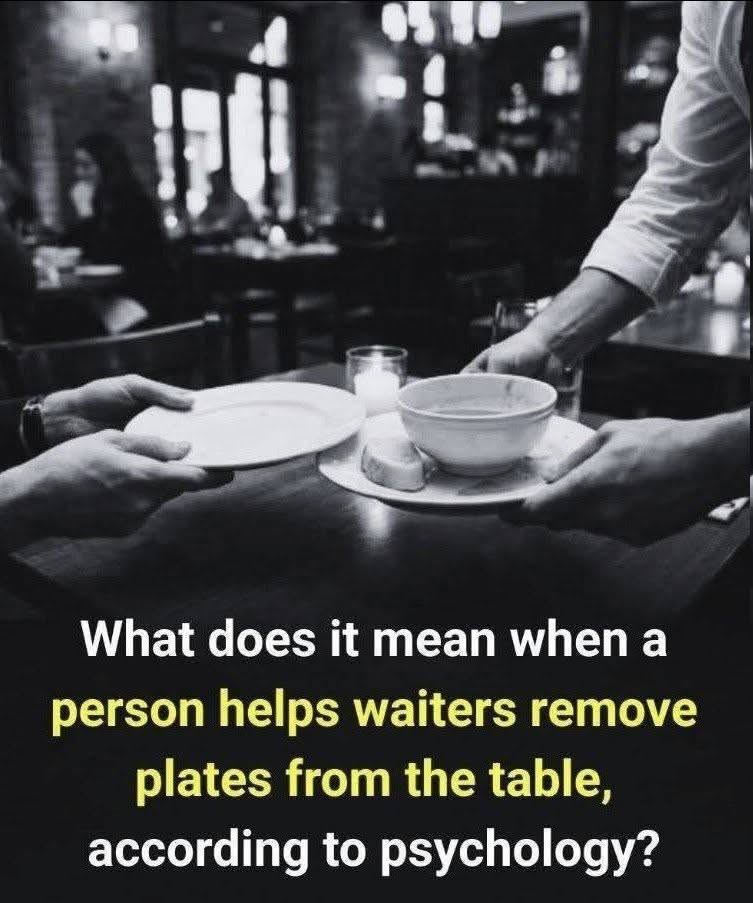
A viral social graphic—captioned “What does it mean when a person helps waiters remove plates from the table, according to psychology?”—shows a diner extending both hands to hand empty plates back to a server at a restaurant table.
While some view stacking dishes or handing plates to waitstaff as simple politeness, psychologists and behavioral experts analyze this gesture through the lens of pro-social behavior, empathy, and social anxiety.
Here is a full breakdown of what helping your waiter says about your personality, the psychological drivers behind it, and when servers actually prefer you don’t help.
4 Main Psychological Drivers Behind Helping Servers
Psychologists attribute the instinct to help servers clear plates to several underlying psychological traits and behavioral motivations:
+-----------------------------------------------------------------------------------+
|                        PSYCHOLOGICAL DRIVERS FOR HELPING WAITERS                  |
+-------------------+----------------------------+----------------------------------+
| Psychological Trait| Primary Subconscious Motivation| Key Behavioral Sign           |
+-------------------+----------------------------+----------------------------------+
| High Trait Empathy| Prosocial cooperation &   | Handing plates to lighten burden |
|                   | active perspective-taking  |                                  |
| Service Background| Shared experience & past   | Stacking plates efficiently for  |
| Mirroring         | industry empathy           | easy tray clearing               |
| Anxiety / Control | Discomfort with clutter or | Clearing space immediately to    |
|                   | server waiting on them     | regain environmental control     |
+-------------------+----------------------------+----------------------------------+
1. High Trait Empathy and Prosocial Orientation
In psychological personality assessments (such as the Big Five personality traits), individuals high in Agreeableness and Trait Empathy naturally perform spontaneous acts of cooperation. They instinctively project themselves into the server’s shoes, perceiving the waiter’s physical effort and seeking to lighten their workload.
2. The “Service Industry Echo” (Shared Identity)
People who have previously worked in hospitality, retail, or food service often retain a subconscious habit of clearing and stacking plates. Social psychology refers to this as in-group empathy—a cognitive connection to workers based on shared past experience.
3. Discomfort with Hierarchical Dynamics
For some diners, sitting back while another person cleans up around them induces mild subconscious discomfort or anxiety. Handing over a plate breaks down the perceived server-customer power dynamic, helping the diner feel more equal and grounded in the interaction.
4. Environmental Control & Clutter Sensitivity
People who prefer structured, tidy environments often help clear plates simply to remove physical clutter from their personal space as quickly as possible. Removing dirty dishes restores personal comfort and visual order to the dining table.
The Restaurant Reality: Do Waiters Want You to Help?
While the intention behind handing plates or stacking dishes is almost always polite, restaurant professionals often have mixed feelings about the gesture:
- When It Helps: Handing a dish that is physically out of the server’s reach (such as across a wide booth) or clearing a pathway for heavy trays is genuinely appreciated.
- When It Hinders: Professional servers balance plates using precise weight-distribution techniques (such as the 3-plate carrying method). Stacking plates improperly or handing a heavy plate unexpectedly can throw off a server’s physical balance and lead to spills.
Financial Impact: The Psychology of Tipping & Service Dynamics
Socio-behavioral studies show a direct correlation between empathy at the dinner table and consumer tipping habits:
- Higher Tip Averages: Diners who display prosocial gestures—such as stacking plates or maintaining warm eye contact with staff—statistically tip 15% to 25% higher than average, viewing the transaction as a human partnership rather than a cold service exchange.
- Positive Hospitality Feedback Loops: Attentive, empathetic interactions between guests and staff lead to higher dining satisfaction scores and repeat business for local establishments.
Fascinating Facts About Dining Psychology
- The Power of Touch: Psychological studies show that servers who briefly touch a customer’s shoulder or hand when presenting the bill see an average increase in tips of up to 20%, illustrating the power of non-verbal human connection.
- The “Clear Table” Effect: Environmental psychology demonstrates that clearing dirty dishes promptly from a table causes diners to report higher satisfaction with their meal’s overall quality and pace.
Conclusion: A Reflective Window Into Human Empathy
Reaching out to hand a plate to your waiter is far more than routine table manners—it is an automatic reflection of high empathy, social awareness, and a natural desire to cooperate with others.
Frequently Asked Questions
Q1: Is it considered rude to hand plates back to a server?
A1: No, it is generally seen as thoughtful and polite. However, avoid passing heavy or hot dishes unexpectedly, as it can disrupt the server’s balance.
Q2: What personality trait is most associated with helping servers?
A2: High Agreeableness and Trait Empathy in the Big Five personality framework are most strongly linked to spontaneous helpful gestures toward service staff.
Q3: Why do servers ask guests not to stack plates?
A3: Professional waitstaff load plates in a specific sequence for stability and easy scraping in the kitchen. Misstacked plates can wobble, spill sauce on bottom surfaces, or create balancing risks on large trays.
Q4: What is the best way to help your waiter at the end of a meal?
A4: Simply consolidate trash onto one main plate, move silverware to the center, and pass items that are hard to reach without making sudden movements.
Q5: Does helping a waiter indicate past service work?
A5: Frequently, yes. People with prior restaurant experience often perform hospitality habits automatically due to muscle memory and shared professional empathy.
