
Introduction
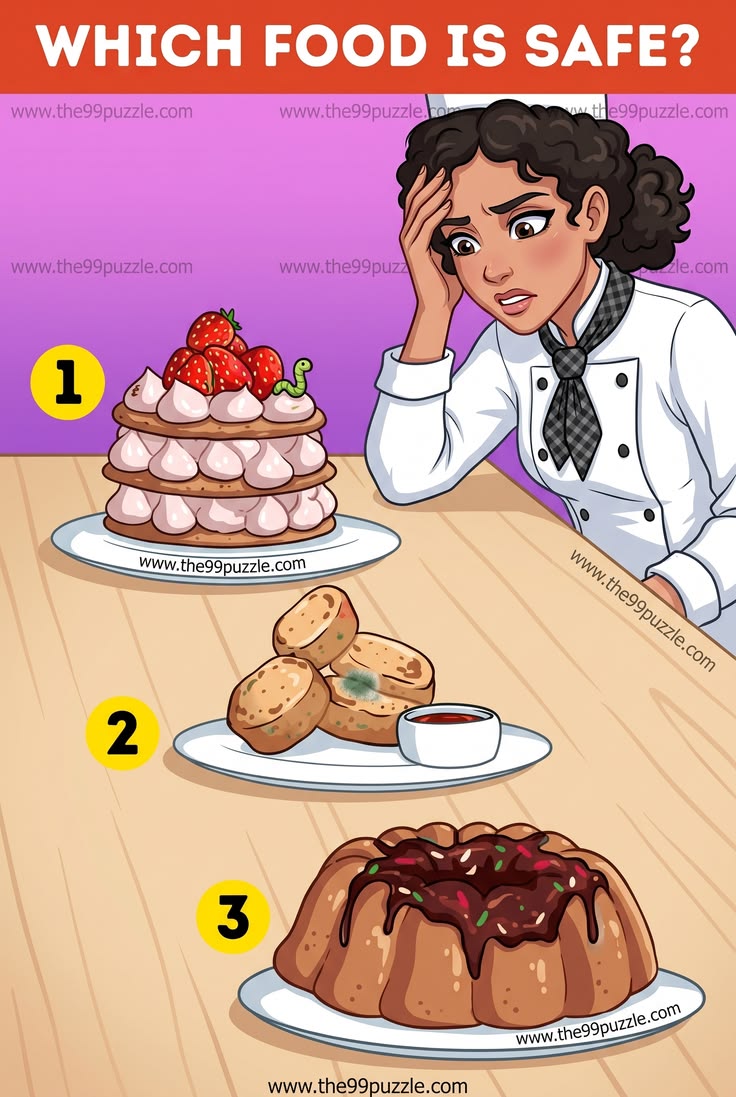
Visual puzzles, logical deduction tests, and food safety brain teasers frequently circulate across social media, inviting users to test their observation skills. Designed specifically to spark playful debate and drive high comment engagement, these puzzles challenge solvers to examine subtle details within an image. When encountering an illustration titled “WHICH FOOD IS SAFE?” featuring a stressed chef and three numbered dishes, readers immediately inspect each option to find the hidden danger.
Evaluating visual riddles closely mirrors examining quality control checks, safety protocols, and data inspection. In this comprehensive guide, we explore the step-by-step logic behind this puzzle, examine why options 1 and 2 are unsafe, and share practical tips for solving visual challenges.
Decoding the Food Safety Puzzle
The secret to solving this puzzle lies in carefully inspecting each dish for contamination or spoilage indicators.
1. Breaking Down Each Dish
- Option 1: A multi-layered cream cake topped with strawberries. However, looking closely at the top right near the strawberries reveals a green caterpillar or worm crawling on the frosting, making it unsafe.
- Option 2: A plate of baked rolls or biscuits served with a dipping sauce. One of the rolls on the right clearly displays a patch of green mold, making it spoiled and unsafe to eat.
- Option 3: A ring-shaped glazed cake or dessert covered in chocolate topping. Scanning this item reveals no bugs, mold, or visible contaminants, making it the only clean choice.
2. The Final Verdict
- Options 1 and 2 both contain hidden or visible spoilage indicators (a worm and mold).
- Option 3 is completely clear of hazards, making Dish #3 the safe food!
Practical Tips for Solving Visual Puzzles
- Inspect Every Corner: Never rely on a quick glance; zoom in on small details like food toppings and plate edges.
- Look for Hidden Hazards: Viral puzzles often hide tiny bugs, mold spots, or structural flaws in unexpected places.
- Engage Online: Sharing visual riddles is a fantastic way to test your attention to detail and see who in your network spots the correct answer first.
Interesting Facts About Visual Puzzles
- Observation puzzles train the brain to suppress quick assumptions and engage in rigorous visual scanning.
- Food safety themes are especially popular online because they tap into universal instincts of caution and hygiene.
- Brain teasers featuring hidden flaws consistently drive high comment volumes as users debate their findings.
Conclusion
While viral social media puzzles designed to test your observation skills often hide tiny details in plain sight, a careful inspection reveals that Dish #3 is the only safe food!
Frequently Asked Questions
Which food is safe in the picture?
Dish #3 is safe because it has no visible contaminants, whereas dish #1 has a worm and dish #2 has mold.
What is wrong with dish #1?
Dish #1 features a small green worm or caterpillar crawling near the strawberries on top of the cake.
What is wrong with dish #2?
One of the baked rolls in dish #2 has a visible spot of green mold on it.
