
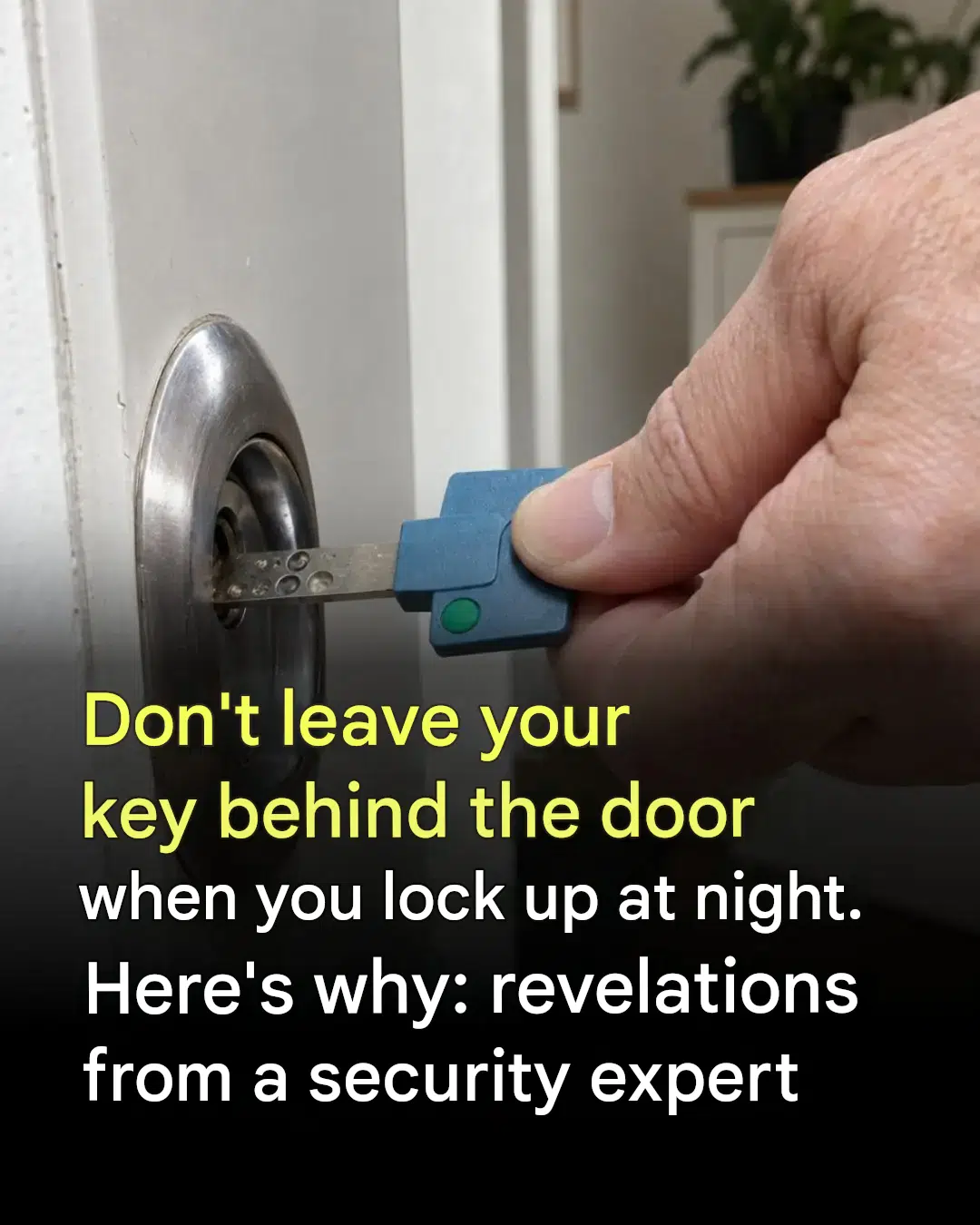
We all grew up with this reflex, inherited from our parents and grandparents: slipping the key into the lock before going to sleep, as if this gesture alone were enough to protect the house. Reassuring, familiar, almost automatic. Except that, according to a security expert, this deeply ingrained habit is not only useless… but downright counterproductive. Enough to make us question this nighttime routine that many of us perform without ever questioning it.
A reassuring habit, but one that provides a false sense of security.
We feel protected with the key in the door. Makes sense, right? In theory, it would block entry to someone with bad intentions from the outside. Except that reality is quite different.
Samuel Prieto, an expert at the Higher Institute of Public Security, explained to our colleagues at Money.it that keys left in the lock “offer no real protection.” On the contrary, they can facilitate the work of malicious individuals who know specific techniques to exploit them. This revelation certainly deserves closer attention.

The techniques used by malicious individuals
This is where it gets really interesting — and a little mind-blowing. The expert describes several methods used to exploit a key left in place.
The first method is called the “fishing” technique. By sliding a thin tool between the door frame and the door, it’s possible to retrieve the key from the inside. Simple, quick, discreet. Hard to imagine, yet quite real.
Second method: the pin lock. Thanks to the key already being inserted, the internal mechanisms of the lock are easily aligned, allowing the door to be opened without force. The key then becomes an unwitting ally.
Finally, using hooks or stiff wires, it’s also possible to retrieve a key ring left hanging just behind the door. Suffice it to say, the key in the lock isn’t a shield… it’s practically an invitation.

Another problem that we don’t think about
There’s another, less obvious reason the expert raises: emergency situations. Imagine that firefighters or emergency services need to respond quickly to your home. If the key is in the lock on the inside, access could be blocked or significantly slowed. This seemingly minor detail can, in certain situations, make a real difference.
Good habits to adopt starting tonight
Good news: the solution is simple. Just lock your door normally, then store the keys in a secure place inside — a drawer, a wall hook out of reach, away from the front door.
To go further, the expert recommends considering a video surveillance system or an alarm. These devices, now affordable and easy to install, offer real peace of mind on a daily basis.
Ultimately, securing your home doesn’t require great effort — just rethinking a few small evening habits
