
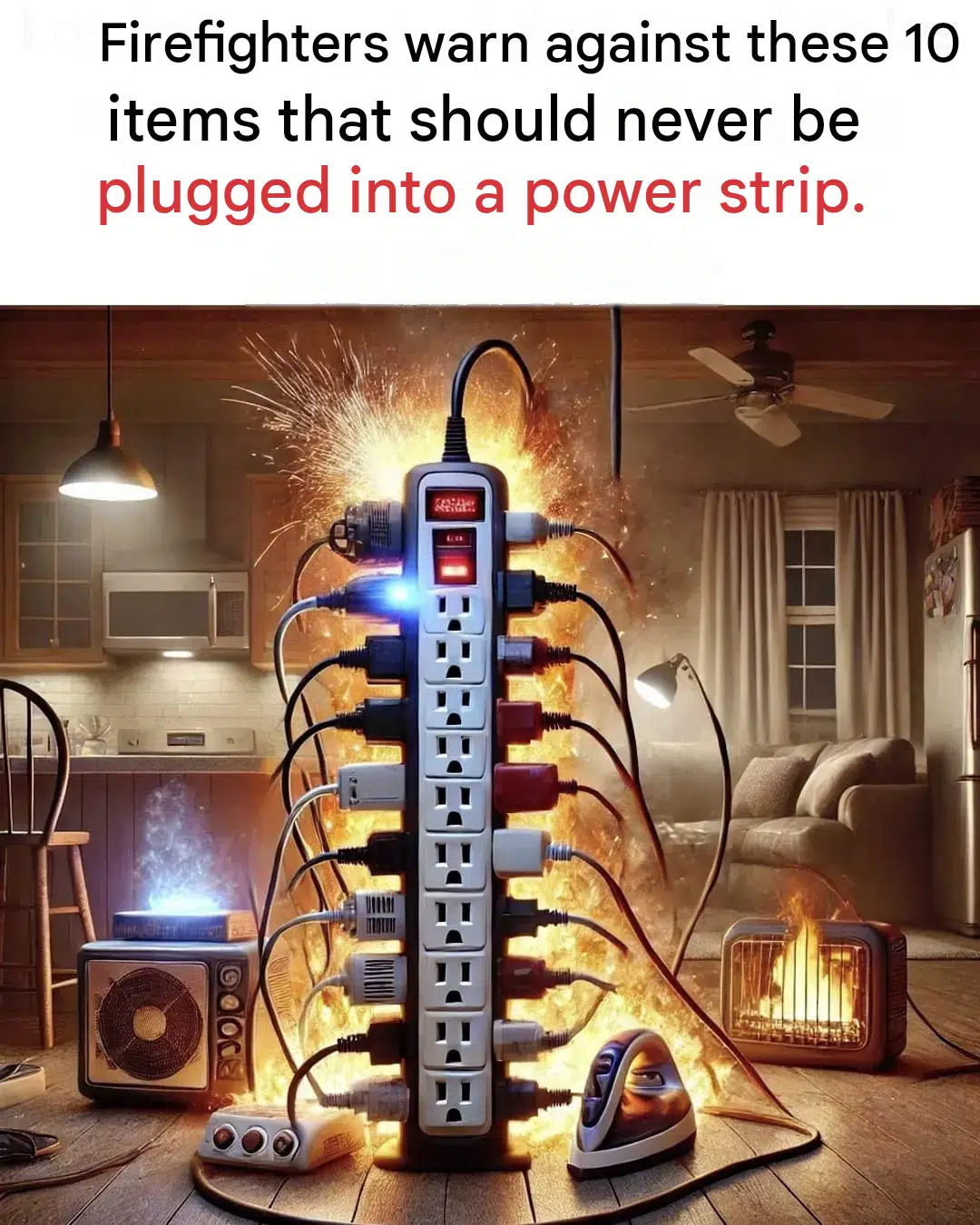
Power strips and surge protectors are essential household accessories. When a room lacks enough wall outlets, a multi-plug strip offers a convenient way to power lamps, phone chargers, laptops, and small desktop electronics simultaneously. However, many homeowners mistakenly view power strips as heavy-duty power sources capable of handling high-wattage appliances indefinitely.
Firefighters and electrical safety experts frequently issue warnings regarding the misuse of power strips, which rank among the leading causes of preventable residential electrical fires. Understanding how power strips function, recognizing their total load limits, and knowing which items to keep away from them is crucial for safeguarding your home and family.
The Hazards of Power Strip Overload and “Daisy Chaining”
To understand why certain devices pose extreme fire risks when plugged into power strips, it helps to examine how electrical circuits handle electrical current.
1. Understanding Electrical Load Limits
- Maximum Amperage Capacity: A standard power strip is designed to distribute a finite amount of electrical current (typically 15 amps total). Plugging multiple high-draw devices into a single strip exceeds this capacity.
- Overheating and Melting: When excess current flows through thin internal wiring, electrical resistance generates intense heat, which can melt plastic housings, destroy insulation, and trigger sparks.
2. The Dangers of “Daisy Chaining”
- Plugging Strips Into Strips: Connecting one power strip into another (known as daisy chaining) multiplies the electrical load across a single wall outlet, drastically increasing the risk of thermal overload, circuit breaker trips, and structural fires.
The 10 Items You Should Never Plug Into a Power Strip
To prevent electrical fires, avoid plugging these high-wattage appliances into power strips or extension cords:
1. Space Heaters
- Massive Power Draw: Space heaters draw continuous high wattage (often 1,500 watts or more), quickly overwhelming standard power strip wiring and causing dangerous overheating.
2. Refrigerators and Freezers
- Continuous Heavy Loads: Refrigerators cycle on and off constantly, demanding high surge currents that can easily trip or overheat power strips over time.
3. Coffee Makers
- Heating Elements: Devices that heat water rapidly require significant electrical current, making them unsuitable for shared multi-plug strips.
4. Toasters and Toaster Ovens
- High Resistance Heating: Exposed heating coils draw immense power during operation, creating an immediate thermal hazard on standard power strips.
5. Microwaves
- High Wattage Output: Microwaves pull heavy electrical loads that require a dedicated wall outlet to operate safely without risking circuit overloads.
6. Hair Dryers, Curling Irons, and Straighteners
- Rapid Heat Generation: Hair styling tools consume high wattage to produce instant heat, which can quickly melt plastic components on low-cost strips.
7. Portable Air Conditioners
- Heavy Compressor Loads: Portable AC units require continuous high amperage, making direct wall plug-ins mandatory.
8. Sump Pumps
- Critical Emergency Power: Sump pumps must operate reliably during severe storms; plugging them into power strips risks unexpected power failures or electrical short circuits.
9. Other Power Strips (Daisy Chaining)
- Multiplying Fire Risks: As noted, plugging multiple extension cords or power strips together creates unmanageable electrical resistance.
10. Medical Equipment (CPAP and Oxygen Concentrators)
- Uninterrupted Reliability: Life-support or vital health devices must plug directly into grounded wall outlets to prevent power fluctuations or accidental disconnections.
Financial, Insurance, and Legal Implications of Electrical Fires
Maintaining strict electrical safety standards protects your property and ensures financial security.
Protecting Your Home and Insurance Coverage
- Preventing Catastrophic Property Loss: Electrical fires caused by overloaded power strips can cause devastating structural damage and personal injury.
- Insurance Claim Integrity: Fire investigators closely examine electrical wiring origins. Adhering to manufacturer guidelines and safety codes ensures your homeowners insurance policies remain fully valid.
Practical Tips for Safe Electrical Usage in Your Home
Optimize your home’s electrical safety with these simple habits:
- Plug High-Wattage Appliances Directly Into Walls: Always connect space heaters, kitchen appliances, and climate control units straight into permanent wall receptacles.
- Check for UL Certification: Ensure all power strips and surge protectors feature certification labels from recognized safety organizations like Underwriters Laboratories (UL).
- Inspect Cords Regularly: Discard any power strips or extension cords showing signs of fraying, discoloration, or melting.
- Use Built-In Circuit Breakers: Choose quality power strips equipped with integrated circuit breakers that automatically shut off power when overloaded.
Fascinating Insights Into Electrical Engineering
- The Invention of the Surge Protector: Early surge suppression technology was developed to protect sensitive telegraph and telephone lines from lightning strikes and high-voltage power surges.
- Circuit Breaker Evolution: Modern household circuit breakers use thermal-magnetic mechanisms to detect both gradual overloads and sudden short circuits, instantly cutting power before wiring can ignite.
Prioritizing Household Safety
Understanding the limits of power strips and knowing which appliances require dedicated wall outlets prevents preventable domestic emergencies. By keeping high-wattage heating and cooling devices plugged directly into wall sockets, you protect your home, reduce fire risks, and ensure long-term electrical safety.
Frequently Asked Questions (FAQ)
Can I plug a space heater into a heavy-duty extension cord?
No. Space heaters should never be plugged into extension cords or power strips, as their continuous high power draw can easily overheat the cord and start a fire. They must always plug directly into a wall outlet.
What is “daisy chaining” and why is it dangerous?
Daisy chaining involves plugging one power strip or extension cord into another. This dangerous practice concentrates too much electrical current through a single circuit, creating extreme heat and fire risks.
How do I know if my power strip is overloaded?
Signs of an overloaded power strip include a warm or hot plastic casing, a burning smell, flickering lights when the device operates, or tripped circuit breakers.
Are surge protectors the same as regular power strips?
No. While both offer multiple outlets, surge protectors contain internal electronic components (metal oxide varistors) designed to absorb voltage spikes and protect sensitive electronics from lightning or grid surges.
