
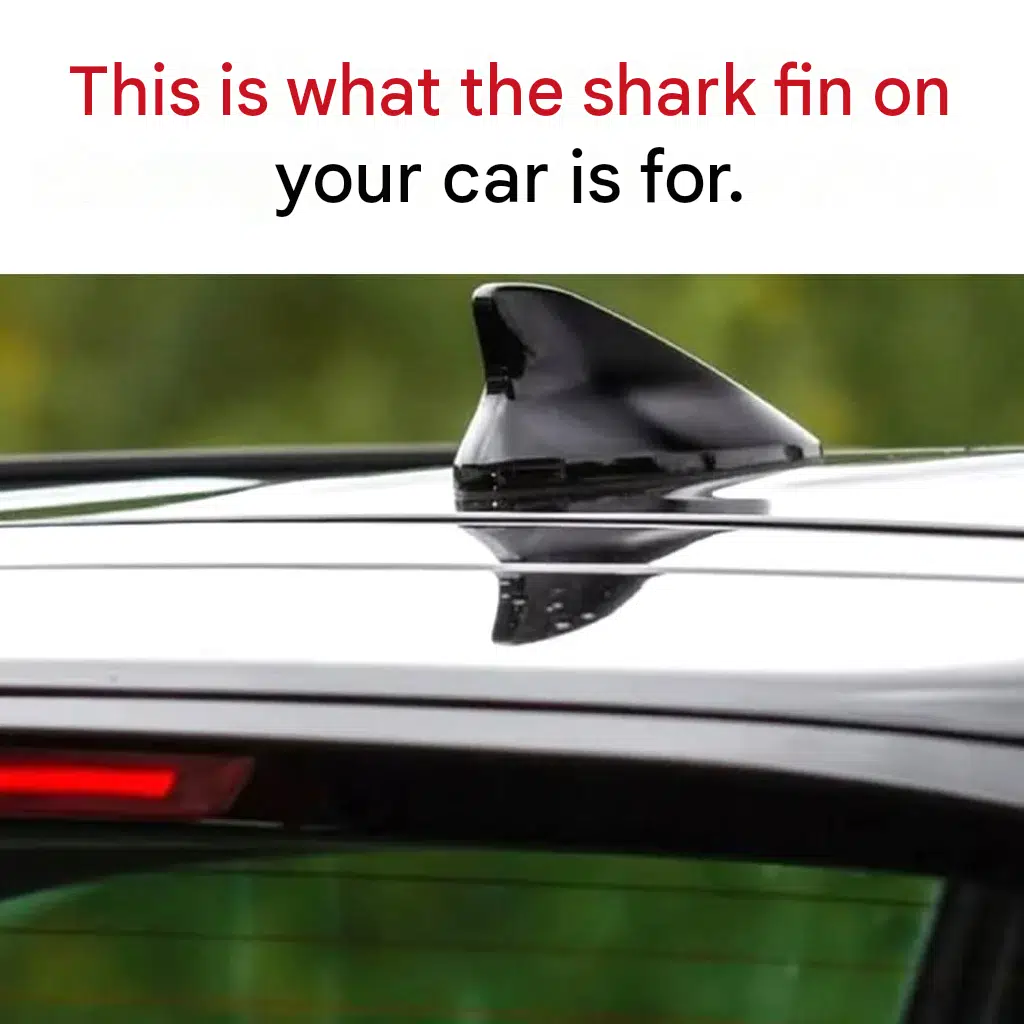
When looking at the roof of modern vehicles, almost everyone has noticed the sleek, aerodynamic “shark fin” protrusion mounted near the rear glass. While some people assume it is purely a cosmetic styling choice designed to give cars a sporty look, this aerodynamic component serves several vital technological functions.
Understanding what the shark fin antenna does, how it impacts vehicle performance, and why automotive designers replaced traditional whip antennas sheds light on modern automotive engineering.
The Function and Technology Behind Shark Fin Antennas
The shark fin is a multi-functional housing unit engineered to handle numerous wireless signals simultaneously.
1. Radio, GPS, and Cellular Communication
- Multiple Built-In Antennas: Inside the plastic fin housing are several specialized miniature antennas. These components handle AM/FM radio broadcasts, satellite radio (SiriusXM), GPS navigation systems, and 4G/5G cellular data connections for connected car features.
- Improved Signal Reception: Unlike older metal whip antennas that could bend or break in automatic car washes, the enclosed design of a shark fin maintains stable, omnidirectional signal reception at high speeds.
2. Aerodynamic Efficiency and Drag Reduction
- Smooth Airflow: As a car moves forward at highway speeds, air flows over the roof. A traditional whip antenna creates wind buffeting and aerodynamic drag, whereas the low-profile, teardrop shape of a shark fin slices cleanly through the wind.
- Fuel Efficiency Contributions: Minimizing aerodynamic drag helps reduce overall fuel consumption and cuts down on interior wind noise.
Financial, Insurance, and Maintenance Considerations
Automotive design choices like the shark fin antenna intersect with vehicle maintenance and insurance costs.
Protecting Your Vehicle Investment
- Avoiding Car Wash Damage: Traditional long antennas frequently snap off in automated car washes, leading to costly replacement parts or damaged paintwork. Shark fins are firmly bolted down and streamlined to withstand automated cleaning brushes.
- Resale Value and Modern Styling: Modern buyers expect contemporary tech features; vehicles equipped with integrated shark fin antennas retain a sleeker, updated aesthetic in the secondary market.
Practical Tips for Maintaining Your Car’s Communication Systems
To ensure your shark fin antenna and onboard electronics function without interruption, keep these maintenance tips in mind:
- Inspect the Rubber Gasket Seal: Regularly check the rubber weatherstripping seal at the base of the fin to ensure water cannot leak into your vehicle’s headliner.
- Avoid Harsh Chemicals: When washing your car roof, avoid using corrosive solvents that could discolor or degrade the plastic housing.
- Check Connection Warnesses: If your GPS or radio reception suddenly drops, have a technician inspect the internal wiring harness connected beneath the roof liner.
Fascinating Insights Into Automotive Evolution
- The Original Whip Antenna: Early car radios relied on long, telescoping metal rods that drivers had to pull up manually before listening to broadcasts.
- BMW’s Pioneering Design: BMW was one of the first automotive manufacturers to introduce the shark fin antenna in the early 2000s on the 7 Series, initially integrating cellular phone and GPS tech before it became an industry standard.
- Stealth Military Origins: The aerodynamic shape was originally adapted from low-radar-profile designs used in military aircraft and submarine periscopes.
Modern Design Meets Functional Efficiency
The shark fin on your car roof is a brilliant example of form meeting function. By combining multiple communication signals into a low-drag, durable package, automotive engineers solved common maintenance headaches while keeping drivers connected on the road.
Frequently Asked Questions (FAQ)
Can I replace a broken whip antenna with a shark fin?
Yes, universal dummy shark fins are sold online, but functional replacement kits require running coaxial cables and wiring harnesses to your stereo or navigation system to restore actual signal reception.
Why do some cars still use traditional antennas?
Certain commercial trucks, base-trim models, or vehicles with specific rear-window defroster-integrated antennas still utilize traditional masts due to cost or specific radio frequency requirements.
Does a shark fin antenna affect car wash safety?
No. Because shark fins are low-profile and rigidly sealed, they easily withstand automated car wash brushes without bending or breaking.
