
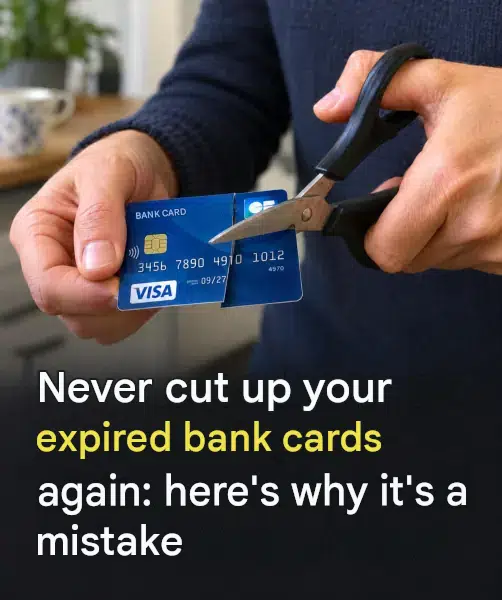
In our increasingly digital world, plastic payment cards remain a staple of daily personal finance. From contactless credit cards and debit cards to loyalty punch cards and transit passes, most adults carry multiple plastic cards in their wallets. When these cards reach their expiration date or get replaced by a bank, standard practice for decades has been to take a pair of scissors and chop the plastic into pieces before throwing it away.
However, modern banking security experts, identity theft investigators, and eco-friendly recyclers suggest that the traditional habit of cutting up expired bank cards may actually be ineffective—or worse, create unexpected security and environmental hazards. Understanding how modern card technology, embedded microchips, and secure disposal methods work helps protect your personal financial privacy.
The Anatomy of a Modern Payment Card: Beyond the Plastic Surface
To understand why traditional card cutting can be flawed, it helps to examine what modern bank cards actually contain beneath their outer laminate.
+-----------------------------------------------------------------------------------+
|                        MODERN BANK CARD COMPONENTS                                |
+------------------------------------+----------------------------------------------+
| Card Element                       | Function & Security Feature                  |
+------------------------------------+----------------------------------------------+
| Magnetic Stripe                    | Stores traditional account and routing data  |
| EMV Microchip                      | Contains encrypted microprocessors and keys  |
| Contactless RFID Antenna           | Enables wireless near-field communication    |
| Plastic Laminated Layers           | Encapsulates sensitive internal hardware     |
+------------------------------------+----------------------------------------------+
1. The Embedded EMV Microchip
Unlike older cards that relied solely on magnetic stripes, modern debit and credit cards feature a visible gold or silver EMV microchip. This tiny computer chip stores encrypted data. Simply cutting a card in half with household scissors often leaves the central microchip intact, meaning a tech-savvy thief could potentially piece the card back together or extract data if disposed of improperly.
2. Contactless RFID Antennas
Many modern cards include an internal copper wire antenna looped around the perimeter of the card to enable tap-to-pay features. Cutting through the card incorrectly can leave these internal components vulnerable to electronic skimming if thrown away in a standard trash bin.
Key Reasons Why Simple Card Cutting Can Be Risky
Reviewing secure disposal guidelines reveals why taking a few extra steps is necessary when discarding expired financial cards.
+-----------------------------------------------------------------------------------+
|                        SECURE CARD DISPOSAL PROTOCOLS                             |
+-----------------------------------------------------------------------------------+
| • Chip Destruction: Cross-cut directly through the gold EMV microchip             |
| • Magnetic Stripe Erasure: Deface or shred the black magnetic strip completely    |
| • Separating Financial Accounts: Ensure replacement cards are activated safely   |
| • Eco-Friendly Recycling: Avoid micro-plastics by using designated bank shredders |
+------------------------------------+----------------------------------------------+
1. Incomplete Physical Destruction
Standard kitchen scissors often struggle to cut cleanly through thick composite plastics, leaving jagged edges or missing the sensitive core components entirely. If thrown into household waste in large pieces, sophisticated fraudsters can harvest the fragments.
2. Environmental Concerns of Plastic Waste
Tossing cut-up pieces of PVC plastic into general landfills contributes to micro-plastic pollution. Many major banks and financial institutions now offer secure card-destruction services or accept expired cards for specialized recycling.
Practical Tips for Securely Disposing of Expired Bank Cards
Protecting your financial identity requires a systematic approach to retiring old payment cards.
- Target the Chip and Stripe: Always make sure your cuts pass directly through the golden EMV chip and the black magnetic stripe.
- Use a Cross-Cut Shredder: Invest in a heavy-duty cross-cut shredder capable of destroying credit cards into unrecoverable particles.
- Contact Your Bank: Return expired cards directly to your local bank branch for secure, professional industrial destruction and recycling.
- Check Account Linkages: Ensure automatic subscription payments are updated to your new card before discarding the old one.
- Separate Multiple Cards: Never dispose of multiple cards from the same household in the same garbage bag or bin.
Surprising Facts About Card Security and Banking History
- The Origin of the Magnetic Stripe: The magnetic stripe was introduced to credit cards in the 1960s, adapting technology originally developed by IBM for storing computer data.
- Global Smart Card Adoption: EMV chip technology drastically reduced counterfeit card fraud worldwide by replacing static data with dynamic, single-use transaction codes.
- Contactless Evolution: Wireless RFID payment technology has grown exponentially, allowing secure transactions within milliseconds while requiring specialized antenna wiring inside the card.
- Identity Theft Statistics: Financial fraud experts report that discarded physical mail and improperly disposed of documents and cards remain primary targets for opportunistic thieves.
Frequently Asked Questions (FAQ)
Why is cutting up a bank card with scissors a mistake?
Simple scissors cuts often fail to destroy the embedded EMV microchip or contactless antenna completely, leaving sensitive data vulnerable if pieces are recovered from household trash.
How should I properly destroy an expired bank card?
Use a heavy-duty cross-cut shredder designed for plastic cards, or cut the card into multiple tiny pieces making sure to obliterate the microchip and magnetic stripe entirely.
Can I recycle old plastic bank cards?
Most municipal recycling centers do not accept PVC credit cards in curbside bins. However, many banks offer secure in-branch recycling programs.
What should I do with old cards that still have active balances?
Never discard a card linked to an active account, even if it is expired, until you have confirmed that your replacement card is activated and all recurring subscriptions are updated.
Are metal credit cards harder to dispose of?
Yes. Premium metal credit cards cannot be cut with scissors and must be returned to the issuing bank in a secure envelope for professional destruction.
Conclusion
Managing personal finance involves protecting your data from the moment a card arrives in the mail to the day it is retired. By upgrading from simple scissor snips to thorough chip destruction and secure recycling methods, you can safeguard your financial identity and protect your privacy.
Stay secure, protect your personal data, and share this essential financial tip with your friends and family!
