
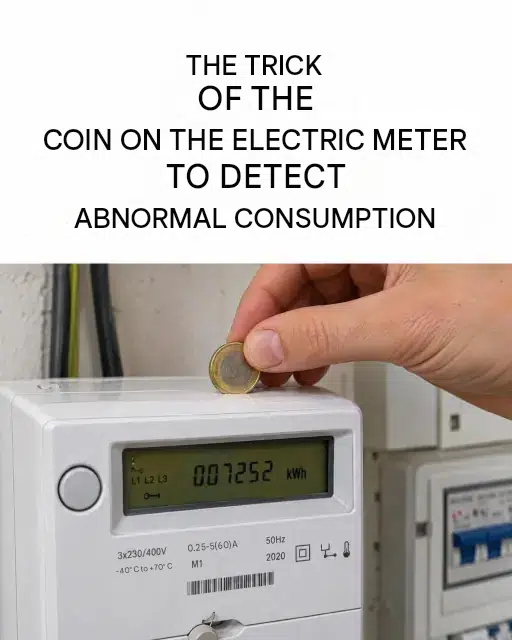
Managing household utility expenses is a priority for homeowners everywhere. From heating and cooling to running major kitchen appliances, electricity consumption makes up a significant portion of monthly household bills. When utility costs unexpectedly spike, homeowners often search for ways to audit their energy usage, identify phantom loads, and detect potential electrical inefficiencies or meter errors.
Over the years, various internet life hacks and viral DIY tricks have circulated on social media, claiming to help users test their electric meters or detect abnormal power consumption using everyday items like coins. Understanding how modern digital electricity meters function, how power usage is measured, and what methods genuinely help monitor household energy efficiency is essential for safe and effective home management.
The Evolution of Electric Meters: From Mechanical Dials to Smart Displays
To understand how energy is tracked, it helps to examine the technology behind residential electricity metering.
+-----------------------------------------------------------------------------------+
|                        EVOLUTION OF ELECTRICITY METERING                          |
+------------------------------------+----------------------------------------------+
| Meter Type                         | Mechanism & Operation                        |
+------------------------------------+----------------------------------------------+
| Mechanical Induction Meters        | Rotating aluminum disk driven by magnetic coils|
| Digital Electronic Meters          | Solid-state microchips measuring voltage/current|
| Smart Meters                       | Wireless automated meters transmitting usage data|
+------------------------------------+----------------------------------------------+
1. Mechanical Induction Meters
Older electromechanical meters featured a visible aluminum disk that spun faster or slower depending on how much electricity was being consumed in the home at any given moment.
2. Modern Digital and Smart Meters
Today, most homes use digital or smart meters featuring LCD screens that display precise kilowatt-hour (kWh) readings, load indicators, and diagnostic codes. These solid-state devices contain no moving mechanical parts, relying instead on high-precision electronic sensors.
Key Strategies for Detecting Abnormal Household Energy Consumption
Instead of relying on unverified internet tricks, homeowners can utilize proven, safe methods to audit their electricity usage and catch unexpected power draws.
+-----------------------------------------------------------------------------------+
|                        PROVEN WAYS TO AUDIT HOUSEHOLD ENERGY                      |
+-----------------------------------------------------------------------------------+
| • The Main Breaker Test: Shut off all breakers to verify if the meter stops moving|
| • Appliance Wattage Meters: Plug individual devices into kill-a-watt monitors     |
| • Smart Meter Portal Tracking: Review hourly or daily usage graphs via utility app|
| • Phantom Load Auditing: Unplug idle electronics drawing standby power            |
+------------------------------------+----------------------------------------------+
1. The Main Breaker Audit
If you suspect abnormal power consumption or want to check if your meter is registering accurately, the most reliable physical test involves shutting off your home’s main circuit breaker. When the main breaker is flipped off, all power to the house is cut; the digital meter’s consumption indicator should go completely dormant. If the meter continues to register active load while the main breaker is off, it indicates a potential wiring fault or meter malfunction that requires professional utility inspection.
2. Identifying Phantom Loads (Standby Power)
Many appliances consume electricity even when turned off—such as televisions, gaming consoles, microwaves, and phone chargers left plugged in. Identifying and eliminating these phantom loads can significantly lower monthly electricity bills.
Practical Tips for Improving Household Energy Efficiency
Lowering your monthly electricity consumption involves adopting smart habits and optimizing appliance usage.
- Upgrade to LED Lighting: Replace traditional incandescent bulbs with energy-efficient LEDs that consume a fraction of the power.
- Maintain HVAC Systems: Clean or replace air filters regularly to keep heating and cooling units running at peak efficiency.
- Use Programmable Thermostats: Adjust temperatures automatically when you are sleeping or away from home to reduce heating and cooling costs.
- Run Full Loads: Only operate dishwashers and washing machines when you have accumulated full loads to maximize water and energy efficiency.
- Unplug Unused Devices: Use smart power strips to cut power entirely to entertainment centers and home office electronics when not in use.
Surprising Facts About Electricity and Grid History
- The War of the Currents: The widespread distribution of residential electricity was pioneered in the late 19th century through the historic rivalry between Thomas Edison’s direct current (DC) systems and Nikola Tesla’s alternating current (AC) grid.
- Smart Grid Integration: Modern smart meters communicate directly with utility companies via cellular or radio frequency signals, eliminating the need for manual meter readers.
- Standby Power Costs: Studies estimate that standby power (“vampire draw”) accounts for up to 10% of an average household’s annual electricity bill.
- Energy Conservation Milestones: Advances in appliance efficiency standards over the past few decades have saved consumers billions of dollars in electricity costs worldwide.
Frequently Asked Questions (FAQ)
Can a coin on an electric meter detect abnormal consumption?
No. Placing a coin on top of a modern digital electric meter has no technical function and cannot detect power consumption or diagnose electrical issues.
How can I check if my electric meter is working properly?
The most accurate DIY test is to turn off your home’s main circuit breaker. If the meter continues to register power usage while the main breaker is off, contact your utility provider for an inspection.
What is a “phantom load”?
A phantom load refers to electricity consumed by electronic devices and appliances while they are plugged in and turned off or in standby mode.
Why is my electricity bill unexpectedly high?
Sudden bill increases are often caused by extreme weather leading to heavy HVAC usage, failing appliance motors, undetected water heater leaks, or unaddressed phantom loads.
How can I track my daily electricity usage?
Most utility companies provide online portals or smartphone apps connected to smart meters, allowing customers to view their hourly and daily power consumption in real time.
Conclusion
Managing household electricity usage requires practical knowledge, energy awareness, and safe auditing techniques rather than unverified internet myths. By understanding how modern meters operate, conducting safe breaker tests, and eliminating phantom loads, you can take full control of your home’s energy efficiency.
Stay informed, optimize your power usage, and share this essential electrical awareness with your friends and family!
